Vape 10-OH-HHC 97%: how to read the information sheet before choosing?
"10-OH-HHC," "97%," "1 ml," "terpenes": in a few words, a vape product description packs several pieces of information that don't all answer the same question. One refers to a listed compound, another to a stated concentration, and a third to the volume. Confusing them can lead you to imagine a quantity of substance, a hardware compatibility, or a level of effect that the product description doesn't actually demonstrate.
The French Hemp Empire's 10-OH category currently features two products, including Vape 10-OH-HHC 97% Rollz 1ml . This article helps you understand its product information, flavor variations, and what details to request regarding your purchased batch. It is not a substitute for the product label or laboratory analysis. The information provided corresponds to pages accessed in September 2026 and is subject to change.
What does the name "10-OH-HHC" indicate?
HHC stands for hexahydrocannabinol. In the expression "10-OH-HHC," the "OH" group represents a hydroxyl group, and the number refers to its position in the molecule's name. This designation indicates a substance related to HHC, but does not imply pharmacological identity. A structural change can alter properties; its extent in humans is not apparent from the name alone.
In the Rollz product information sheet, "main ingredient: 10-OH-HHC" appears among the technical specifications. To know what actually , this statement must be compared with an analysis of the finished product: identity of the substance, quantity measured, other cannabinoids present, and the method used. The brand name alone reveals neither the exact proportions nor the possible presence of isomers or impurities.
It's also important to distinguish between the compound itself and its production method. The fact that a molecule is related to a natural product or a possible metabolite doesn't guarantee that a highly concentrated cartridge comes from a direct flower extraction. Transformation, purification, and the addition of other ingredients may occur. The origin of the raw material and the manufacturing process are information you should obtain from the manufacturer or seller when these factors are important to your decision.
Why "97%" doesn't describe the entire cartridge
The product information sheet indicates a concentration of 97% and describes the product as a highly concentrated extract. Before deducing the mass of 10-OH-HHC in the device, it is essential to know precisely what is being measured. Does the concentration apply to the distillate used before blending, the final liquid in the cartridge, a single substance, or a sum of compounds? The flavoring ingredients and base mentioned in the description may alter the composition of the finished product.
The issue isn't purely theoretical. Suppose a laboratory measures the purity of an ingredient before adding terpenes, and then uses that ingredient to formulate a cartridge. The value measured on the ingredient would no longer automatically describe the purity of the entire cartridge. Conversely, if the 97% refers to the final mixture, the analyte, the method, and the batch number are necessary to understand its meaning. The datasheet alone doesn't provide sufficient detail on these points.
A usable certificate of analysis must therefore identify the product or material tested, include a relevant batch number, provide a date, and present a method and legible results. It is helpful to ask for the concentration of 10-OH-HHC measured in the finished product, rather than simply asking the general question, "Is it really 97%?" If a value is given as a percentage, also verify whether it represents a mass fraction and what constituents make up the remainder.
Finally, a high stated concentration does not predict the individual experience. It provides neither a dose per inhalation, nor a guaranteed duration or intensity. The actual amount delivered depends in particular on the device's operation and usage; clinical data specific to 10-OH-HHC remain limited. A numerical promise of "perceived potency" derived from 97% would therefore be misleading.
What can be calculated with "1 ml"?
The milliliter indicates a nominal filling volume. It does not, by itself, tell you how many milligrams of 10-OH-HHC are in that unit. To convert from volume to mass, you would need to know the actual density of the mixture; to then isolate the mass of the stated compound, you would need a concentration with a clearly defined base that accurately reflects the final product.
A common shortcut is to equate 1 ml to 1 g, then multiply that assumed gram by 97%. This produces an appealing but potentially inaccurate figure. Extracts and aromatic blends do not necessarily have the density of water. A quantity in milligrams should only be presented as fact if it is based on reliable batch-specific measurements or data.
The volume doesn't indicate a fixed number of puffs. A puff counter would depend on the duration of each activation, the resistance, the setting, and the viscosity of the formula. The information sheet doesn't provide a reliable value to guarantee battery life or the amount delivered per inhalation. If this information is important to your purchase, ask the manufacturer how it was calculated.
The displayed price should be interpreted with the same care. Two devices sold at the same price can differ in the presence of a battery, the actual quantity of liquid, or the availability of a refill. A comparison in euros per milliliter only indicates the volume paid for. To calculate a cost per milligram of the advertised compound, a reliable quantity in the final product is required. If this quantity is not documented, it is better to maintain a comparison based on verifiable characteristics rather than publishing an approximate ratio.
All-in-one or battery cartridge: check which version is sold
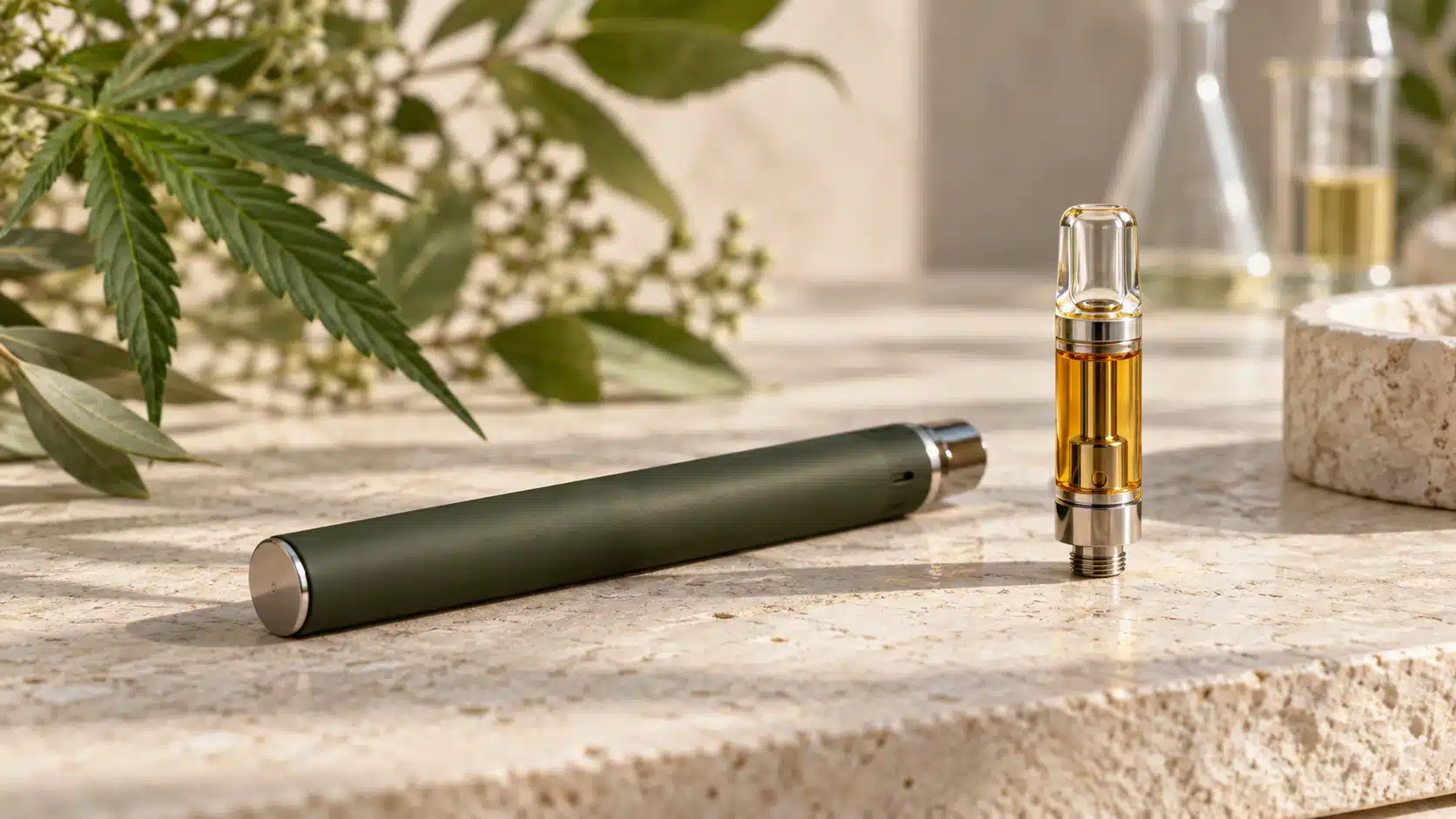
The Rollz vape description uses "portable device," but also specifies that, depending on the version, it can be either an all-in-one model or a pre-filled cartridge compatible with a battery. This distinction makes a real difference to what you'll receive. An all-in-one includes its own power supply; a separate cartridge requires a compatible battery, possibly a 510-style battery if the version supports it.
Before ordering, confirm the exact form of the variant you've added to your cart. Check if the battery is included, if it's rechargeable, if a cable is provided, and how the system is activated. The product description may mention automatic or button activation, depending on the model. This wording doesn't guarantee that every unit offers both modes. For a separate cartridge, ask about the connection type and the heating settings compatible with the battery you're considering.
The name "Vape 1 ml" should never be used as proof of 510 compatibility. A cartridge with a threaded connection for a battery is not the same as a small, pre-assembled device that cannot be disassembled. This check prevents you from receiving a product that is unusable with your existing equipment.
What do the ten "terpene" options correspond to?
The product page currently displays Amnesia Haze, Blackberry Kush, Blue Dream, Gelato Drip, Chem Dawg, Jet Fuel, Midnight Octane, Skunk, Sugar Dough, and Tahoe OG. These are the names of the strains offered on the page. They serve to identify an aromatic option; they do not prove that each cartridge is made from a flower bearing that exact name.
The word "terpenes" provides a general indication of the formula's aromatic profile but does not detail the recipe. Depending on the product, terpenes may have different botanical origins and be added to an extract. The product information sheet does not provide a detailed list of compounds or their proportions for each of the ten variations. If you are looking for a specific ingredient or wish to avoid certain aromas, request the specific composition for the selected variation.
It's tempting to guess the flavor of Blackberry Kush from "blackberry" or to classify Sugar Dough among the sweet profiles. These associations are assumptions based on reading, not results of sensory analysis of the batch. Even names like Amnesia Haze and Blue Dream, familiar to flower enthusiasts, could refer to formulated aromatic signatures. The actual aroma must be judged by the product itself and its precise description.
A useful approach is to compare two levels: first, the main compound and its measured concentration, and then the profile of the other ingredients. Choosing a fragrance without examining the active substance, or choosing a percentage without looking at the inhaled ingredients, leaves an essential part of the information sheet out of reach.
The difference with a CBD vape
The simultaneous presence of the product in the "10-OH" and "CBD Vapes" categories on the website does not mean that 10-OH-HHC is CBD. The Rollz product description explicitly names 10-OH-HHC as the main component. A CBD vape, on the other hand, identifies cannabidiol as the desired cannabinoid and must specify its concentration. This chemical distinction takes precedence over any comparison of price, flavor, or form.
The knowledge accumulated about CBD does not automatically transfer to a hydroxylated derivative of HHC. The properties, history of use, interactions, or safety profile of cannabidiol cannot be attributed to 10-OH-HHC simply because both appear in the same catalog. If you are explicitly searching for CBD, verify that the product description and analysis name CBD.
Do not simply equate percentages between products. A 60% CBD cartridge, for example, and a 97% 10-OH-HHC cartridge do not constitute a common scale of "strength." These are different substances, formulations, and sometimes even different measurement methods. A proper comparison would begin by identifying and measuring the exact quantity of each compound, followed by a description of the conditions of use and any uncertainties involved.
What regulations should be checked?
The French regulatory framework for cannabinoids has evolved several times. TheANSM (French National Agency for Medicines and Health Products Safety) classified HHC and certain derivatives in 2023, and other substances have been the subject of subsequent decisions. A shop may display "THC compliant" for a product; this statement alone does not answer the question of the classification of the main compound listed on the same product page.
For a product sold under the name 10-OH-HHC, verify the exact chemical name and its corresponding status in the official texts applicable at the time, particularly documents published by the ANSM (French National Agency for Medicines and Health Products Safety) and any updates thereto. Do not automatically assume that 10-OH-HHC is the same as HHC, nor conclude that it is authorized simply because the name is different or the product is listed online. Commercial descriptions and shop listings often contain conflicting information on this point.
The THC threshold often associated with hemp is not a universal pass for every processed molecule. A product may raise other questions besides its delta-9-THC content: the substance's identity, classification, ingredients, product form, and regulations governing its marketing. If precise compliance cannot be documented, request a substantiated response before making any purchase or publishing a legal claim.
What results can be expected from a certificate of analysis?
A good review begins with verifying the laboratory's identity and its relevance to your product. The certificate should identify the sample tested and the batch number. If the page mentions a complete vape, ensure the results pertain to the final liquid and not just a distillate that was subsequently blended. Examine the sampling date, the units used, and the measurement limits.
The cannabinoid panel should clearly show what is detected and what is not, using a method adapted to the compounds listed. The absence of 10-OH-HHC from the list of tested analytes is a major issue: a "certificate of analysis" can be authentic yet unable to confirm the molecule being tested. Similarly, a result for delta-9-THC does not automatically provide information on all other cannabinoids.
The product information sheet mentions a vaporizer base and flavorings or terpenes, depending on the specific product. A cannabinoid content analysis does not necessarily document the identity of these ingredients or the presence of contaminants. You can request a list of constituents, the batch testing performed, and the manufacturing conditions. Avoid interpreting the absence of a substance on a certificate as proof that it is not present: it may simply not have been tested for.
One final check concerns the units. A result expressed as a percentage of the distillate cannot be converted to milligrams per cartridge without information on the fill mass and other ingredients. If the figures in the report and on the label appear different, request a written explanation related to the batch.
Vaping and health uncertainties
A vape produces an aerosol intended for inhalation. This is not harmless, even without nicotine.In 2026, ANSES (the French Agency for Food, Environmental and Occupational Health & Safety) published an expert report on the health risks associated with vaping products ; its conclusions regarding this product category do not constitute specific clinical validation of 10-OH-HHC or the Rollz reference product. The method of administration and the substance itself must be considered separately.
There is limited published clinical data on 10-OH-HHC to establish a reliable profile of its effects, interactions, and risks in humans. The term "97%" does not eliminate this uncertainty. ANSEShas also reported cases of poisoning linked to products marketed as CBD but containing other substances. This underscores the importance of clear analytical identification, without allowing us to attribute these cases to the vaping examined here.
This type of product is intended for adults only. Avoid any driving or activity requiring full alertness after exposure to a substance that may impair alertness. If you are taking medication, have a medical condition, are pregnant, or are breastfeeding, seek medical advice. If a product causes any concerning effect, discontinue use and contact a healthcare professional or emergency services, depending on the severity.
Compare a vape format and the preroll of the category
The category also features a 10-OH preroll advertised at 50% ABV, in a 2g format. The two products cannot be compared by simply subtracting 50% from 97%. First, the basis for the stated percentages needs to be verified. Second, a milliliter of liquid and two grams of preroll material do not represent the same unit, nor do they have the same formulation. Finally, inhaling a vape aerosol and inhaling combustion smoke have different characteristics.
To compare potential purchases, create a shared record: substance actually detected, quantity per unit, additional ingredients, batch number, analyses, device type, precautions, and documented compliance. The comparison then becomes concrete. The highest percentage displayed on the screen is not automatically the deciding factor.
If you prioritize flavor over form, keep in mind that the names of selectable terpenes for vaping don't necessarily describe those in the preroll. Each product has its own recipe, base ingredients, and presentation. These are two separate descriptions to read.
A six-step reading method
- Identify the compound. Note the name 10-OH-HHC and search for it in the batch analysis.
- Define 97%. Ask what is being measured and whether the result relates to the final formulation.
- Check the 1 ml. Verify the actual volume delivered and the fill mass if you want to know the quantity in milligrams.
- Confirm the hardware. Make it clear whether the chosen version is an all-in-one or a cartridge requiring a battery.
- Read the ingredients. Ask what the selected "terpenes" option refers to and the composition of the base.
- Check the applicable regulations. Consult the current official texts for the exact substance; do not rely solely on the statement "THC compliant".
This method works beyond that benchmark. It allows you to distinguish what's written on a datasheet, what has been measured, and what still needs clarification. A salesperson who can respond by linking each figure to a specific batch provides more useful information than a purely technical argument based on sheer "power.".
Frequently asked questions about 10-OH-HHC vaping
Does 97% mean 970 mg in a 1 ml cartridge?
Not necessarily. This calculation would assume, among other things, that 1 ml weighs exactly 1 g and that the percentage refers to 10-OH-HHC in the finished product. Both of these assumptions must be verified. Request a quantity measured in milligrams per unit if you need this information.
Do the Amnesia Haze or Gelato Drip options correspond to flower varieties contained in the vape?
The names appear in the "terpenes" menu of the product information sheet. They do not, on their own, prove the use of a flower of the corresponding variety. Ask for the origin of the aromas and the list of ingredients for the exact variant.
Does the Rollz vape necessarily work with my 510 battery?
No. The product description indicates that the presentation may vary depending on the version: all-in-one or cartridge compatible with a battery. Confirm the variant being sold, its connector, and the permitted settings before pairing it with a 510 pen.
Is a low level of THC sufficient to establish the legality of 10-OH-HHC?
No. The potential classification of the main compound and other applicable regulations must be considered independently of the THC level. Consult the current official regulations for the documented chemical identity of the product.
Does a high concentration prove a stronger effect than another product?
No. To compare two products, you must first know their composition, the actual quantities delivered, and the available scientific data. Differences in devices and individual variations preclude a simple scale based solely on commercial percentages.
Read the figures before reading the promises
The Rollz 10-OH-HHC vape's name includes a stated compound, a 97% concentration, and a 1ml bottle size. While each of these details is useful, none replaces the need to identify the batch, the specific product version, and the ingredients. To make an informed choice, ask what exactly the 97% concentration represents, the quantity of 10-OH-HHC in the finished product, details of the flavor variations, and relevant compliance documentation. You can then consult the Rollz vape product page for a precise checklist of points to verify.