10-OH
Here is the only result
10-OH-HHC: Discover a new generation of cannabinoids
Discover the world of 10-OH-HHC at The French Hemp Empire, a range dedicated to one of the hydroxylated derivatives of HHC which is currently generating increasing interest in the world of new cannabinoids.
Our selection includes Vape 10-OH-HHC 97% Rollz 1ml, offered in several flavor profiles inspired by iconic varieties: Amnesia Haze, Blackberry Kush, Blue Dream, Gelato Drip, Chem Dawg, Jet Fuel, Midnight Octane, Skunk, Sugar Dough or Tahoe OG.
The French Hemp Empire favours an approach based on composition, stated concentration, traceability and information available on each reference.
Since 10-OH-HHC is a recent cannabinoid and still insufficiently documented in humans, the characteristics of a product should be evaluated from its composition and analyses rather than from promises of potency or effects.
For adults only. Do not drive after using a product that may impair alertness.
-
Vape 10-OH-HHC 97% Rollz 1ml
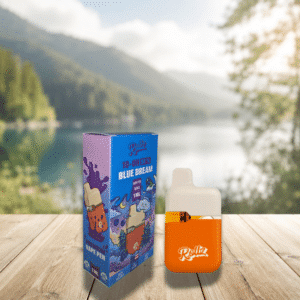 Selecting options: This product has several variations. Options can be selected on the product page.Power :39.90 €


10-OH-HHC: effects, origin, risks and information about 10-hydroxy-HHC
10 -OH-HHC, also known as 10 OH HHC, 10OH-HHC, 10-hydroxy-HHC or 10-hydroxyhexahydrocannabinol, belongs to the world of cannabinoids derived from HHC.
Since the evolution of regulations surrounding HHC and several semi-synthetic cannabinoids in Europe, new substances have gradually appeared on the market.
10-OH-HHC is one of those that currently raise many questions.
What is 10-OH-HHC?
What is the difference between 10-OH-HHC and HHC?
What are the effects of 10-OH-HHC?
Is 10-OH-HHC psychoactive?
Is 10-OH-HHC more potent than CBD?
What is the difference between 10-OH-HHC and THC?
Is 10-OH-HHC legal in France in 2026?
What are the risks of 10-OH-HHC?
Can it be detected in a saliva test?
These questions require a cautious approach.
Unlike CBD or THC, 10-OH-HHC still has very little clinical data to precisely characterize its effects in humans.
Therefore, we must distinguish three categories of information:
what its chemistry allows us to establish,
what experimental research may allow us to observe,
And
which is simply a matter of testimonials or marketing.
This distinction forms the basis of our presentation of 10-OH-HHC at The French Hemp Empire.
What is 10-OH-HHC?
The term 10-OH-HHC refers to 10-hydroxyhexahydrocannabinol.
The "OH" indicates the presence of a hydroxyl group.
The compound is structurally related to HHC, or hexahydrocannabinol.
This identity already makes it possible to distinguish 10-OH-HHC from many recent commercial names whose composition is sometimes difficult to determine.
10-OH-HHC is therefore not simply a marketing name.
It corresponds to an identifiable chemical family of hydroxylated compounds associated with HHC.
What does 10-OH mean?
In organic chemistry, "OH" corresponds to a hydroxyl group.
The number 10 indicates the relevant position in the nomenclature used to describe the molecule.
The name:
10-OH-HHC
can thus be understood as:
10-hydroxy-HHC.
This structural modification distinguishes the compound from non-hydroxylated HHC.
What is HHC?
HHC stands for hexahydrocannabinol.
It belongs to the cannabinoid family.
HHC experienced a particularly rapid spread on the European market before being subject to regulatory measures in several countries.
In France, HHC was classified as a narcotic in 2023.
This regulatory history partly explains why research into HHC derivatives has expanded considerably.
10-OH-HHC and HHC: what's the difference?
The fundamental difference lies in their structure.
10 -OH-HHC corresponds to a hydroxylated form linked to HHC.
This chemical modification can influence various physicochemical and biological properties.
However, this structural difference should not be automatically interpreted as a definitive statement regarding:
- power;
- the duration;
- security;
- the effects;
- legality.
Two structurally similar molecules can have different pharmacological profiles.
Is 10-OH-HHC a metabolite of HHC?
The metabolism of cannabinoids can lead to the formation of hydroxylated compounds.
In particular, HHC can be transformed by the body into various metabolites.
This concept is important to understand the scientific interest in hydroxy-HHC.
But it does not mean that the commercial product sold under the name 10-OH-HHC is simply "natural HHC produced by the body".
A commercially isolated or manufactured compound and a metabolite produced temporarily in the body should not be considered identical situations.
Is 10-OH-HHC natural?
The answer depends on what one means by natural.
The compound may be associated with HHC metabolism.
This does not mean that the concentrations used in commercial products come directly from an abundant extraction of hemp flowers.
For a highly concentrated commercial formulation, the manufacturing method and the origin of the material must be documented by the manufacturer.
It is therefore preferable to speak of a hydroxylated cannabinoid derivative rather than automatically presenting commercial products as natural hemp extracts.
10-OH-HHC: natural or semi-synthetic cannabinoid?
This question requires distinguishing the molecule from its production method.
A molecule can exist as a metabolite while also being commercially obtained through chemical transformation.
The term semi-synthetic is generally used when a substance is obtained from a natural raw material which then undergoes a chemical transformation.
To accurately evaluate a product, it is therefore necessary to know its manufacturing process.
10-OH-HHC vs CBD
The difference with CBD is significant.
CBD
Cannabidiol is a phytocannabinoid naturally present in Cannabis sativa L.
It has been studied for several decades and has a particularly large body of scientific literature.
10-OH-HHC
10-OH-HHC belongs to the universe of hydroxylated derivatives of HHC.
The available data regarding its human use is much more limited.
It would therefore be incorrect to consider 10-OH-HHC as simply a "stronger" version of CBD.
The two compounds should not be placed on a simple power scale.
10-OH-HHC vs THC
Delta -9-THC and 10-OH-HHC are two different substances.
Delta-9-THC has a widely studied pharmacology and is the main intoxicating cannabinoid in cannabis.
10-OH-HHC is structurally related to HHC.
Therefore, it should not be called THC.
Nor should we assume that:
10-OH-HHC = Legal THC
Or
10-OH-HHC = THC without THC.
These formulations would be chemically and legally misleading.
10-OH-HHC vs HHC
HHC and 10-OH-HHC have a structural relationship, but are not identical.
The hydroxyl group constitutes an important molecular difference.
This change can notably affect:
- metabolism;
- solubility;
- biological interactions;
- elimination.
However, the precise pharmacological consequences must be established experimentally.
10-OH-HHC vs 10-OH-HHCP
It is also important not to confuse:
10-OH-HHC
And
10-OH-HHCP.
HHCP and HHC have different structures.
Therefore, their hydroxylated derivatives are not automatically interchangeable.
A difference of a few letters in a cannabinoid name can correspond to a real molecular difference.
10-OH-HHC vs 10-OH-HHCP: which is more potent?
It is not rigorous to construct a universal ranking without robust pharmacological data directly comparing substances under identical conditions.
Internet tables showing, for example:
CBD = 1
HHC = 10
10-OH-HHC = 20
HHCP = 30
should not be considered scientific data simply because they use numbers.
Power depends in particular on:
- of affinity for receptors;
- intrinsic efficiency;
- of the concentration;
- of metabolism;
- of the formulation;
- of the person.
10-OH-HHC vs Delta HC
Delta HC and 10-OH-HHC should not be confused.
The term 10-OH-HHC provides much more precise chemical information.
Delta HC can be used as a trade name depending on the products.
Therefore, we should compare the compositions rather than the names.
10-OH-HHC vs THCA
THCA stands for tetrahydrocannabinolic acid.
In particular, it constitutes a biosynthetic precursor of THC in the plant.
10-OH-HHC belongs to a different category of compounds.
The two substances are chemically different.
10-OH-HHC vs CBN
CBN cannabinol, is a cannabinoid naturally associated in particular with certain transformations of THC.
10-OH-HHC is a hydroxylated derivative of HHC.
Again, the two names do not refer to commercial variants of the same substance.
10-OH-HHC vs CBG
CBG stands for cannabigerol.
This is a phytocannabinoid naturally present in cannabis.
CBG has a different structure and pharmacology than 10-OH-HHC.
What are the effects of 10-OH-HHC?
That's the central question.
And it is also the one on which we must be most careful.
The scientific data currently available do not allow us to define a complete clinical profile of 10-OH-HHC in humans with the same precision as for THC .
Various testimonials can be found on the internet describing:
- changes in perception;
- relaxation;
- euphoria;
- bodily sensation;
- altered alertness.
These testimonies do not constitute clinical evidence.
The actual composition of the products used in these testimonials is also not always verified.
It is therefore preferable to speak of reported effects rather than guaranteed effects.
Is 10-OH-HHC psychoactive?
Given its relationship to HHC and the information available around cannabinoid derivatives of this family, it is prudent to consider that a formulation of 10-OH-HHC may exhibit psychoactive potential.
However, the exact potency, dose-effect relationship, and individual variations are not sufficiently characterized to provide a reliable equivalence with THC.
This uncertainty is precisely what warrants caution.
Does 10-OH-HHC get you high?
The expression "to make someone float" is not scientific.
Commercial or user testimonials may describe subjective effects.
But it is impossible to guarantee that a person will have a specific experience.
The effects of cannabinoids can vary depending on many individual parameters.
Is 10-OH-HHC more potent than HHC?
This statement appears frequently on shops and forums.
It should not be presented as a scientific certainty without solid comparative data.
A structural modification can alter the pharmacology of a molecule, but it does not automatically mean:
More hydroxylated = more powerful.
The relationship between structure and activity is much more complex.
Is 10-OH-HHC more potent than THC?
Same answer.
There is no sufficiently robust basis to assert in general that a 10-OH-HHC product is systematically more or less potent than delta-9-THC.
Marketing multipliers such as the following should be avoided:
"Three times stronger than THC"
Or
"10 times more powerful.".
Without proper study, these figures are not reliable.
How long do the effects of 10-OH-HHC last?
Clinical data are insufficient to provide a reliable universal duration.
The potential duration would depend in particular on:
- of the formulation;
- of the concentration;
- of the person;
- of metabolism;
- of other substances present.
It would therefore be misleading to promise a specific duration.
10-OH-HHC 97%: what does this concentration mean?
The French Hemp Empire currently references a Rollz formulation advertised as containing 97% 10-OH-HHC.
A concentration of 97% means that the manufacturer is advertising a material or formulation with a very high concentration of the main compound.
But concentration and pharmacological potency are two different concepts.
97% does not mean "97% effect".
This also does not mean that the product is 97 times more powerful than a 1% product.
Concentration describes the proportion of a substance.
How to verify a 10-OH-HHC 97%
A high concentration should be able to be documented by a certificate of analysis corresponding to the batch.
Several elements are particularly important:
identity of the compound,
measured concentration
lot number,
analytical method,
laboratory,
other cannabinoids,
THC,
impurities and contaminants when they are sought.
Why is COA important for 10-OH-HHC?
The Certificate of Analysis is an essential source of information for new cannabinoid formulations.
It can be used to verify if the measured composition corresponds to the information provided.
For a 10-OH-HHC product, the certificate should ideally document precisely the substance analyzed.
10-OH-HHC and purity
A high purity level advertised does not in itself constitute a guarantee of quality.
It is also necessary to know what the other components represent.
For a material advertised at 97%, the question becomes:
What are the remaining 3%?
Depending on the wording, it could be:
- other constituents;
- of terpenes;
- of impurities;
- of by-products;
- other cannabinoids.
Only sufficiently comprehensive analytical documentation can provide an answer.
Why are impurities important?
When a cannabinoid is obtained through chemical transformation, the process can theoretically generate various by-products.
Purification is therefore an essential step.
The analyses may, in particular, look for the following, depending on the products:
- residual solvents;
- heavy metals;
- contaminants;
- by-products;
- other cannabinoids.
The concentration of the main compound is only one part of the quality control.
Vape 10-OH-HHC
10-OH-HHC is notably found in vape.
These devices contain a pre-filled formulation associated with an electronic system.
To evaluate this type of product, two elements must be distinguished:
the quality of the device
And
the quality of the formulation.
A properly designed device does not automatically guarantee the purity of its contents.
Vape 10-OH-HHC 97% Rollz 1 ml
The French Hemp Empire currently lists Vape 10-OH-HHC 97% Rollz 1 ml.
The commercial information currently displayed includes, in particular:
format: 1 ml
compound announced: 10-OH-HHC
Advertised concentration: 97%
range: Rollz
Several terpene profiles are available.
Rollz 10-OH-HHC Aromatic Profiles
The range currently presented includes, in particular:
Amnesia Haze
Blackberry Kush
Blue Dream
Gelato Drip
Chem Dawg
Jet Fuel
Midnight Octane
Skunk
Sugar Dough
Tahoe OG
These names mainly correspond to the aromatic ranges offered.
They do not alter the advertised chemical identity of the main cannabinoid.
10-OH-HHC Amnesia Haze
Amnesia Haze is generally associated with an aromatic profile combining vegetal, citrus and spicy notes.
10-OH-HHC Blackberry Kush
Blackberry Kush evokes more of the dark fruits associated with vegetal and earthy notes.
10-OH-HHC Blue Dream
Blue Dream is generally associated with a fruity, slightly sweet and vegetal world.
10-OH-HHC Gelato Drip
Gelato profiles are particularly known for their soft, creamy, and fruity nuances.
10-OH-HHC Chem Dawg
Chem Dawg evokes more powerful, vegetal, earthy and "gas" notes.
10-OH-HHC Jet Fuel
Jet Fuel clearly belongs to the aromatic fuel/gas universe.
10-OH-HHC Skunk
Skunk corresponds to one of the most iconic aromatic families of cannabis.
10-OH-HHC Tahoe OG
Tahoe OG generally evokes OG profiles: resinous, earthy, vegetal and citrusy.
10-OH-HHC and terpenes
Terpenes are aromatic molecules found in many plants.
They allow for the construction of different sensory profiles.
Among the best known in the world of hemp:
- myrcene;
- limonene;
- pinene;
- linalool;
- beta-caryophyllene.
However, the terpene profile does not allow us to determine the potency of the cannabinoid.
10-OH-HHC: what are the risks?
Specific long-term data regarding 10-OH-HHC remain limited.
This is a major factor.
Semi-synthetic cannabinoids and HHC derivatives have been subject to increased health monitoring.
The adverse effects observed with this family of substances therefore justify not presenting 10-OH-HHC as a "risk-free" alternative.
What are the possible side effects?
There is currently no comprehensive clinical list specific to 10-OH-HHC.
For related psychoactive cannabinoids, various adverse effects may include:
- anxiety ;
- confusion ;
- nausea;
- dizziness;
- altered alertness;
- accelerated heart rate;
- faintness.
This does not mean that all of these effects will systematically occur with 10-OH-HHC.
This means that the absence of specific data should not be interpreted as proof of safety.
10-OH-HHC and alcohol
Combining it with alcohol should be avoided.
Combining several substances that can impair alertness or perception may make the effects less predictable.
10-OH-HHC and medications
Specific drug interactions of 10-OH-HHC are insufficiently characterized.
This lack of data calls for caution.
A person undergoing drug treatment should seek advice from a healthcare professional before any exposure to a newly introduced cannabinoid.
10-OH-HHC and pregnancy
The use of psychoactive or insufficiently studied cannabinoids should be avoided during pregnancy and breastfeeding.
The absence of safety studies does not constitute proof of the absence of risk.
10-OH-HHC and driving
You should not drive after using a substance that may impair:
- vigilance;
- perception ;
- coordination;
- reaction time;
- psychomotor skills.
This recommendation is particularly important for 10-OH-HHC due to the lack of data to accurately predict its effects.
10-OH-HHC and saliva test
The question "10-OH-HHC saliva test" is common.
It should never be guaranteed that a 10-OH-HHC product will produce a negative result.
The tests, their analytical targets, metabolites and possible cross-reactions considerably complicate the issue.
The actual composition of the product must also be taken into account.
10-OH-HHC should therefore never be presented as a solution to avoid screening.
Will 10-OH-HHC be legal in France in 2026?
This is probably the most sensitive SEO issue.
French regulations concerning semi-synthetic cannabinoids have evolved considerably since the classification of HHC in 2023 and that of several other cannabinoids subsequently.
Therefore, we must avoid an absolute formulation such as:
"10-OH-HHC 100% legal in France.".
The status must be assessed based on:
- of the exact chemical identity;
- of the product's composition;
- families of substances possibly covered by the classifications;
- texts in force at the time of marketing.
A page published in 2026 must therefore be regularly updated.
10-OH-HHC and a threshold of 0.3% THC
The fact that a product contains less than 0.3% delta-9-THC is not sufficient to automatically demonstrate its overall legality.
For what ?
Because a product can meet a threshold for delta-9-THC while containing another substance subject to specific regulations.
This is particularly important with neo-cannabinoids.
Compliance must be assessed across the entire composition.
Is 10-OH-HHC banned like HHC?
We should not reason solely by analogy of name.
The legal status of a substance depends on its chemical designation and the exact scope of the applicable classification texts.
Structural proximity to a regulated substance may also require precise legal and chemical analysis.
The answer should therefore be verified in the official texts in force rather than deduced from a commercial page.
Why is the regulation of cannabinoids changing?
The market is evolving rapidly.
A new substance may appear before sufficient toxicological data are available.
The authorities can then take into account:
- addictovigilance data;
- side effects;
- pharmacology;
- health risks;
- proximity to substances that are already regulated.
This is one of the reasons why the rapid developments observed around semi-synthetic cannabinoids have occurred.
10-OH-HHC reviews: how reliable are the testimonials?
Searches for "10-OH-HHC reviews" primarily return results for:
- forums;
- social networks;
- shops;
- user comments.
This information can help to understand the subjective perception of a product.
They do not allow us to establish scientifically:
- its power;
- its safety;
- its pharmacology;
- its toxicity;
- its regulatory status.
An opinion remains a testimony.
10-OH-HHC danger: what should you remember?
The main point of concern lies in the lack of perspective.
A recently marketed substance may have:
- from few human studies;
- little toxicological data;
- little information is available on its repeated use;
- limited data on interactions.
This justifies a much more cautious approach than that used for substances studied for several decades.
10-OH-HHC and addiction
Specific data regarding the potential for dependence of 10-OH-HHC are insufficient to establish an accurate profile.
Its proximity to psychoactive cannabinoids nevertheless justifies not presenting this substance as devoid of potential for abuse or dependence without data to establish this.
10-OH-HHC and tolerance
The same caution applies to tolerance.
There is insufficient specific human data to define precisely how repeated exposure to 10-OH-HHC might alter the body's response.
How to recognize a properly documented 10-OH-HHC product?
Several criteria are essential.
Identify
The compound must be clearly named.
Concentration
The stated percentage must be verifiable.
Analysis
A COA corresponding to the batch is important information.
Purity
The other components must be considered.
Contaminants
Analyses tailored to the manufacturing method are relevant.
Traceability
Manufacturer, batch and origin must be identifiable.
Why is traceability essential?
The market for new cannabinoids is evolving very rapidly.
Two products bearing the same name may not necessarily have the same purity or analytical profile.
Traceability makes it possible, in particular, to link:
product → batch → manufacturer → analysis.
This chain provides an important basis for assessing quality.
10-OH-HHC and EEAT
A page dedicated to 10-OH-HHC should avoid claims that are impossible to prove.
To create truly useful information, we must distinguish between:
established chemistry,
scientific research,
health data
testimonies,
marketing.
This separation improves both editorial quality and trust.
FAQ 10-OH-HHC
What is 10-OH-HHC?
10-OH-HHC refers to 10-hydroxyhexahydrocannabinol, a hydroxylated compound structurally related to HHC.
What does OH mean in 10-OH-HHC?
OH indicates the presence of a hydroxyl group.
Is 10-OH-HHC HHC?
No. It is structurally related to HHC but has an additional chemical modification.
Is 10-OH-HHC THC?
No. 10-OH-HHC and delta-9-THC are different compounds.
Is 10-OH-HHC CBD?
No. CBD and 10-OH-HHC are chemically different.
Is 10-OH-HHC natural?
It may be associated with HHC metabolism, but concentrated commercial formulations can be obtained through chemical transformation. The origin should be verified with the manufacturer.
Is 10-OH-HHC psychoactive?
A psychoactive potential must be considered, but its precise profile in humans remains insufficiently characterized.
What are the effects of 10-OH-HHC?
Clinical data are still too limited to provide a universal list of scientifically proven effects.
Is 10-OH-HHC more potent than HHC?
There is insufficient robust comparative data to present a universal equivalence.
Is 10-OH-HHC stronger than THC?
Such a statement cannot be scientifically generalized with the currently available data.
How long do the effects last?
There is no universally documented duration.
What is 10-OH-HHC 97%?
This statement refers to the declared concentration of the main compound. Ideally, it should be documented by a batch analysis.
Does The French Hemp Empire offer 10-OH-HHC?
The French Hemp Empire currently lists a Vape 10-OH-HHC 97% Rollz in 1ml format.
What flavor profiles are offered?
The currently displayed range includes Amnesia Haze, Blackberry Kush, Blue Dream, Gelato Drip, Chem Dawg, Jet Fuel, Midnight Octane, Skunk, Sugar Dough and Tahoe OG.
What is a COA?
A Certificate of Analysis is a certificate presenting the analytical results obtained on a sample.
Why check the COA?
In particular, it allows for comparison of the measured composition with the announced concentrations.
Does 10-OH-HHC present any risks?
Specific data remains limited. This lack of perspective justifies particular caution.
Can 10-OH-HHC be combined with alcohol?
Combining with alcohol should be avoided due to the increased unpredictability of the effects on alertness and perception.
Can 10-OH-HHC interact with medications?
Specific interactions are not well documented. If you are undergoing treatment, consult a healthcare professional.
Is it safe to drive after using 10-OH-HHC?
No, when a product is likely to impair alertness or psychomotor skills.
Does 10-OH-HHC appear in saliva tests?
A negative result cannot be guaranteed and the substance should not be used with the aim of circumventing screening.
Is 10-OH-HHC legal in France?
Its status must be verified based on its exact chemical identity, product composition, and the current version of the regulations. Its legality should not be inferred solely from the fact that delta-9-THC is less than 0.3%.
Does less than 0.3% THC mean the product is legal?
Not automatically. Other substances contained in the product may be subject to specific regulations.
What is the difference between 10-OH-HHC and 10-OH-HHCP?
These are distinct compounds belonging respectively to the HHC and HHCP families. They should not be confused.
10-OH-HHC: Essential information to remember
10 -OH-HHC, or 10-hydroxyhexahydrocannabinol, is one of the substances that has appeared in the landscape of new cannabinoids.
Unlike some purely commercial names, its name provides real information about its structure and its relationship with HHC.
However, this does not mean that everything is known about this substance.
Human data remains limited.
The short- and long-term effects are not characterized with the same level of precision as those of cannabinoids studied for several decades.
Drug interactions are insufficiently documented.
Power should not be determined from testimonials or marketing multipliers.
And its regulatory status must be assessed based on current French legislation and the exact chemical identity of the product.
For The French Hemp Empire, a transparent presentation of 10-OH-HHC is based on four elements:
identify,
composition,
analysis,
traceability.
A concentration reported at 97% is important information, but it must be placed in its analytical context.
The consumer must be able to know which substance was measured, what other constituents are present and which batch the analysis corresponds to.
It is this approach that allows us to distinguish genuine information about 10-OH-HHC from a simple marketing ploy.
For adult use only. Keep out of reach of children. Not recommended during pregnancy or breastfeeding. Do not combine with alcohol or other psychoactive substances. Do not drive or operate machinery after using a product that may impair alertness. Long-term toxicological and clinical data regarding 10-OH-HHC remain limited.
Scientific sources on 10-OH and HHC derivatives
HHC and structurally related substances are subject to European monitoring. Consult the EUDA technical report on HHC and its derivatives.
In France, several cannabinoids and chemical families have been classified as narcotics. Find information published by the ANSM (French National Agency for Medicines and Health Products Safety) on these classifications.
The regulatory details must be sought in the official decision amending the list of substances classified as narcotics.
The emergence of new molecules is documented in the European 2026 report on new psychoactive substances.
The distribution of cannabinoids obtained by chemical transformation is studied in the European report on semi-synthetic cannabinoids.
French health authorities have also issued an alert regarding the actual composition of certain cannabinoid products.
The presence or absence of the term "10-OH" in an administrative news item does not, in itself, constitute proof of legality. The complete chemical structure must be examined.