" Preroll 10-OH 50% Rollz 2g ": this name combines a ready-to-use format, a product line, a percentage, and a mass. However, it doesn't reveal the complete recipe of the product. Does the 50% refer to the preparation inside the cone, to an extract applied to the plant material, or to a cannabinoid measured in the finished product? Does the 2g include only the inner material or also the paper and filter? Without these details, a seemingly simple calculation could lead to an incorrect answer.
The French Hemp Empire's 10-OH category displays this reference alongside a vape whose name explicitly states "10-OH-HHC 97%". This similarity is not enough to prove that the two products have exactly the same main component: the preroll's name simply states "10-OH". Before discussing effects, status, or quantity per unit, it's necessary to identify the specific formulation of the preroll batch.
This guide is for adult customers who want to understand a product information sheet and a certificate of analysis. It distinguishes between information already provided on the label, possible calculations under certain conditions, and points to ask the seller. Newer cannabinoids require particular attention: human data remains limited, and regulations may change depending on the molecule and the country.
What does "preroll 10-OH" mean on a product sheet?
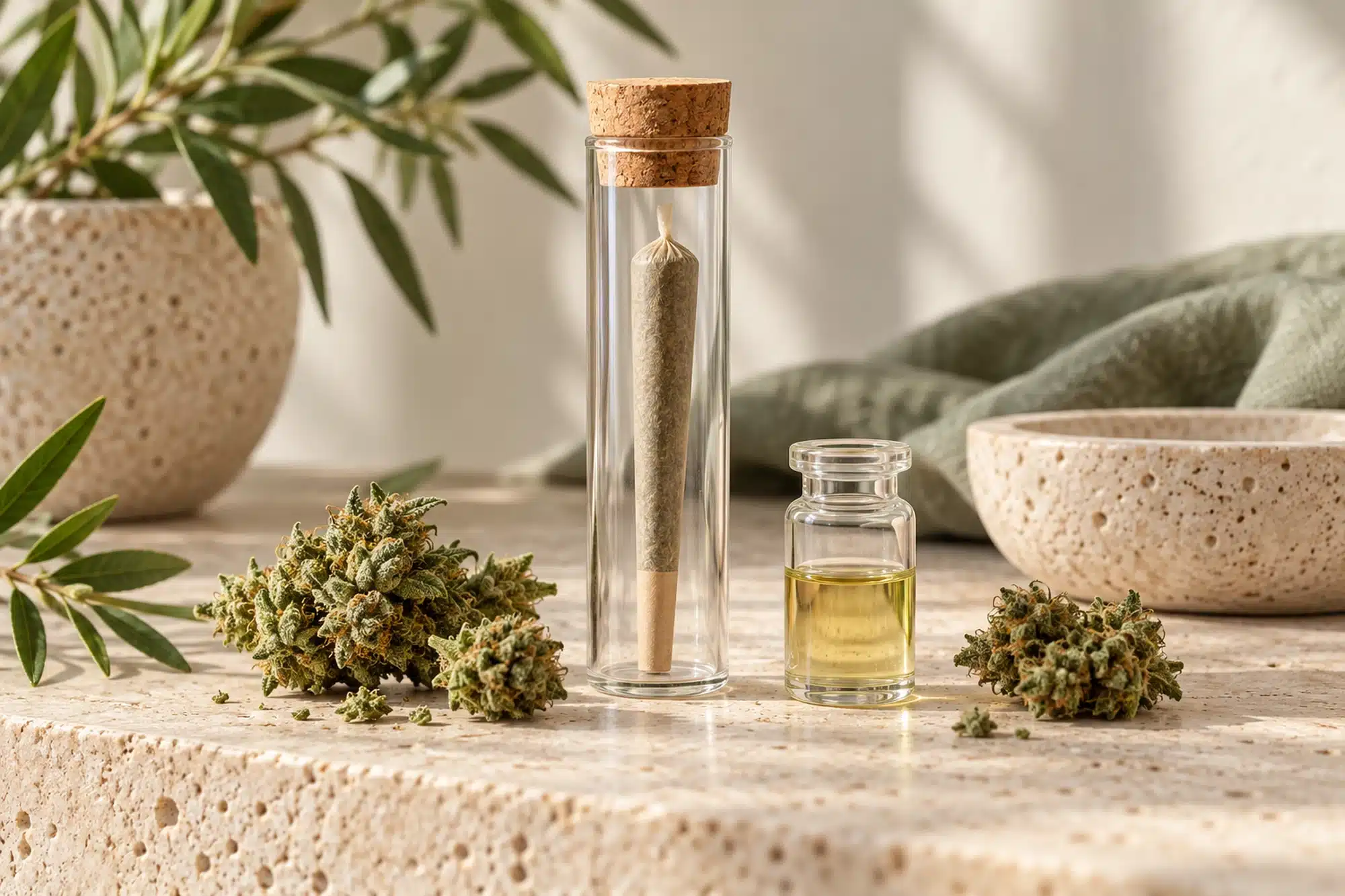
A preroll is a cone or roll already filled by the manufacturer. The term refers to the presentation, not the exact composition of the filling. This may combine plant material and, depending on the recipe, an extract, a distillate, or other ingredients. None of these elements should be assumed to be present in the Rollz product without its technical data sheet and the documents corresponding to the batch.
"10-OH" is an abbreviation. In the world of cannabinoids, "OH" can indicate a hydroxyl group in a chemical name; however, the commercial abbreviation alone does not provide a complete analytical identity. It does not specify the full name, any isomers, or the presence of other cannabinoids. Therefore, it is essential to use the exact product name when discussing it and to ask what it refers to in that specific reference.
The site's general category discusses, among other things, 10-OH-HHC, a hydroxylated derivative associated with HHC. This should not lead to automatically renaming the preroll "10-OH-HHC" if its name or analysis does not explicitly state this. The distinction is crucial: a difference of just a few letters can refer to a different molecule or a formulation with multiple components.
"Rollz" here refers to the product line displayed on the website. The product name can help identify a specific item, but it is not a substitute for the batch number. Two units sold several months apart could belong to different batches. Therefore, a thorough check should link the product name, packaging, and laboratory results to the actual batch being offered.
The figure "50%": what is the denominator?
A percentage is always a fraction of a whole. Before interpreting it, ask, "50% of what substance, measured in what material?" If the manufacturer states 50% of a named cannabinoid in the final topping, the figure describes a possible mass concentration of that topping. If it refers to the purity of an ingredient incorporated before blending, the final concentration in the preroll may be different.
A purely theoretical example: an initial 1 g preparation containing 50% of a substance represents 500 mg of that substance in the preparation, if the value is a measured mass fraction. If this preparation is then mixed with 1 g of another material that does not contain the substance, the total content does not remain at 50%. The substance now represents 500 mg in 2 g, or 25% by mass. The same figure printed on two documents can therefore describe two different manufacturing steps.
Another possibility: "50%" could mean the sum of several cannabinoids, a rounded value, or a result of an analysis of the raw material. These variations cannot be deduced from a product photo. Look for a specific line on the product information sheet and in the analysis: name of the molecule, unit, matrix analyzed, and date.
It is also incorrect to interpret a 50% concentration as "50% effect" or a promise of relative potency. Chemical concentration does not measure an individual's response. This depends on the specific substance, its other constituents, the method of exposure, and numerous individual factors. For newer cannabinoids, clinical data is often lacking to make reliable comparisons.
Do the advertised 2g include the paper and filter?
The figure "2 g" presents a second ambiguity. Can it be interpreted as two grams of vegetable filling and extract ? The net weight designation and the definition of what is being weighed must be read. A preroll is an assembled product: the cone, any filter or tip, and the packaging also have mass. The consumable contents are not necessarily equal to the mass of a complete object weighed on a scale.
If the 2 g explicitly refers to the net mass of the final filling, and if this filling actually contains 50% of a given molecule by mass, then multiplication would give 2000 mg × 0.50 = 1000 mg of this molecule in the filling. However, this result is conditional: it confirms neither the identity of the molecule, nor the validity of the analysis, nor the actual mass analyzed. It also does not correspond to an inhaled quantity.
If the 50% content refers only to an extract present in a portion of the filling, you need to know the mass of that extract to calculate the total quantity. If the 2 g represents something other than the net mass of the mixture, you must first obtain the relevant mass. Therefore, presenting "1000 mg per preroll" as an established fact based solely on the wording would be unwise.
| Displayed indication | Useful information | Question to ask |
|---|---|---|
| Preroll | Pre-assembled format. | What is the detailed composition of its filling? |
| 10-OH | Reference name. | What is the full chemical name shown on the batch analysis? |
| 50 % | Proportion announced. | What compound and what substance is this percentage of? |
| 2 g | Announced commercial mass. | Does it refer to the trim alone or to the entire assembled set? |
| Rollz | Commercial range. | What batch number identifies the product sold today? |
Why an analysis of the extract is not always sufficient
Imagine that the manufacturer has an extract used in the preparation analyzed. The report certifies certain measurements of this extract. Once the extract is incorporated into a plant material, the final mixture may have a different content and other parameters that need to be monitored. A report on the ingredient is useful for traceability, but its scope must be clearly defined.
To interpret "50%" in a preroll, the most direct information would be a representative analysis of the final batch filling, using a method appropriate for the advertised substance. A properly taken sample is crucial: if the application of an ingredient is not homogeneous, a single small portion might not accurately represent all the units.
The issue of homogeneity is not a judgment made about this particular reference product; it is a general technical challenge with formulated products. A flower, an extract, and other potential ingredients do not have the same texture or distribution. The laboratory must know which matrix it is analyzing and use an appropriate method. Without this context, a precise figure in a table can give a misleading impression of certainty.
Also ask whether the document relates to the "finished" product after packaging or to an earlier stage. The batch number on the report must be matched to the one on the packaging or product sheet. An analysis of another fragrance, another series, or a similar raw material is not sufficient to confirm the quality of the preroll you will receive.
How to read the batch analysis certificate?
Start with the identifying information: laboratory name, date, sample, batch number, and the product or material described. Then check the results columns: molecule sought, value, unit, and method limits. A line labeled "10-OH" without a fully developed chemical name or clearly identified analytical standard may require further explanation.
Next, look at the entire measured profile, not just the line corresponding to the marketing claim. The delta-9-THC content, other cannabinoids, and any potential byproducts can be important for understanding the product and its status. A "not detected" statement should be interpreted in light of the detection or quantification limit specified by the laboratory; it does not mean that an absolute absence has been demonstrated.
Finally, distinguish between compositional analyses and contaminant analyses. A cannabinoid profile does not necessarily measure metals, pesticides, residual solvents, or microbiological contamination. Depending on the materials and processes used, other controls may be relevant. A document should not be presented as a universal certificate if it only covers one category of analyses.
To delve deeper into this topic, you can consult The French Hemp Empire's page on CBD certificates and laboratory analyses . The same traceability practices apply to a recent product: identify the batch, understand the methodology, and know exactly what the laboratory tested.
10-OH, 10-OH-HHC and HHC: avoid shortcuts
HHC is hexahydrocannabinol.In 2023, the ANSM (French National Agency for Medicines and Health Products Safety) announced its classification, along with that of two derivatives. 10-OH-HHC is another chemical name, associated with a hydroxylated derivative of HHC. Similar names and structural similarities do not imply perfect identity, identical effects, or identical legal status without verification of the relevant regulations.
The prefix "10-OH" alone may be insufficient to distinguish between several substances or formulations. Therefore, two assumptions must be avoided: assuming it is necessarily 10-OH-HHC because another product in the range bears that name; or assuming it is necessarily a distinct substance because the name is abbreviated. The batch technical document must clarify this ambiguity.
CBD and delta-9-THC are two other substances. Simply stating that a preroll is "hemp-based" doesn't rule out the possibility of added cannabinoids. Similarly, stating that a product is below the applicable delta-9-THC threshold doesn't automatically establish the status of each of its other molecules. The complete ingredient list remains the starting point.
If the documentation names isomers or similar forms, ask what is actually being measured and how the results are aggregated. A sum stated as "total cannabinoids" does not necessarily answer the question, "How much of the specifically identified 10-OH substance?" For a new cannabinoid, the quality of the analytical identification is just as important as the percentage printed prominently.
The legal status depends on the exact composition
The legality of a 10-OH preroll cannot be inferred from the word "hemp," the 0.3% delta-9-THC threshold, or its presence in a shop. In France, the list of narcotics has been amended several times to include named substances and certain chemical families.In particular, the ANSM (French National Agency for Medicines and Health Products Safety) published a classification of new cannabinoids in 2024.Therefore, to examine a product today, one must have the full name of each compound and compare its structure with the applicable regulations.
The 0.3% threshold stipulated in the French hemp regulations, specifically by thedecree of December 30, 2021, concerns the delta-9-THC content under the conditions specified in that decree. It is not a general authorization for any other cannabinoid. Therefore, a categorical legal response based on "10-OH 50%" and "2 g" would be unfounded.
If the product is intended for another country, the destination regulations must be checked separately. National regulations may differ. A statement such as "legal throughout Europe" cannot be inferred simply because a French website lists the product. A change in composition or wording may also render an older product information insufficient for assessing a more recent batch.
This caution should not make the process incomprehensible. The correct order is practical: obtain the complete composition, verify the analysis corresponding to the batch, consult the current regulations for the substances concerned, and consider the country of sale and shipment. If the identity of the substance remains unknown, the conclusion should remain open.
Is a 50% preroll "more powerful" than a 97% vape?
The comparison of the two percentages is tempting, especially when the references appear in the same category. However, these numbers may refer to different molecules, matrices, and measurement methods. A preroll contains plant material and possibly some preparation; a vape contains a formulation intended for a device. Their proportions do not directly measure the effects felt.
The route of exposure also differs. A percentage in a filling does not represent the amount absorbed by a person; neither does a percentage in a cartridge. Without robust comparative data on the exact compositions and conditions of use, claiming that a product is "half as strong" because 50 is close to half of 97 makes no scientific sense.
Specific human data on new cannabinoids remains limited. Potential effects may vary from person to person and from batch to batch; there is no simple equivalence with CBD, HHC, or THC based solely on the stated concentration. If a product is likely to impair alertness, driving and operating machinery should be avoided.
Does the ready-to-use format eliminate the need for verification?
A pre-assembled product makes choosing a format easier, but also reduces the opportunity to examine each component separately before purchase. Therefore, the product information sheet and traceability play a crucial role. Look for the net weight of the filling, the identity of the cannabinoid(s), their concentration in the finished product, the general nature of the plant material, and the batch number.
Aromatic descriptions, when they exist, outline a specific sensory experience. They do not guarantee precise botanical genetics or a measured presence of particular terpenes. Smell alone cannot determine the proportion of cannabinoids. Do not substitute flavor preference for examining the composition.
The cone's external appearance does not prove that its contents are homogeneous. Even a visually uniform product must be evaluated based on the manufacturer's information and, when available, on appropriate analyses. If the paper, tip, or other assembly components are included in the total mass, the product information sheet should clearly state this to allow for interpretation of the advertised 2g weight.
Proper storage is important after receipt. Follow the packaging instructions, and protect the product from moisture, heat, and access by minors. Any product with an unusual odor, visible mold, or damaged packaging should be set aside and reported to the seller with its batch number.
Questions to ask the seller before buying
- To which specific chemical substance does "10-OH" correspond? Ask for its expanded name as it appears on the analysis, without assigning it an identity by comparison with another reference.
- What exactly does "50%" represent? Is it a measure of the final filling, the content of an extract used, or a sum of several cannabinoids?
- What does the "2g" include? Is the net mass of the filling separate from the paper, filter, and packaging?
- Does the certificate relate to the batch currently being sold? Compare the reference, batch number, and date.
- What other components were measured? The delta-9-THC content and other cannabinoids provide a more complete picture.
- What method supports the identification and percentage? The laboratory must be able to distinguish the reported substance from the related compounds being sought.
A partial response alone does not prove a product defect, but it does limit what you can verify. If the provided documentation relates only to one ingredient or a previous batch, ask for a link between this analysis and the proposed unit. If this link does not exist, it is best not to assume that the label figures are definitive.
Precautions adapted to a new cannabinoid
This type of product is intended for adults. Cannabinoids that may alter perception or attention require avoiding driving and activities demanding sustained alertness. The effects experienced cannot be guaranteed based on concentration levels, customer reviews, or chemical similarity to a better-known substance.
Inhaling smoke also carries its own respiratory risks, distinct from those related to the specific cannabinoid. A preroll is not a neutral route of exposure simply because its filling is derived from hemp. The product is not a treatment, and no therapeutic claims are implied by the label "10-OH.".
If you are pregnant, breastfeeding, ill, or taking medication, seek medical advice and avoid experimenting with cannabinoids that are not well studied. Combining cannabinoids with alcohol or other substances that impair alertness increases the risk of adverse reactions. If you experience a severe or unusual reaction, contact emergency services immediately and keep the packaging to facilitate batch identification.
10-OH 50% 2g Preroll FAQ
Does the 10-OH 50% preroll contain 1 g of active molecule?
Only under one specific assumption: 2 g must represent the net mass of the final filling, and 50% must be the measured mass content of an identified molecule in that same filling. Without this information, the calculation 2 g × 50% does not prove the actual quantity.
Is "10-OH" always synonymous with 10-OH-HHC?
No, the abbreviation of a trade name is not sufficient to establish this identity. It may refer to a shortened name, but only the batch composition document can confirm the substance present. Retain the name "10-OH" until the full name is documented.
Why might the percentage of the extract differ from that of the preroll?
Because one raw material can be mixed with another. The proportion measured before blending is no longer necessarily the proportion in the final mixture. An analysis report must specify the material tested.
Is a product with less than 0.3% THC automatically compliant?
No. The delta-9-THC content is an important factor in hemp, but the status of other substances present must be checked separately, as well as other requirements applicable to the product.
Can we directly compare a 50% preroll and a 97% vape?
Numbers alone are not enough. It is necessary to verify the compound targeted by each product, the analyzed product, the units used, and the nature of the medium. Even a correct chemical comparison does not allow us to deduce an equivalence of perceived effects.
Which document should be requested first?
Request the full composition sheet and certificate of analysis for the lot currently being sold, including the expanded identity of "10-OH", the percentage basis, the net weight of the topping, and other cannabinoids measured.
A reliable four-step label reading
Follow the instructions in order: preroll describes the format; 10-OH must be expanded to its chemical identity; 50% must be linked to a compound and a matrix; 2 g must be defined as a precise net mass. Only after linking these four elements to the same batch does calculating a total quantity become relevant.
The product can then be reviewed with the relevant documentation in the 10-OH range. If something is missing, ask the question rather than inventing the answer. This is the most useful way to compare a new product without confusing a commercial percentage, a laboratory measurement, and a promise of effects.