HHC has been classified as a narcotic in France since June 13, 2023. The National Agency for the Safety of Medicines and Health Products (ANSM) added hexahydrocannabinol (HHC), along with two of its derivatives, HHCO and HHCP, to the list of narcotics, making their production, import, sale, possession, and use illegal throughout France. A second decision, published on June 3, 2024, expanded this list to include other semi-synthetic cannabinoids, including THCP, THCA, and H4-CBD.
Key points to remember immediately:
- June 13, 2023 : date of entry into force of the ban on HHC, HHCO and HHCP (ANSM decision).
- June 3, 2024 : Extension of the list of narcotics to include new cannabinoids (THCP, THCA, H4-CBD, H2-CBD, HHCPO and others).
- Legal basis : Decree of 22 February 1990 as amended, relating to the list of narcotics (articles L.5132-7 and R.5132-86 of the Public Health Code).
- Competent authority : ANSM, based on reports from the centers for evaluation and information on drug dependence and addiction vigilance (CEIP-A).
- Scope : the entire chain is concerned, from manufacturing to final consumption.
Key points
| Point | Details |
|---|---|
| HHC ban | Classified as a narcotic since 13/06/2023; THCP, THCA and H4-CBD added on 03/06/2024. |
| Penalties incurred | Up to 1 year imprisonment and a €3,750 fine for simple use. |
| Health risks | CEIP-As have reported serious side effects: convulsions, loss of consciousness, tachycardia, paranoia. |
| Check for legal CBD | Require a COA linked to the batch number, delta-9 THC level < 0.3%, ISO 17025 accredited laboratory. |
| Thefrenchhempempire | Supplier of compliant CBD products with accessible COA, full traceability and delivery in France. |
Table of Contents
- What is HHC and how does it differ from THC and CBD?
- What health risks motivated the ban on HHC?
- What does the ban cover in practice: texts, dates and sanctions?
- I have consumed HHC or observed an adverse effect: what should I do?
- What legal alternatives are there in France now that HHC is banned?
- Practical checklist to verify that a CBD product is legal in France
- Chronology and official references to consult
- How does a legitimate supplier guarantee the conformity of its products?
- Why compliance and transparency are not optional
- Compliant CBD products, tested and delivered in France
- Sources
What is HHC and how does it differ from THC and CBD?
Hexahydrocannabinol (HHC) is a cannabinoid obtained primarily through semi-synthesis from CBD extracted from hemp. Its chemical structure is similar to delta-9 THC, with a tetrahydropyranyl ring that gives it increased stability against heat and oxidation.
CBD (cannabidiol), on the other hand, is a non-psychoactive cannabinoid extracted directly from the hemp plant without significant chemical transformation.
| Molecule | Natural presence | Psychoactivity | Legal status in France |
|---|---|---|---|
| CBD | Yes (hemp) | No | Legal under certain conditions (THC < 0.3%) |
| Delta-9 THC | Yes (cannabis) | Yes | Amazing, illegal |
| HHC | Minute traces | Yes | Narcotic, banned since 13/06/2023 |
| HHCO / HHCP | No (summary) | Yes (powerful) | Narcotic, banned since 13/06/2023 |
| THCP | No (summary) | Yes (very powerful) | Narcotic, banned since 03/06/2024 |
| THCA | Yes (THC precursor) | Yes (after decarboxylation) | Narcotic, banned since 03/06/2024 |
| H4-CBD | No (hemisynthesis) | Potentially | Narcotic, banned since 03/06/2024 |
Legality in France depends less on the marketing label than on the regulatory classification of the substance.
To understand the differences between CBD and THC and their legal implications, a thorough reading of these chemical distinctions remains essential before any purchase.
What health risks motivated the ban on HHC?
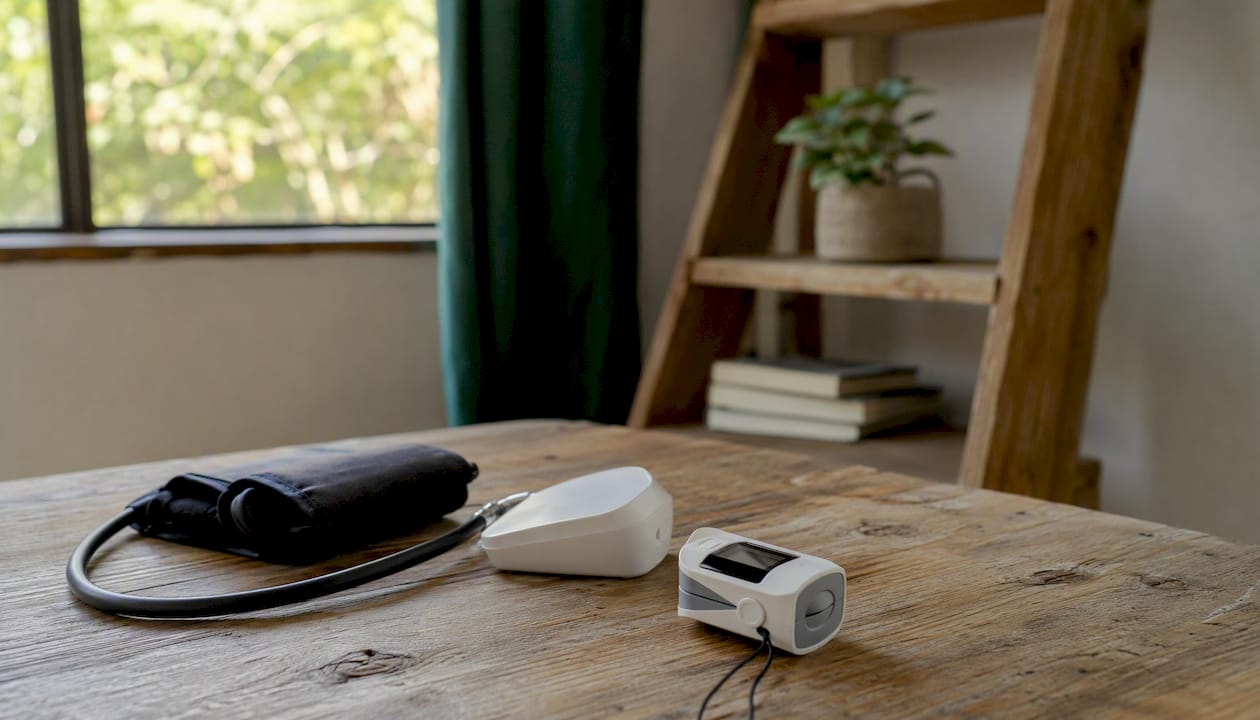
The ban on HHC and its derivatives is not an arbitrary administrative decision. It is based on concrete reports transmitted by the CEIP-A, a national network responsible for monitoring the adverse effects of psychoactive substances and alerting health authorities.
The serious side effects reported by the CEIP-A and relayed by the ANSM in its decision of June 3, 2024 include, in particular:
- vomiting and nausea.
- Loss of consciousness and confusional states.
- Convulsions, including in consumers with no history of epilepsy.
- Paranoia and acute anxiety episodes.
- Tachycardia and high blood pressure.
- In the most severe cases, states close to a coma
CEIP-A reports : Addictovigilance centers have documented serious immediate effects linked to semi-synthetic neo-cannabinoids, motivating the use of the emergency procedure by the ANSM to accelerate their classification as narcotics.
The ANSM (French National Agency for Medicines and Health Products Safety) has also determined that HHC presents a risk of abuse and dependence equivalent to that of cannabis, which justifies its inclusion on the list of narcotics rather than on the list of psychotropic substances subject to a less restrictive regime. The variability of concentrations in commercial products, often lacking independent analysis, amplifies this risk: without a certificate of analysis (COA), the consumer is unaware of the actual dose ingested.
What does the ban cover in practice: texts, dates and sanctions?
Prohibited acts
Since June 13, 2023, all transactions involving HHC, HHCO, and HHCP have been prohibited in France. Since June 3, 2024, this prohibition has extended to THCP, THCA, H4-CBD, H2-CBD, and several other structures of the benzo[c]chromene ring. Specifically, the following are prohibited:
- Production and manufacturing, including by semi-synthesis .
- Importexport .
- Possession , regardless of the quantity .
- The sale, provision and distribution free of charge.
- Foruse .
Reference texts
The decree of February 22, 1990, as amended, establishes the list of narcotics in France. The ANSM decisions of June 13, 2023, and June 3, 2024, amended this decree to include HHC and its derivatives, in accordance with Articles L.5132-7 and R.5132-86 of the Public Health Code. These texts can be consulted on Légifrance and in the public database of medicines.
The criminal penalties incurred
The possession and use of narcotics are punishable under Article L.3421-1 of the Public Health Code, which provides for up to one year of imprisonment and a €3,750 fine for simple use. These provisions apply equally to private individuals and professionals.
Le Monde confirmed that several European countries adopted similar measures during the same period, a sign of continental regulatory convergence on these substances.
I have consumed HHC or observed an adverse effect: what should I do?
In case of serious symptoms (loss of consciousness, convulsions, breathing difficulties), the absolute priority is to call 15 (SAMU) or 112.
Immediate actions to report to emergency services:
- The name of the product consumed and its form (flower, vape, resin, e-liquid).
- The estimated quantity and time of consumption.
- The symptoms observed and their evolution.
- The age and weight of the person concerned, if possible.
Pro tip: Keep the packaging, batch number, and product label. Take a photo before handing the packaging over to emergency services. This information allows health authorities to trace the affected batch and warn other consumers.
To report an adverse event to health authorities, the official Signalement is accessible to all citizens. This reporting directly informs the CEIP-A surveillance system and contributes to the early detection of new risks.
For support with addiction or problematic consumption, the Drugs lists local support structures (CSAPA, consultations for young consumers, hospital addiction services).
What legal alternatives are there in France now that HHC is banned?
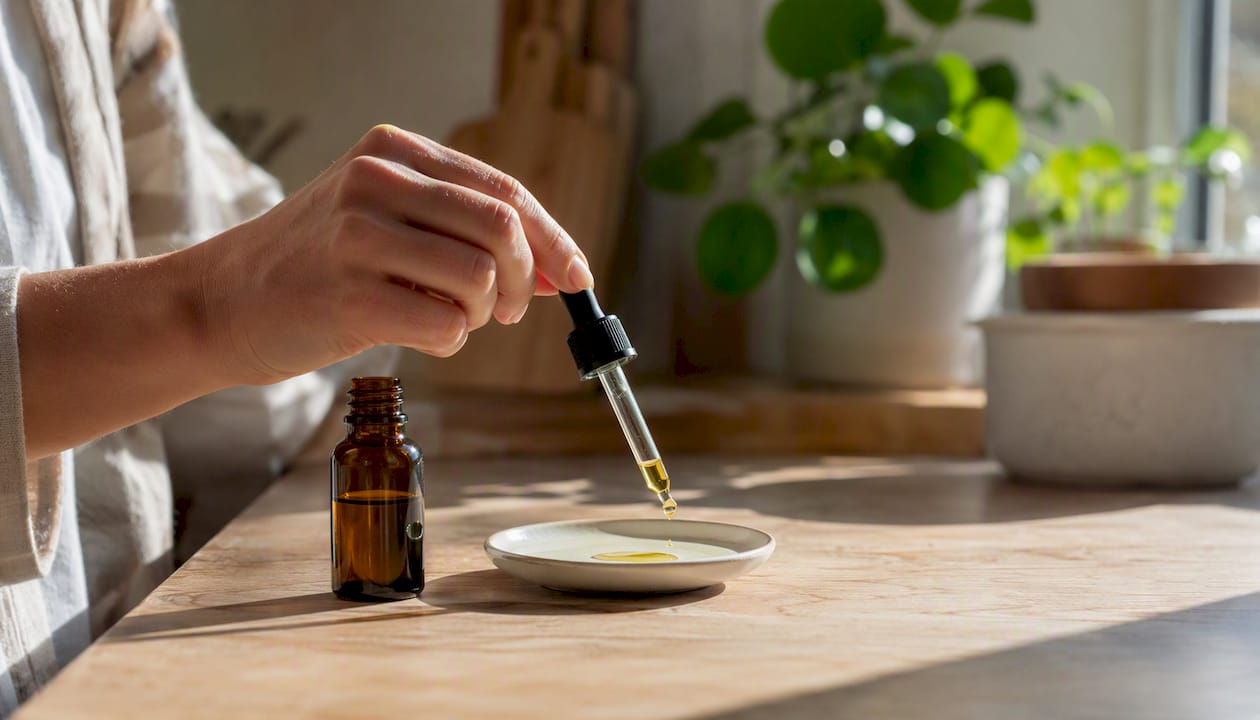
The ban on HHC does not leave consumers without options. CBD-based products remain legally marketable in France, provided they comply with specific regulations.
Legally available categories:
- CBD flowers and resins from authorized hemp varieties, with a delta-9 THC level of less than 0.3%.
- CBD oils (full spectrum, broad spectrum or isolate), accompanied by a recent COA.
- CBD e-liquids and vapes that comply with vaping product regulations.
- CBD wellness products (cosmetics, food supplements) subject to applicable sector regulations.
A CBD product legal in France must have a delta-9 THC content of less than 0.3%, be accompanied by a Certificate of Analysis (COA) issued by an accredited independent laboratory, and make no claims of any psychotropic effects. Any product sold without these guarantees presents a regulatory and health risk.
Always avoid products that claim to produce a "high," "stoned," or "psychoactive" effect, even if they are labeled "legal." These claims often indicate the presence of semi-synthetic cannabinoids or cannabinoids classified as narcotics. To explore the types of CBD legal in Europe and their compliance requirements, consulting the available regulatory guides will help you make informed choices.
Thefrenchhempempire offers a range of compliant premium CBD flowers and legal CBD resins accompanied by accessible COAs, constituting an example of a supplier applying these traceability criteria.
Practical checklist to verify that a CBD product is legal in France
Before making any purchase, checking the following points will help to eliminate non-compliant products.
On the label and product information sheet:
- Origin of the raw material (variety of hemp, country of cultivation).
- Declared delta-9 THC level, less than 0.3%.
- Mention of an accredited independent laboratory that carried out the analyses.
- Batch number allowing the product to be linked to its COA.
- No claims of psychoactive effects.
In the Certificate of Analysis (COA):
- Analytical method used (preferably HPLC or GC-MS).
- Date of issue of the COA (less than 12 months for fresh flowers).
- Total THC level including THCA decarboxylation (formula: total THC = delta-9 THC + 0.877 × THCA).
- Detection and quantification limits are clearly indicated.
- Laboratory accreditation (ISO 17025 standard or equivalent).
Pro tip: Always ask the seller for the batch number and verify that it exactly matches the COA provided. A generic COA not linked to a specific batch offers no guarantee about the product you actually receive.
Warning signs to watch out for include: claims of a "high" or "legal high," a complete lack of Certificate of Authenticity (COA), abnormally low prices for products supposedly with high concentrations, and sellers unable to provide traceability information. For more in-depth information on cannabinoid levels in CBD flowers and their proper measurement, detailed technical resources are available.
Chronology and official references to consult
Regulatory decisions were made in rapid succession. Here are the main milestones:
- June 3, 2024 : Extension of the list of narcotics to include new cannabinoids (THCP, THCA, H4-CBD, H2-CBD, HHCPO and related structures), based on CEIP-A reports.
Official references to consult:
- ANSM, press release of June 13, 2023 : reference text on the initial classification of HHC.
- ANSM, decision of June 3, 2024 : extension to neo-cannabinoids.
- Légifrance : consolidated text of the decree of February 22, 1990, as amended.
- Public database of medicines : decrees and amending decisions.
- Reporting : platform for reporting adverse effects.
How does a legitimate supplier guarantee the conformity of its products?
Regulatory compliance involves a set of documented and verifiable practices.
Expected practices of a compliant supplier:
- Publication of COAs for each batch sold, accessible directly on the product pages.
- Full traceability of the raw material: hemp variety, country of origin, phytosanitary certificate.
- Internal control of batches before sale, with a withdrawal procedure in case of non-compliance.
- Clear product descriptions, without unauthorized therapeutic claims or terms suggesting psychoactive effects.
- Regularly updating regulatory information provided to clients.
Thefrenchhempempire applies these practices by making its product Certificates of Analysis (COAs) accessible, ensuring the traceability of its supplies, and maintaining active regulatory monitoring. The CBD and regulatory news published on the website illustrates this commitment to transparency towards consumers.
A supplier who refuses to provide the COA for a specific batch or who cannot indicate the precise origin of their raw material does not meet the minimum traceability requirements expected in this sector.
Why compliance and transparency are not optional
The proliferation of bans between 2023 and 2024 reveals a reality that many market players preferred to ignore: French health authorities have demonstrated their ability to act swiftly, within weeks, as soon as serious reports are received from the CEIP-A (Regional Centers for Information and Prevention of Drug Abuses). HHC was presented as a "legal" substitute for cannabis; it is now classified as a narcotic. THCP, THCA, and H4-CBD were added less than a year later.
What deserves emphasis is the logic behind these decisions: the ANSM (French National Agency for Medicines and Health Products Safety) does not classify a substance because it is popular or because the media seizes upon it. It acts on the basis of documented reports of serious side effects, transmitted by a network of healthcare professionals. This means that any semi-synthetic neo-cannabinoid currently marketed as "legal" could be banned within months, as soon as reports accumulate.
For a consumer, prudence doesn't mean avoiding CBD, but demanding traceability. A product with a recent Certificate of Analysis (COA), linked to a specific batch, and produced from a regulated hemp variety, doesn't present the same risk profile as a semi-synthetic substance sold without independent analysis. The distinction is technical, but its consequences are tangible: on one hand, a verifiable and legal product; on the other, a substance whose actual concentration and effects remain unknown until consumption.
Compliant CBD products, tested and delivered in France
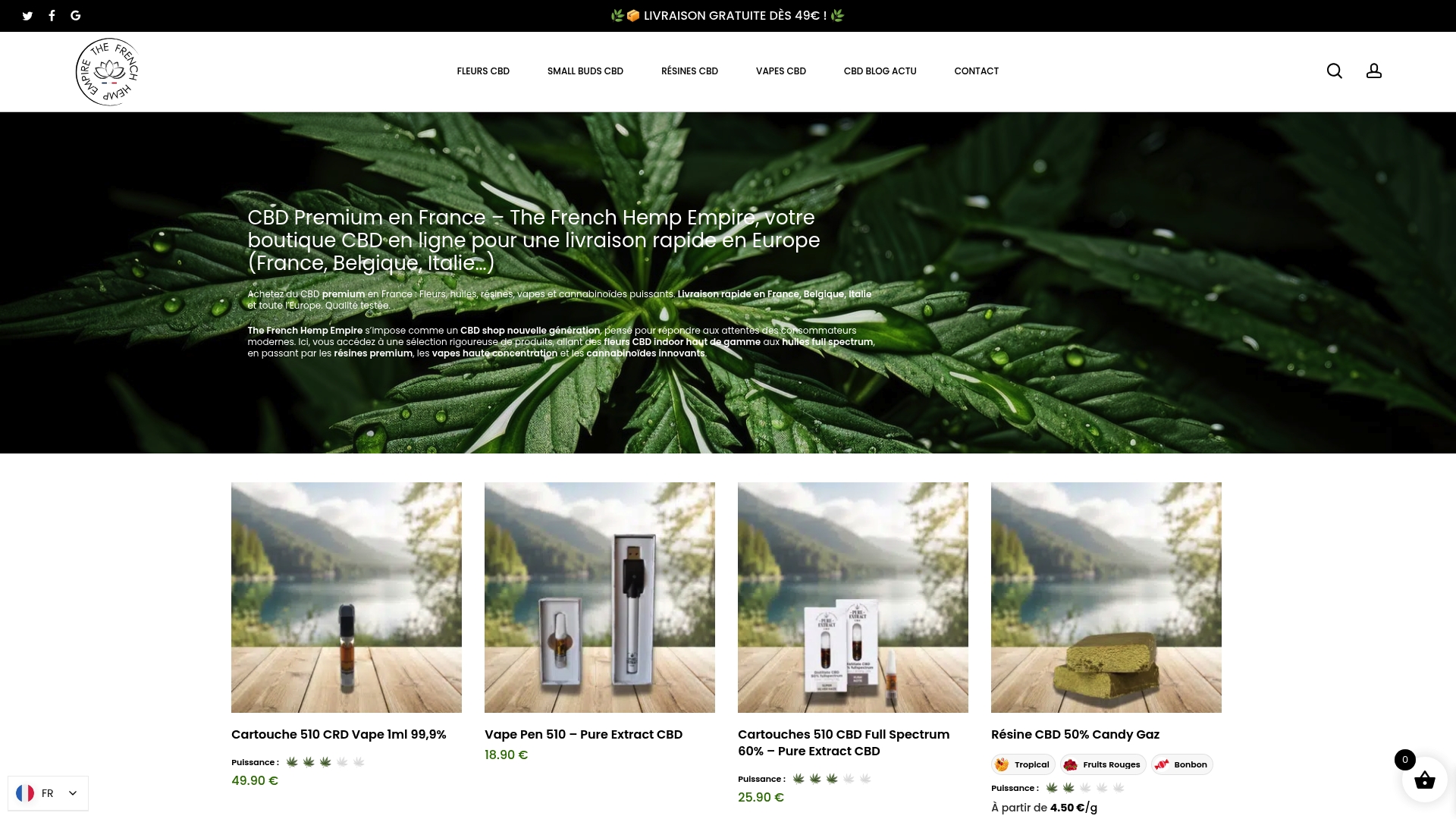
Thefrenchhempempire offers a selection of CBD products legal in France, each accompanied by an independent laboratory certificate of analysis linked to its batch number. CBD flowers, CBD resins, vapes, and CBD e-liquids: every product complies with the 0.3% delta-9 THC threshold and benefits from complete traceability of the raw materials. Delivery is available in France, with customer service available for any COA requests or questions regarding product compliance. To explore the range and access product sheets with their analyses, visit the premium CBD flower shop directly.
Sources
- The ANSM classifies hexahydrocannabinol (HHC) and two of its derivatives on the list of narcotics – ANSM
- The ANSM adds new cannabinoids to the list of narcotics
- Cannabis: HHC banned in France, announces the Medicines Agency
- Cannabis: HHC will be banned in France from Tuesday – Le Monde
- Reporting
This article provides general information for educational purposes. It does not constitute personalized legal advice. For any specific situation, consult a legal professional or the relevant authorities.
This article provides general information and is not a substitute for professional medical advice. Consult a qualified healthcare professional about your specific situation before taking any action based on this content.