By 2026, several legal HHC substitutes will be available in France: CBD flowers and resins, hemp-based oils and e-liquids that comply with the 0.3% THC limit, as well as cannabinoids not classified as narcotics, such as CBG and CBN. These legal HHC options constitute the categories accessible for purchase by any consumer wishing to remain compliant with French regulations.
The main compliant alternatives to consider are:
- CBD flowers and CBD resins : from approved hemp varieties, with THC ≤ 0.3%, available in store and online.
- CBD oils : full spectrum, broad spectrum or isolate, provided that the THC content remains below the legal threshold.
- CBD e-liquids and vapes : inhalable format, high bioavailability, subject to the same compliance requirements.
- CBG (cannabigerol) and CBN (cannabinol) : cannabinoids not classified as narcotics, present in legal hemp-derived products.
- THCV, THCP, H4CBD : emerging molecules whose regulatory status remains to be verified on a case-by-case basis with theANSM before any purchase.
- 10-OH-HHC : potentially psychoactive HHC metabolite, not formally classified to date but to be approached with particular caution.
For each of these categories, requiring a certificate of analysis (COA) issued by an independent laboratory and verifying the traceability of the batch remains the minimum condition for a secure purchase.
Table of Contents
- Is HHC really banned in France, and what does the law say in 2026?
- What types of legal products can one buy in France today?
- How do the effects of these alternatives compare to HHC?
- How can I verify that a product is legal and safe before buying it?
- How to choose the right product and the right seller in France?
- What health and legal risks should you be aware of?
- Why is seller traceability crucial?
- Key points
- A commitment to traceability and consumer safety
- Compliant and traceable products, available now
- Official sources and recommended reading
Is HHC really banned in France, and what does the law say in 2026?
The French National Agency for Medicines and Health Products Safety (ANSM) has officially HHC (hexahydrocannabinol), HHCO, and HHCP to its list of narcotics, effective June 13, 2023. Since that date, the production, sale, and use of these three molecules have been prohibited in France. This decision follows warnings issued by addiction monitoring experts, who highlighted the structural and pharmacological similarities between HHC and THC, particularly their shared affinity for CB1 receptors in the endocannabinoid system.
Legal framework applicable to hemp-derived products in France: any product derived from Cannabis sativa L. and legally marketed must have a THC content of 0.3% or less in the whole plant, in accordance with Decree No. 2022-867 of June 9, 2022, published on Légifrance. This threshold applies to flowers, resins, oils, and e-liquids. Exceeding this limit exposes both the seller and the buyer to criminal prosecution.
The regulatory framework is not limited to the three molecules classified in 2023. New semi-synthetic substances continue to appear on the European market, and the EMCDDA (European Monitoring Centre for Drugs and Drug Addiction) network has warned of the growing diversity of these cannabinoids, calling for increased monitoring. In France, the ANSM (National Agency for Medicines and Health Products Safety) can issue additional classifications by ministerial decree at any time. For molecules whose status is not yet determined, direct consultation of the texts on Légifrance (the French legal database) or the ANSM website remains the only reliable source.

What types of legal products can one buy in France today?
The legal HHC solutions available on the French market fall into several categories, each with its own characteristics in terms of bioavailability, cannabinoid profile and required controls.
-
CBD flowers : the most common form, derived from certified hemp varieties. Compliance with the THC threshold ≤ 0.3% must be attested by a Certificate of Authenticity (COA) for each batch, as the content can vary depending on the harvest and drying conditions. Premium CBD flowers of superior quality exhibit a complete terpene profile and full traceability of origin.
-
CBD resins : concentrated extracts from the plant, with a higher cannabinoid content. The risk of analytical variability is higher than for flowers; a recent Certificate of Analysis (COA) (dated within the last six months) is essential. Legal, compliant CBD resins will display the batch number and extraction method on the label.
-
CBD oils : available in full spectrum (containingtraces of THC below the legal limit), broad spectrum (THCremoved), or isolate (pure CBD). Full spectrum offers a potentially stronger entourage effect, but requires rigorous verification of residual THC content.
-
CBD e-liquids and vapes : inhalation provides faster bioavailability than oral administration. Puffs and 510 cartridges must state the CBD concentration, the absence of prohibited substances, and include a Certificate of Analysis (COA) covering solvent residues and heavy metals. Compliant CBD vapes meet these requirements.
-
CBG (cannabigerol) : a biosynthetic precursor of CBD and THC, not classified as a narcotic. Its effects are generally described as modulating, without marked psychoactivity. Available as an oil, flower, or enriched resin.
-
CBN (cannabinol) : a breakdown product of THC, present in low concentrations in mature plants. Not classified as a narcotic in France. Often associated with relaxing properties, particularly for sleep. For a detailed comparison, CBG, CBN, and CBD details their different effects.
-
THCV, THCP, and H4CBD : emerging cannabinoids whose legal status in France is not uniformly established. Some may have sufficient affinity for CB1 receptors to produce effects similar to THC. Their consumption requires prior verification of their regulatory status with the ANSM (French National Agency for Medicines and Health Products Safety).
-
Edibles (gummies) and food resins : this category is subject to novel food regulations at the European level. The risks of inaccurate labeling are particularly high in this segment; a batch analysis covering solvent residues and the exact cannabinoid content is essential before any purchase.
How do the effects of these alternatives compare to HHC?
HHC is a semi-synthetic molecule with psychoactivity similar to that of delta-9-THC, producing euphoric effects, altered perception, and a risk of addiction documented by addiction monitoring experts. The legal alternatives available in France fall on a very different spectrum.

CBD remains the gold standard for non-psychoactive substances: it does not induce euphoria or cognitive impairment, but can produce noticeable relaxation, anxiety reduction, and a mild sedative effect at high doses. Its duration of action varies depending on the route of administration: approximately 15 to 30 minutes by inhalation, and 1 to 2 hours orally. To understand precisely what the law allows regarding the effects of CBD, the page "CBD and the Legal THC Threshold" provides helpful clarifications.
CBN has a mild sedative effect, often described as more pronounced than that of pure CBD, without reaching the psychoactivity of HHC. CBG, on the other hand, is more associated with mood- and concentration-modulating effects, without marked sedation.
Pro tip: Oral administration (oil, gummies) prolongs the duration of action and delays the onset of effects by 30 to 90 minutes, depending on individual metabolism. Starting with a low initial dose and gradually increasing it allows you to assess your personal response without risk of overdose.
Emerging cannabinoids like THCV and THCP present a more complex situation. Pharmacology specialists have explained that derivatives synthesized from CBD can have sufficient affinity for CB1 receptors to produce effects similar to THC, thus justifying their regulatory monitoring. THCP, in particular, exhibits a significantly higher affinity for CB1 receptors than delta-9-THC, according to available pharmacological data. Therefore, these molecules cannot be considered non-psychoactive alternatives without prior verification.
How can I verify that a product is legal and safe before buying it?
The main source of risk for consumers does not always lie in the molecule itself, but in the opacity of the market: numerous seizures have revealed products labeled "CBD" that actually contained HHC or other semi-synthetic cannabinoids. The most effective protection remains documented transparency by batch.
Items to check on the Certificate of Analysis (COA):
- Complete cannabinoid profile: CBD, CBG, CBN, THC (delta-9 and delta-8), THCA, with quantified values.
- Solvent residues: particularly relevant for resins and oils obtained through chemical extraction.
- Heavy metals: lead, cadmium, mercury, arsenic.
- Pesticides and mycotoxins for products from non-certified crops.
- Correspondence between the batch number shown on the COA and the one printed on the product packaging.
Pro tip: A Certificate of Authenticity (COA) that is more than 12 months old or does not include a specific batch number does not guarantee the conformity of the product you are holding. Requiring a COA for each batch, rather than a generic COA for each product reference, is the minimum recommended practice.
Warning signs to identify immediately:
- Complete absence of COA or refusal by the seller to provide it.
- COA issued by the manufacturer's internal laboratory, without third-party accreditation.
- Promises of "very powerful" or "HHC-like" effects without mention of the cannabinoid profile.
- Vague labeling on THC content (mention "< 0.3%" without precise value or batch number).
- Abnormally low prices, often correlated with a lack of serious analytical controls.
If in doubt, the recommended procedure is simple: request the Certificate of Authenticity (COA) before purchasing, refuse the product if it is not provided, and report any suspicious products to the ANSM (French National Agency for Medicines and Health Products Safety) via its reporting portal. CBD certificates and lab analyses explains how to read a lab report step by step.
How to choose the right product and the right seller in France?
Verifying the conformity of a product before purchase follows a methodical logic, whether the purchase is made in a physical store or online.
Practical steps for a secure purchase:
- Check the availability of the COA per batch on the product sheet or upon explicit request.
- Checking the origin of the hemp: certified variety, country of cultivation, agronomic conditions (organic or sustainable agriculture).
- Compare the declared CBD and THC levels with the values in the corresponding COA.
- Ask about the extraction method: supercritical CO2 extraction is the reference in terms of purity; chemical solvent extractions (butane, hexane) present higher residual risks.
- Evaluate the quality of customer service: a serious salesperson answers technical questions about analysis and traceability.
Specific questions to ask the seller:
- Which accredited laboratory performed the analysis, and what is its date?
- Does the COA correspond to the batch number of the product in stock?
- What extraction method was used?
- Are the terpenes present natural or artificially added?
- What is the return policy in case of a found non-conformity?
Specific warning signs related to online shopping:
- Product sheets without mention of the batch number or link to the COA.
- Marketing descriptions using terms like "HHC effect" or "maximum potency" without analytical data.
- Lack of complete legal information or physical address of the seller.
- Delivery times not specified or packaging without proper labeling.
Thefrenchhempempire is an example of a traceable seller: each product comes with its Certificate of Authenticity (COA), the origin of the hemp is documented, and the THC threshold of ≤ 0.3% is systematically verified for each batch. For further information on selection criteria, the guide to recognizing high-quality CBD details the standards to expect.
What health and legal risks should you be aware of?
Reported adverse effects of HHC and its derivatives include dizziness, tachycardia, anxiety, confusion, and, in the most severe cases, cardiovascular risks. These effects are explained by the structural similarity between HHC and THC, whose addictive profile has been documented by addiction experts.
Important note regarding 10-OH-HHC: this hydroxylated metabolite of HHC is not formally classified as a narcotic in France at present, but it remains potentially psychoactive and can cause false positives in saliva tests, with direct consequences for driving. Its consumption exposes individuals to a real legal risk, even in the absence of formal classification.
Hemp-based products may contain metabolites or impurities resulting from synthesis or processing, including hydroxylated and methoxylated derivatives, which alter their pharmacological properties and detection in biological tests. A product presented as legal may therefore produce a positive result in a saliva test if its composition has not been verified by a complete Certificate of Analysis (COA).
In terms of drug interactions, CBD inhibits certain cytochrome P450 enzymes, which can alter the metabolism of anticoagulant, antiepileptic, or immunosuppressant medications. At-risk populations, particularly pregnant or breastfeeding women and individuals undergoing psychiatric treatment, should consult a healthcare professional before consuming any cannabinoid products, including legal ones. Any adverse effects should be reported to the ANSM pharmacovigilance system.
Why is seller traceability crucial?
A well-written Certificate of Analysis (COA) is much more than a mere administrative formality: it precisely identifies the cannabinoids present, quantifies potentially harmful residues, and allows verification that the product exactly matches the delivered batch. Knowing how to read this document is a practical skill for any consumer of hemp-derived products.
What a reliable COA should contain:
- Identification of the accredited laboratory (COFRAC accreditation number or European equivalent).
- Date of analysis and batch number corresponding to the product.
- Quantified cannabinoid profile (minimum CBD, THC, CBG, CBN, THCA, CBDA).
- Results for solvent, heavy metal and pesticide residues, with reference limit values.
- Signature or stamp of the laboratory.
The expected best practices of a reputable seller extend beyond just the Certificate of Authenticity (COA). Transparency regarding the geographical origin of the hemp, the cultivation method, the extraction conditions, and the return policy are additional indicators of reliability. Experts in substance abuse prevention emphasize that the market's lack of transparency makes independent laboratory analyses essential for consumer safety.
Concrete proof to request before purchasing:
- Direct link to the COA per batch on the product sheet.
- Technical data sheet mentioning the hemp variety, country of origin and extraction method.
- Clearly documented shipping and return policy.
- Full contact details of the seller and legal notices in accordance with French law.
Thefrenchhempempire publishes its certificates of analysis on the dedicated CBD quality, analysis and traceability, with a systematic correspondence between batch number and laboratory report.
Key points
The legal alternatives to HHC available in France in 2026 are based on hemp-derived products that comply with the THC ≤ 0.3% threshold, accompanied by COAs per batch issued by accredited independent laboratories.
| Point | Details |
|---|---|
| Legal status of HHC | Classified as a narcotic by the ANSM since June 13, 2023; production, sale and use prohibited in France. |
| Compliant alternatives available | CBD flowers, CBD resins, oils, e-liquids and unclassified cannabinoids (CBG, CBN) below the THC threshold ≤ 0.3%. |
| Priority security criterion | Require a COA per batch covering cannabinoid profile, solvent residues and heavy metals. |
| Emerging molecules at risk | THCV, THCP, H4CBD and 10-OH-HHC require verification of legal status with the ANSM before purchase. |
| Thefrenchhempempire | Offers CBD flowers, resins, oils and vapes with COA per batch, documented traceability and THC ≤ 0.3% compliance. |
A commitment to traceability and consumer safety
The cannabinoid market in France is undergoing a period of regulatory consolidation. What concerns me most, observing the trends from 2023 to the present, is less the emergence of new molecules than the persistence of commercial opacity that exposes consumers to risks they are unaware of.
The truth that few guides clearly state: a product legally sold today may contain substances classified as dangerous tomorrow if the seller doesn't keep up with regulatory changes in real time. Compliance isn't a permanent state achieved once and for all; it's an ongoing process of batch verification, updated analyses, and monitoring of ANSM (French National Agency for Medicines and Health Products Safety) decisions.
The French Hemp Empire's commitment is based precisely on this principle: every product available on the site complies with the THC threshold ≤ 0.3% and is accompanied by a Certificate of Analysis (COA) issued by an independent laboratory. For any questions regarding product compliance or the interpretation of a certificate of analysis, the CBD news and customer support are available to assist consumers.
Compliant and traceable products, available now
Thefrenchhempempire offers a range of hemp-derived products designed for consumers who don't want to choose between quality and legal compliance. CBD flowers, resins, full-spectrum oils, e-liquids, and vapes: each product comes with its own Certificate of Authenticity (COA) for each batch, with traceability of the hemp's origin and systematic verification of the THC threshold ≤ 0.3%.
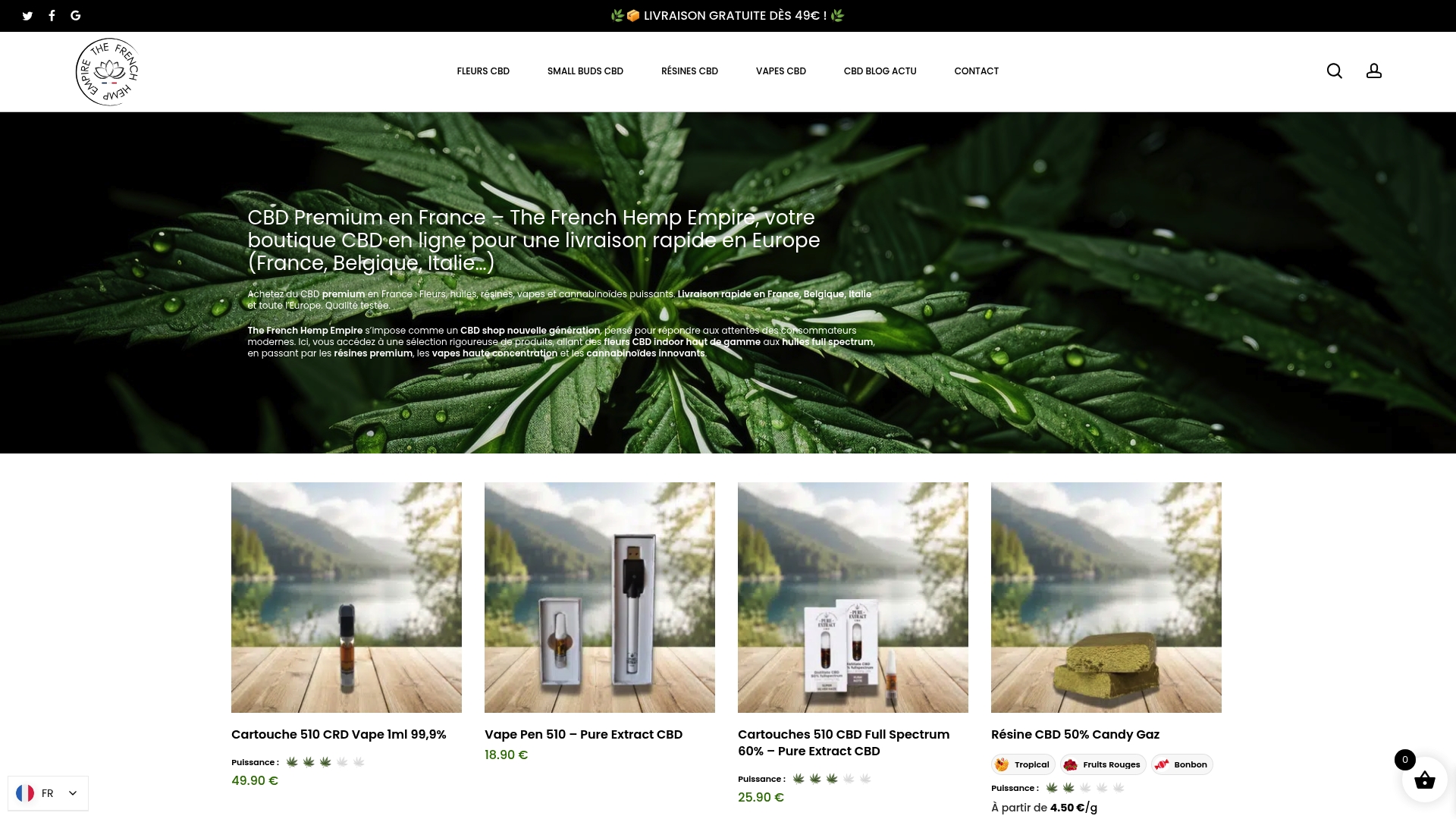
Discreet and fast delivery is available throughout Europe, with a clear return policy and customer service available to answer technical questions about analyses or product composition. Unlike the numerous offers on the market lacking analytical documentation, every order placed with Thefrenchhempempire is based on verifiable laboratory data.
To explore the full range and view available certificates of analysis, go directly to Thefrenchhempempire store.
This article provides general information for educational purposes. It does not constitute legal or medical advice. For any questions relating to your personal situation, consult a healthcare professional or check the applicable laws on Légifrance and the ANSM website.
Official sources and recommended reading
- ANSM — Classification of HHC, HHCO and HHCP on the list of narcotics : official reference decision for the legal status of HHC in France since June 2023.
- Légifrance : regulatory texts applicable to hemp-derived products, decrees and ministerial orders to be consulted regularly to follow developments.
- Hexahydrocannabinol — Wikipedia : synthesis of structural and pharmacological data on HHC and its derivatives.
- Thefrenchhempempire — CBD Certificates and Laboratory Analyses : A practical guide to reading and interpreting a COA, with examples of laboratory reports.
- Thefrenchhempempire — Check the traceability and origin of CBD : step-by-step method to validate the origin and conformity of a product before purchase.