The sale of CBD is legal in France, but driving after consuming it can expose you to criminal charges if THC is detected during a roadside check. This point is crucial: the commercial legality of a product does not equate to authorization to drive after using it. The Court of Cassation confirmed in June 2023 that the presence of THC detected after CBD consumption can constitute the offense of driving under the influence of narcotics, regardless of the product's legal origin.
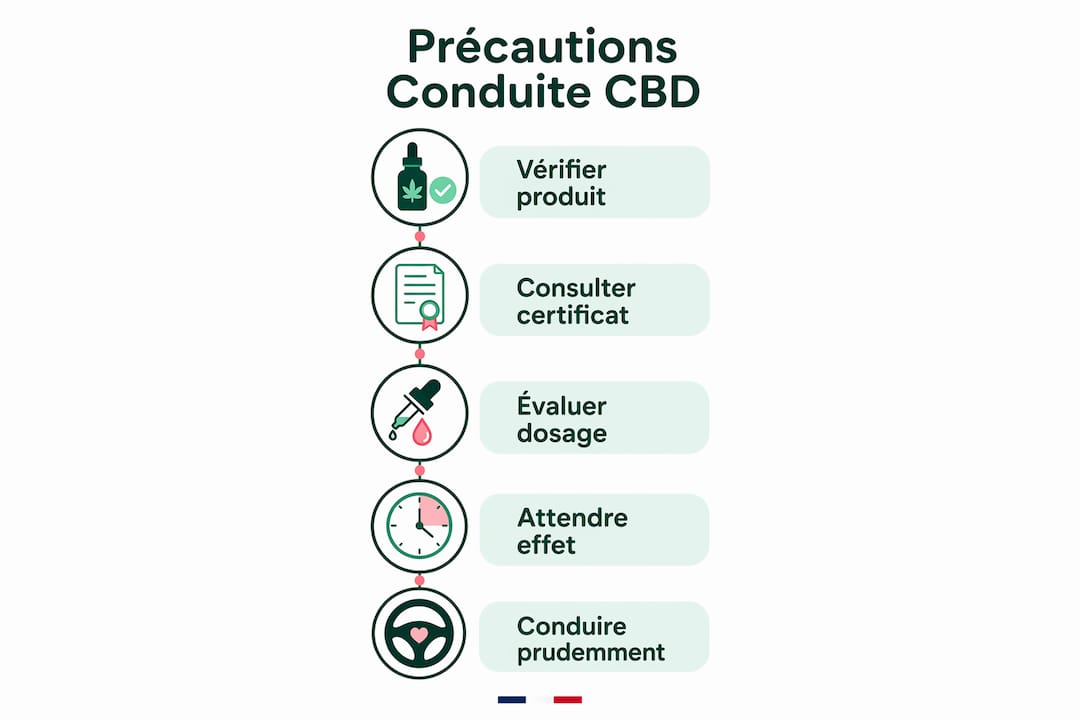
Before getting behind the wheel, here are the immediate actions to remember:
- Check that your product has a recent Certificate of Analysis (CoA) confirming a THC level that complies with regulations.
- Wait a sufficient amount of time after consumption before driving, the time may vary depending on the frequency of use.
- Do not drive if drowsy or impaired, regardless of the cause.
- In the event of a positive test, immediately request a counter-analysis of the blood and retain all proofs of purchase and analyses.
Table of Contents
- What is CBD and what are its effects relevant to driving?
- Full-spectrum, broad-spectrum, isolate: what is the risk of THC depending on the formulation?
- French legal framework: sale authorized, but driving under the influence of drugs prohibited
- How do roadside drug tests work and what are their limitations?
- What penalties do you risk if you test positive for THC after consuming CBD?
- Practical precautions to take before getting behind the wheel
- What to do if the saliva test is positive? Step-by-step action plan
- How to read a certificate of analysis to verify that a product is suitable for driving
- Key points
- What case law reveals about consumer perception of CBD
- Traceable CBD products for drivers who want to limit risks
- Useful sources and official references
What is CBD and what are its effects relevant to driving?
Cannabidiol (CBD) is one of the main cannabinoids extracted from hemp (Cannabis sativa L.). Unlike tetrahydrocannabinol (THC), it is not classified as a psychotropic substance and does not produce the euphoric or cognitively impaired effects characteristic of recreational cannabis. Its sale is regulated in France, subject to compliance with the legal threshold of 0.3% residual THC.
That said, CBD is not without physiological effects relevant to driving:
- Drowsiness and fatigue: high doses of CBD can induce sedation, especially in sensitive individuals or in the case of first-time use.
- Drug interactions: CBD inhibits certain liver enzymes (CYP450), which may amplify the effect of sedative, anxiolytic, or antiepileptic drugs.
- Individual variability: effects depend on the method of consumption, dosage, and metabolic profile of each person.
To delve deeper into the effects depending on the dosage, the guide on the effects and safe dosage of high-concentration CBD details these mechanisms. In terms of prevalence, CBD consumption has become widespread in France in recent years, making clear information about the risks while driving all the more necessary.
Full-spectrum, broad-spectrum, isolate: what is the risk of THC depending on the formulation?
The composition of a CBD product directly determines the risk of THC being present in the body after consumption. Three main categories exist on the market:
- Full-spectrum: contains all the cannabinoids of hemp, including residual THC up to 0.3%. This formulation presents the highest risk of detectable traces during testing.
- Broad-spectrum: the cannabinoids are retained, but THC is theoretically eliminated through a purification process. The risk is reduced but not eliminated, as traces may remain depending on the quality of the process.
- Isolate: a purified form containing only CBD (usually 99% or higher), without any other cannabinoids. This formulation is the least likely to produce a positive result for THC, provided the product is properly analyzed and certified.
An often underestimated point: many CBD products have discrepancies between their labeling and actual composition. A product labeled "broad-spectrum" or "THC-free" may contain undeclared traces if the manufacturer doesn't submit each batch to independent analysis. Low-priced products are particularly vulnerable to this risk.
To understand the differences between these types of legal CBD, a careful reading of the batch certifications remains essential before any purchase.
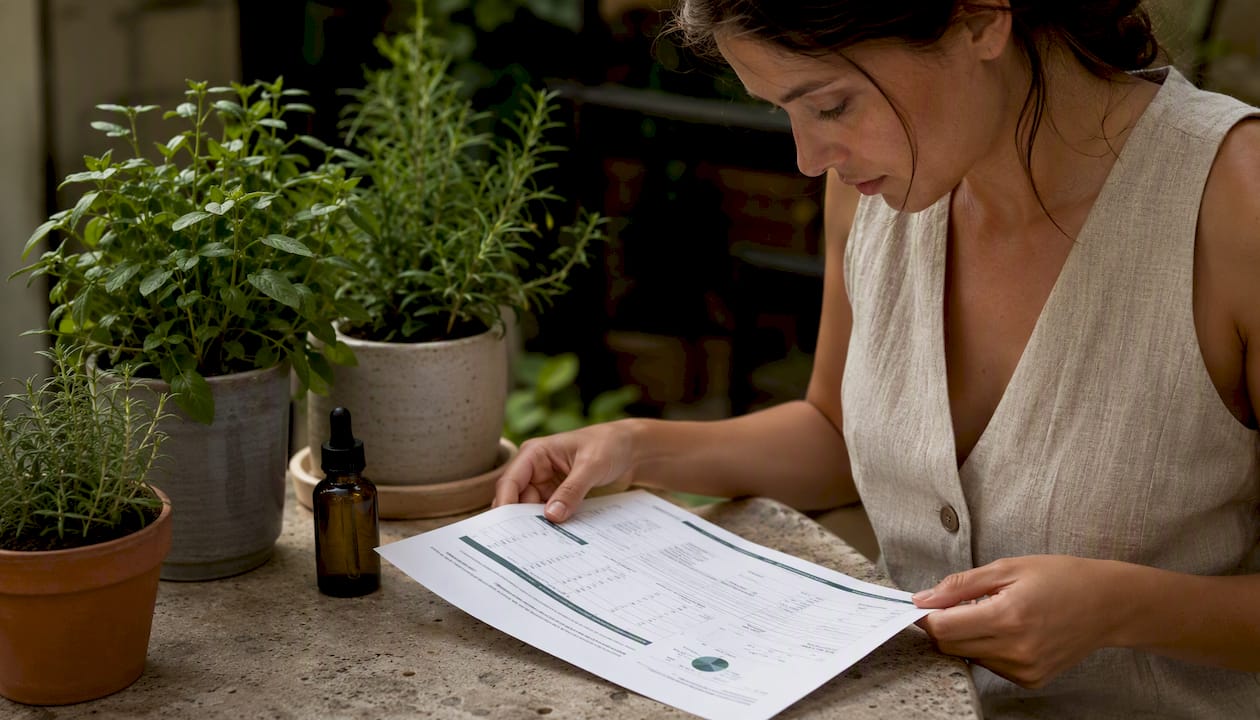
Pro tip: If you drive regularly, choose an isolate with a dated CoA linked to your product's batch number. A generic CoA not tied to your specific batch offers no real guarantee.
French legal framework: sale authorized, but driving under the influence of drugs prohibited
The distinction between the commercial legality of CBD and the prohibition on driving after consuming it is at the heart of the current legal issue. In France, ArticleL.235-1 of the Highway Code stipulates that driving a vehicle after using substances or plants classified as narcotics constitutes a criminal offense. The offense is established as soon as THC is detected, without any minimum concentration threshold being required.
Several points deserve to be clearly distinguished:
- The marketing threshold (0.3% THC in the product) is a commercial law rule that regulates sales. It does not create any leniency for driving.
- Theabsence of a safe threshold for driving means that even a trace of THC detected in saliva or blood may be sufficient to constitute an offense.
- Thelegal origin of the product (CBD purchased in a shop, with an invoice) does not constitute a valid justification according to current case law.
For a complete analysis of the regulatory framework for CBD in France, the applicable thresholds and points of vigilance are detailed on the website of Thefrenchhempempire.
How do roadside drug tests work and what are their limitations?
The roadside drug testing protocol involves two successive steps. First, law enforcement officers use a saliva test, which provides a rapid result at the roadside. If this test is positive, a confirmatory blood sample must be taken. It is the blood test, not the saliva test alone, that forms the basis for any potential criminal charges.
It is important to be aware of the analytical limitations of these tests:
- tests do not distinguish the origin of THC : whether it comes from a legal CBD product or from illicit cannabis, the test result is the same.
- The saliva test does not measure the precise concentration of THC; it only detects its presence above a detection threshold.
- CBD itself is not targeted by these tests: only THC triggers the infringement procedure.
Approximate detection windows: For an occasional user, THC remains detectable in saliva for a few hours to about a day. For a regular user, the window can extend to several days or even longer due to accumulation in fatty tissues.
Drugs are involved in approximately 18 to 21% of road fatalities according to data cited by the authorities, which explains the priority given to these checks and their increasing frequency on French territory.
What penalties do you risk if you test positive for THC after consuming CBD?
The consequences of a positive test are the same whether it involves illicit cannabis or legal CBD, as long as THC is detected. According to data published by the prefecture of Réunion in June 2024, the applicable penalties are as follows:
- A prison sentence of up to two years.
- A fine of up to 4,500 euros.
- Six points deducted from the driving licence.
- Suspension or cancellation of the license depending on the circumstances and the seriousness of the facts.
Beyond criminal penalties, immediate administrative measures can be applied as soon as the inspection takes place:
- Administrative suspension of the permit by the prefecture, as a precautionary measure, even before any judgment.
- Vehicle immobilization on site in certain cases.
- Registration in the register of traffic offenders, with potential consequences for car insurance and employment for professional drivers.
The combination of CBD and alcohol systematically worsens the situation: the association of two substances detected during the same control leads to cumulative sanctions and a more serious criminal qualification.
Practical precautions to take before getting behind the wheel
Reducing the risk of a positive test relies on product choices and preventative behaviors that any driver can implement.
- Choose the right formulation. Opt for a certified CBD isolate rather than a full-spectrum product. Verify that the Certificate of Authenticity (CoA) is dated, linked to the batch number, and issued by an accredited laboratory.
- Allow sufficient waiting time. For occasional use, wait at least 6–7 hours before driving. For regular use, the window can extend to several days: caution dictates not driving in this case unless certain.
- Never drive if you are drowsy. Even without detectable THC, CBD-induced drowsiness poses a real risk to road safety and can constitute a separate offense.
- Avoid risky combinations. Combining with alcohol or sedative medications (benzodiazepines, antihistamines) amplifies the effects and increases penalties in the event of a check.
- Keep your proof of purchase. Retain the invoice, Certificate of Authenticity (CoA), and packaging with the corresponding batch number. These documents do not guarantee the cancellation of proceedings, but they constitute useful evidence for your defense.
- Be wary of low-priced products. An inexpensive CBD product without a Certificate of Authenticity (CoA) may have a composition that does not conform to the labeling.
- Check the specific precautions for concentrated products. Highly concentrated CBD products require special attention regarding dosage and waiting period before driving.
Pro tip: CBD product packaging generally doesn't warn about the risk of traffic violations, as there's currently no legal requirement to do so. Don't assume the absence of a warning means there's no risk.

What to do if the saliva test is positive? Step-by-step action plan
A positive result on a saliva test does not automatically mean a conviction, but how you react at the time partly determines the rest of the procedure.
- Remain calm and cooperative. Any hostile attitude or refusal to cooperate will worsen the situation and may constitute a further offense.
- Mention your CBD use if relevant. Inform law enforcement that you consumed a legal CBD product, and if possible, present the product, the receipt, and the Certificate of Authenticity (CoA). This does not halt the proceedings but provides context.
- Requesting a second blood test is a right. A confirmatory blood test is mandatory before any criminal proceedings. It also allows for verification of the legality of the sample collection and the analytical protocols applied.
- Keep all evidence. Photograph or note the report number, keep the product packaging with its batch number, print the corresponding CoA.
- Contact a lawyer specializing in traffic law. Defense strategies generally focus on the legality of the sample collection, the traceability of the product, and the detected concentrations. A Certificate of Analysis (CoA) can support the claim that the product was compliant, but it does not guarantee the automatic cancellation of the procedure if THC is indeed detected in the blood.
- Do not sign any document without reading it. Any document signed during the inspection may have procedural implications.
Pro tip: A counter-analysis of the blood sample is primarily used to verify the technical validity of the initial sample, not to prove the absence of THC if it is present. Don't consider it a guarantee of cancellation, but rather a procedural right to be exercised systematically.
How to read a certificate of analysis to verify that a product is suitable for driving
The Certificate of Analysis (CoA) is the key document for assessing the conformity of a CBD product. Knowing how to read it correctly allows you to distinguish a product that has truly been tested from one whose conformity is merely claimed.
| Field to check | What he needs to indicate | Common trap |
|---|---|---|
| THC level measured | Less than 0.3% (analytical result, not just self-reported) | Value declared by the manufacturer without independent analysis |
| Method of analysis | GC-MS or LC-MS (accredited chromatographic methods) | Method not specified or non-quantitative colorimetric test |
| Date of analysis | Recent and consistent with the batch production date | Certificate of Authenticity dated several years ago, not representative of the current batch |
| Batch number | Same as the number on your packaging | Generic CoA not linked to a specific batch |
| Laboratory | Accredited by a recognized laboratory | Manufacturer's in-house laboratory, without third-party accreditation |
Quick checklist:
- Does the CoA batch number exactly match the one printed on your packaging?
- Is the measured THC level less than 0.3% according to the analysis, and not just according to the manufacturer's declaration?
- Is the laboratory independent and accredited?
- Is the analysis date recent compared to the production date?
If any of these conditions are not met, the Certificate of Analysis (CoA) is not a reliable proof of conformity. In this case, contacting the seller directly to obtain the document specific to your lot is the appropriate course of action.
Pro tip: Print the Certificate of Analysis (CoA) for your batch and keep it with your invoice in the same folder. This way, these documents are readily available for inspection. A screenshot on your phone might suffice in a pinch, but a printed copy is always preferable.
Key points
Driving after consuming CBD exposes you to a criminal offence if THC is detected, regardless of the legality of the product purchased.
| Point | Details |
|---|---|
| Offense without a minimum threshold | In France, any detected presence of THC is sufficient to constitute an offense, without any minimum concentration being required. |
| Saliva tests and the origin of THC | The tests do not distinguish between THC from legal CBD and that from illicit cannabis: the mere presence triggers the procedure. |
| Recommended waiting times | Minimum 6–7 hours for occasional use; several days for regular use before driving again. |
| Penalties incurred | Up to 2 years imprisonment, a fine of 4,500 euros and a deduction of 6 points according to current case law. |
| Thefrenchhempempire | Offers CBD products with CoA per batch, traceability and compliance with the legal threshold of 0.3% THC. |
What case law reveals about consumer perception of CBD
The gap between consumer perception and legal reality is probably the most underestimated problem in this matter. According to media investigations on the subject, between 18 and 21% of road fatalities are linked to drug use, and a majority of CBD users are unaware of the risk of traffic violations because they equate commercial legality with authorized use. This confusion is understandable, but legally costly.
What deserves emphasis is that the French Supreme Court's (Cour de cassation) jurisprudence leaves no room for ambiguity: the legal origin of THC is not a valid defense. In other words, presenting a product purchased in a store with a receipt does not suspend criminal proceedings. The Certificate of Authenticity (CoA) can support a defense regarding the product's conformity, but it does not prove the absence of THC in the body if a blood test detects it.
The real precaution, therefore, is not based on documentation, but on behavior: choosing a formulation without THC (certified isolate), respecting a realistic withdrawal period, and not driving if in doubt. Drivers who think they are protected solely by a Certificate of Absorption (CoA) take a real residual risk. Transparency about products is necessary, but it does not replace caution behind the wheel.
Traceable CBD products for drivers who want to limit risks
For drivers who use CBD and wish to minimize their exposure to the risk of THC detection, the choice of product and supplier is crucial. Thefrenchhempempire offers a range of CBD products with batch-specific certificates of analysis, issued by independent laboratories, and compliant with the legal limit of 0.3% THC.
Each product comes with complete traceability: batch number, extraction method, controlled origin, and accessible analytical results. For drivers, the premium CBD flowers available on the site are selected with particular attention to regulatory compliance. If you plan to drive, prioritize isolate formulations or products whose Certificate of Analysis (CoA) confirms the absence of detectable THC in your specific batch. If you have any doubts about a batch or analysis, Thefrenchhempempire's customer service can provide you with the document corresponding to your order. Check the shop and verify the available CoAs before making any purchase.
Useful sources and official references
For further information on the legal and regulatory aspects discussed in this article, the following sources are authoritative in France:
- Article L.235-1 of the Highway Code — Legifrance: reference text defining the offence of driving after using narcotics, without a minimum concentration threshold.
- Judgment of the Court of Cassation, Criminal Chamber, February 14, 2024 (No. 23-90.024) — Legifrance: decision confirming that the consumption of legal CBD does not exempt the driver in the event of detection of THC.
- Prefecture of La Réunion — Newsletter June 2024: official document summarizing the applicable sanctions (2 years imprisonment, 4,500 euros fine, 6 points deduction).
- MAAF — CBD and driving: what are the risks in case of a check?: practical summary on insurance risks and road fatality data related to narcotics.
- Senate — Written question on cannabidiol consumption and driving: parliamentary insight into labelling discrepancies and information gaps for consumers.
- Criminal Licence — CBD and driving: what does the law say? : detailed legal analysis and defence strategies in case of a positive test.
- TF1 Info — Investigation into legal action related to CBD consumption: report on the limitations of saliva tests and the increase in legal action.
This article provides general educational information. It does not constitute legal advice. For any personal situation, consult a lawyer specializing in traffic law or contact the relevant authorities.