T9HC is a cannabinoid described as semi-synthetic, obtained through the chemical transformation of hemp precursors and structurally similar to Δ9-THC, the psychoactive molecule in cannabis. It produces real psychoactive effects, potentially pronounced depending on the dose and method of consumption, unlike CBD, which does not.
Three points should guide any immediate decision:
- Never drive after consumption, even in small doses, until the effects are known.
- Demand a Certificate of Analysis (COA) issued by an independent laboratory before making any purchase.
- Check the regulations in force in your country, as the legal status of this type of cannabinoid remains uncertain at the European level.
The warning sign to remember : European authorities classify this type of molecule among the new psychoactive substances to be monitored, due to a lack of sufficient toxicological data.
Key points
| Point | Details |
|---|---|
| Nature of T9HC | Semi-synthetic cannabinoid similar to Δ9-THC, without a standardized official chemical name. |
| Expected effects | Euphoria, sensory alteration and drowsiness have been reported, with a risk of anxiety at high doses. |
| Scientific evidence | Controlled clinical trials are virtually non-existent, according to the Journal of Clinical Medicine. |
| Product verification | Always demand a COA corresponding to the exact batch number before purchase. |
| Compliant alternative | Thefrenchhempempire offers CBD flowers and resins tested in an independent laboratory with full traceability. |
Table of Contents
- What exactly is T9HC? Chemical definition and semi-synthetic status
- Why did T9HC appear on the legal hemp market?
- What effects does T9HC cause according to available testimonials?
- How does T9HC act on the endocannabinoid system?
- Dosage and precautions: who should avoid T9HC?
- Is T9HC legal? How to check the situation in your country
- What does science really say about T9HC?
- How to read a Certificate of Analysis (COA) before buying a product?
- What Thefrenchhempempire takes away from the T9HC
- Legal, tested and traceable alternatives already exist
- Sources
What exactly is T9HC? Chemical definition and semi-synthetic status
T9HC refers to a molecule presented by some manufacturers as a semi-synthetic derivative of Δ9-THC, obtained through the chemical modification of natural hemp cannabinoids, generally CBD. The process is similar to that used to produce HHC (hexahydrocannabinol), another semi-synthetic cannabinoid already well-known on the European market. The commercial rationale is similar: start with a legal and abundant molecule, then chemically transform it to obtain a compound with psychoactive properties comparable to those of natural THC.
Comparing T9HC to Δ9-THC extracted directly from the plant or to HHC makes sense, but oversimplification should be avoided. A publication indexed on ScienceDirect points out that small structural modifications between related cannabinoids can significantly alter their affinity for CB1 and CB2 receptors, making any generalization such as "T9HC is twice as strong as HHC" risky. Currently, no reliable large-scale comparative data is available.
The nomenclature of these molecules varies depending on the seller, the spellings multiply, and this terminological confusion seriously complicates traceability for both the consumer and the authorities.
One point deserves to be known before going any further:
- The term "T9HC" is not an official chemical name recognized by a pharmacopoeia.
- Some suppliers use different spellings or trade names for potentially similar, or even identical, molecules.
- This lack of standardization makes comparing products particularly difficult, even for an attentive buyer.
Why did T9HC appear on the legal hemp market?
The rise of T9HC responds to a simple commercial logic: some CBD consumers are looking for more pronounced effects, while remaining within a framework presented as legal.
This strategy relies on well-established hemp supply chains in Europe, coupled with laboratory-based chemical processing techniques. The European Drug Report 2025 confirms the continued emergence of these types of cannabis-derived substances and calls for enhanced monitoring of semi-synthetic compounds.
Three commercial risks arise directly from this situation:
- Significant variability in quality from one supplier to another, due to the lack of a recognized standard.
- There is a near absence of independent studies on the long-term safety of these molecules.
- A legal and health responsibility that rests almost entirely on the seriousness of the seller, in the absence of a stable legal framework.
What effects does T9HC cause according to available testimonials?
User feedback, largely from online forums and communities rather than clinical trials, describes an effect profile similar to that of classic Δ9-THC. The following are frequently reported:
- A feeling of euphoria or lightness, comparable to a moderate to strong cannabis effect.
- A sensory alteration, particularly visual and temporal.
- A change in appetite, often an increase.
- Marked drowsiness at higher doses.
- Episodes of anxiety or discomfort may occur when the dose exceeds individual tolerance.
The reported duration of effects varies depending on the method of consumption: faster and shorter when vaped, slower to develop but longer when taken orally. These accounts remain uncontrolled observations and should never be confused with validated clinical data. No published study to date has precisely measured the intensity of T9HC compared to Δ9-THC or other emerging cannabinoids such as THCP under comparable conditions.
Pro tip: Watch for signs of intoxication such as palpitations, marked confusion, or intense anxiety. If these symptoms appear, stop consuming anything immediately and consult a healthcare professional rather than waiting for it to go away on its own.
How does T9HC act on the endocannabinoid system?
Like Δ9-THC, T9HC binds to CB1 receptors, which are predominantly found in the central nervous system, and to a lesser extent to CB2 receptors, which are more peripheral. This binding to the endocannabinoid system explains both the central psychoactive effects and certain peripheral effects such as appetite changes.
The estimated duration of action depends strongly on the method of administration: a few hours when inhaled, longer when taken orally due to slower gastrointestinal absorption. This inter-individual variability is significant, and several factors influence it:
- The level of tolerance already acquired by a regular cannabinoid user.
- Liver metabolism is unique to each individual.
- The concomitant use of other medications, particularly those metabolized by the same liver enzymes.
A ScienceDirect publication points out that receptor affinity varies considerably between structurally similar cannabinoids, which prevents simply extrapolating known data on Δ9-THC to T9HC.
Dosage and precautions: who should avoid T9HC?
The most important rule remains the same as for any unknown psychoactive cannabinoid: always start with a microdose, wait until the full effect is felt before considering an additional dose, and never drive after consumption.
Certain populations should simply avoid this type of product, as the risks far outweigh the supposed benefits.
The following are of particular concern:
- Pregnant or breastfeeding women, for whom no safety data exists.
- People with a history of psychiatric disorders, particularly anxiety or psychotic disorders.
- Patients undergoing psychotropic treatment, due to the risk of poorly documented drug interactions.
Pro tip: If you are currently undergoing any medical treatment, even a minor one, talk to your doctor or pharmacist before consuming this product. This is especially true for medications metabolized by the liver, where interactions are difficult to predict.
Is T9HC legal? How to check the situation in your country
No European text explicitly names T9HC. This regulatory gap does not mean that the product is authorized everywhere; it primarily means that its status depends on the national interpretation of existing rules on cannabis and its derivatives. The EMCDDA technical report on HHC and related substances clearly illustrates this ambiguity: semi-synthetic cannabinoids are classified therein among new psychoactive substances to be monitored, without clear harmonization between Member States.
Before making any purchase or consumption, here are the steps to follow:
- Consult the national lists of controlled substances updated by your health authority.
- Check if the product claims compliance with the 0.3% Δ9-THC threshold applicable to legal hemp.
- Always ask for the Certificate of Analysis (COA) of the specific batch you intend to purchase.
- Check for a possible "Novel Food" status if the product is intended for oral consumption, as this status implies specific prior authorization.
A recent article for the general public reminds us that the situation of cannabinoid derivatives such as Δ9, HHC or 10-OH-HHC remains uncertain in France in 2026, which confirms that individual caution takes precedence over any certainty displayed by a seller.
| Point | Details |
|---|---|
| European status | No clear harmonization; T9HC falls under the category of new psychoactive substances monitored by the EMCDDA. |
| Local verification | Consult the national lists of controlled substances before making any purchase. |
| Documentary evidence | Demand a COA that corresponds precisely to the lot purchased. |
What does science really say about T9HC?
Controlled clinical trials of semi-synthetic cannabinoids remain scarce, and T9HC is no exception. A publication in the Journal of Clinical Medicine (MDPI) highlights the general lack of rigorous trials for many emerging cannabinoids, which severely limits what can be said with certainty about their safety.
Several types of data are simply missing:
- Studies of chronic toxicity on repeated long-term consumption.
- Precise data on drug interactions.
- Dose-response studies allow for the establishment of reliable safety benchmarks.
In the absence of solid research, methodological prudence consists of systematically checking whether a claim is based on a published and peer-reviewed study, or simply on an isolated testimony relayed without critical distance.
This distinction between scientific evidence and anecdote remains the best filter available for a non-specialist reader confronted with marketing claims.
How to read a Certificate of Analysis (COA) before buying a product?
A reliable COA must meet specific criteria, otherwise it is not worth much:
- Verify that the laboratory is independent of the manufacturer and clearly identified.
- Check the analysis method used and the detection limits mentioned.
- Compare the advertised cannabinoid profile with the contaminants sought (pesticides, heavy metals, residual solvents).
- Make sure that the batch number and date exactly match the physical product in your possession, ideally via a QR code.
| Element of the COA | What you need to check |
|---|---|
| Laboratory | Manufacturer independence and accreditation mentioned |
| Batch number | Exact match with the product packaging |
| Contaminants | Pesticides, heavy metals, residual solvents tested |
Pro tip: Always ask for a signed and dated copy of the COA, and favour suppliers who publish their analyses freely rather than on simple request.
What Thefrenchhempempire takes away from the T9HC
Analytical transparency is not a marketing ploy: it is the only real protection in a market that is still poorly regulated. Thefrenchhempempire advocates an approach where every batch is traceable and every claim verifiable, precisely because molecules like T9HC illustrate what happens when this isn't the case. If you belong to one of the at-risk populations mentioned above, or if any doubt remains, consult a healthcare professional before any consumption, and always check the applicable legal framework in your country of residence.
Legal, tested and traceable alternatives already exist
Faced with the uncertainty surrounding molecules like T9HC, Thefrenchhempempire offers a clear alternative: legal CBD products, each batch of which is checked by an independent laboratory before being put on sale.
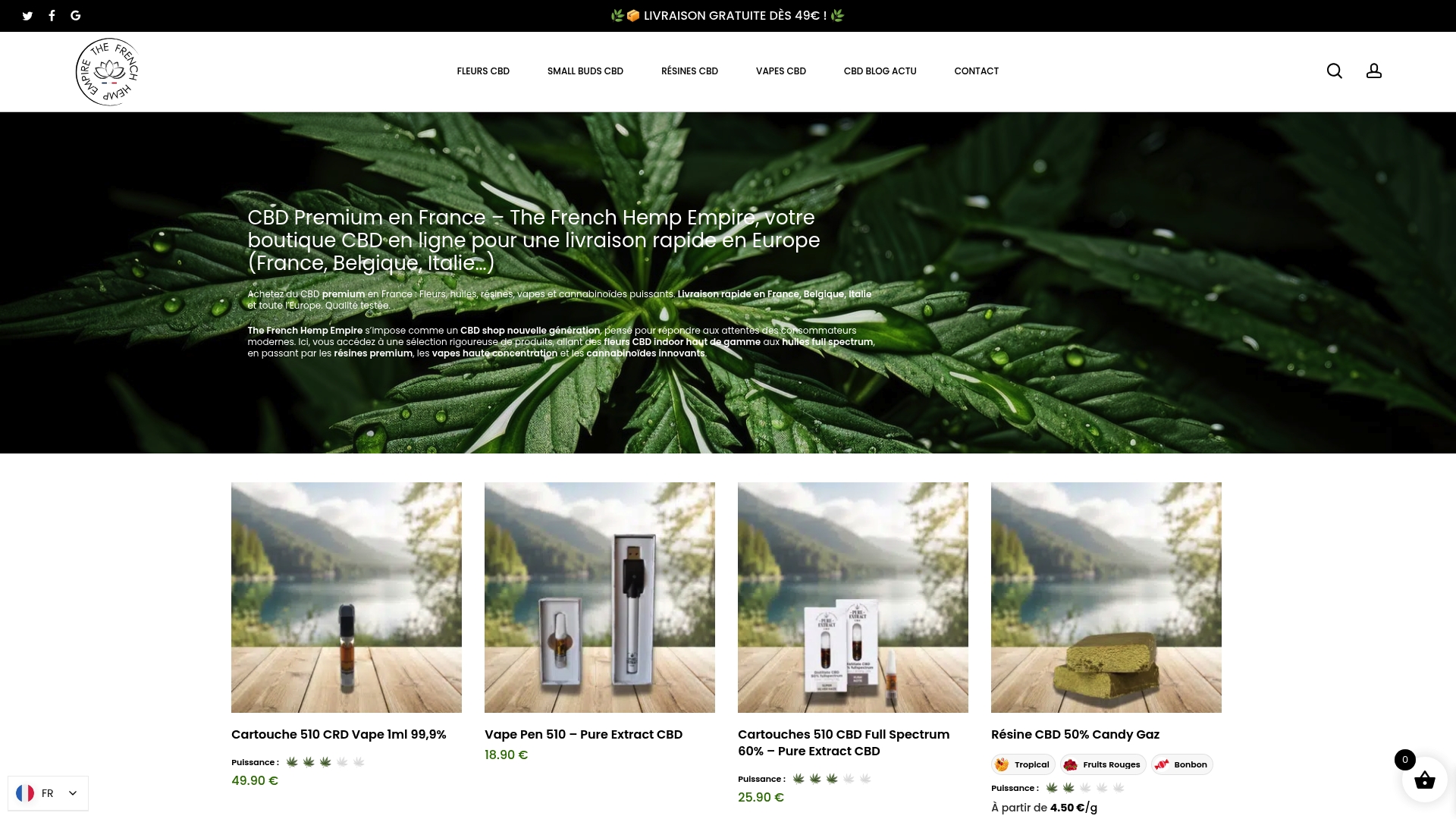
Unlike semi-synthetic cannabinoids whose exact composition is sometimes unclear, the premium CBD flowers offered comply with the legal limit of 0.3% Δ9-THC and come with a complete certificate of analysis, which can be consulted before purchase. For readers curious to understand the differences between cannabinoid categories, the page dedicated to legal CBD types in Europe details the compliance criteria applicable in 2026, and the T9HC gathers product information specific to this molecule for those who wish to delve deeper. Consult the certificate of analysis for the batch that interests you before placing any order, and compare the cannabinoid profiles offered according to your actual needs.
Sources
To verify regulatory status and stay up-to-date on the latest knowledge about these substances, consult the EMCDDA's reports on new psychoactive substances and Thefrenchhempempire's CBD news blog. Always request a certificate of analysis and a laboratory statement before making any purchase, regardless of the product's source.
This article provides general information and is not a substitute for professional medical advice. Consult a qualified healthcare professional about your specific situation before taking any action based on this content.
- EMCDDA — European drug report 2025: new psychoactive substances
- ScienceDirect — article (S246817092400047X)
- MDPI — Journal of Clinical Medicine (13(6):1540)