THCV (tetrahydrocannabivarin) is a natural cannabinoid found in hemp, structurally similar to THC but pharmacologically distinct. Its shorter side chain alters how it interacts with the body, which explains why its effects differ from those of classic THC.
Three points to remember before going any further:
- Its chemical structure (propyl chain at C3, versus pentyl at C5 for THC) comes from a completely separate biosynthetic pathway.
- THCV behaves differently at CB1 and CB2 receptors depending on the dose received, which directly influences its potential appetite-suppressant effect
- The level of scientific evidence remains mostly preclinical: certificates of analysis (COA) and studies published on PMC are your best indicators for sorting the seriousness of marketing.
Key points
THCV differs from THC in its own biosynthesis, its dose-dependent behavior at CB1 receptors, and a level of evidence that is still predominantly preclinical.
| Point | Details |
|---|---|
| A molecule distinct from THC | THCV originates from a separate biosynthetic pathway, via divarinolic acid rather than olivetolic acid. |
| Dose-dependent effect | At low doses, THCV acts as a CB1 antagonist; at high doses, it can become an agonist. |
| Evidence still limited | Appetite-suppressing effects are well documented in animals, but poorly confirmed in humans. |
| Check the certificate of analysis | A reliable COA reveals the true THCV content and detects isomers or semi-synthetic forms. |
| Choose traceable products | Thefrenchhempempire offers flowers, resins and vapes with independent laboratory analyses and complete traceability. |
Table of Contents
- What is THCV: chemical structure and origin in the plant
- How THCV affects the body: a two-sided mechanism
- Does THCV really get you high? What the evidence shows
- THCV, THC and CBD: what are the concrete differences for you?
- Where to find THCV: varieties, extracts and available products
- THCV and legislation: what to check before buying
- THCV: Side effects and precautions to know
- How to choose and get started with THCV
- A promising cannabinoid, but still poorly understood
- Controlled products for exploring cannabinoids with peace of mind
- To learn more about THCV
- Frequently Asked Questions about THCV
- Sources
What is THCV: chemical structure and origin in the plant
THCV originates from a biosynthetic pathway entirely separate from that of THC. Hemp first produces divarinolic acid, a precursor that is transformed into THCVA, which is then decarboxylated under the influence of heat or light to yield the active THCV. THC, on the other hand, is derived from olivetolic acid: the two molecules can therefore never convert into one another within the plant, contrary to a persistent misconception.
The visible difference lies in the length of the side chain: three carbon atoms (propyl) for THCV, five (pentyl) for THC. This structural detail changes how the molecule binds to the body's receptors.
A few useful points to note before proceeding:
- THCV exists in several isomers, including Δ9-THCV and Δ8-THCV, which do not all behave in the same way.
- Cultivars naturally rich in THCV remain rare, mainly certain African varieties known as landrace.
- Most European hemp plants contain only traces of it.
How THCV affects the body: a two-sided mechanism
THCV exhibits a biphasic behavior at CB1 receptors: at low doses, it acts as an antagonist, meaning it partially blocks receptor activation rather than triggering it. At higher doses, the molecule can switch to an agonist behavior, similar to that of THC.
Key point: this biphasic effect explains why some studies report that THCV reduces appetite, while others describe stimulant effects or mild euphoria at high doses. The dose literally changes the nature of the effect.
The key points to keep in mind about this mechanism:
- THCV's affinity for CB1 and CB2 differs from that of THC, which generally limits its psychoactive potential at common doses.
- The majority of the data comes from in vitro experiments or animal models.
- Human trials remain few in number and involve small sample sizes, which precludes any firm generalization.
Does THCV really get you high? What the evidence shows
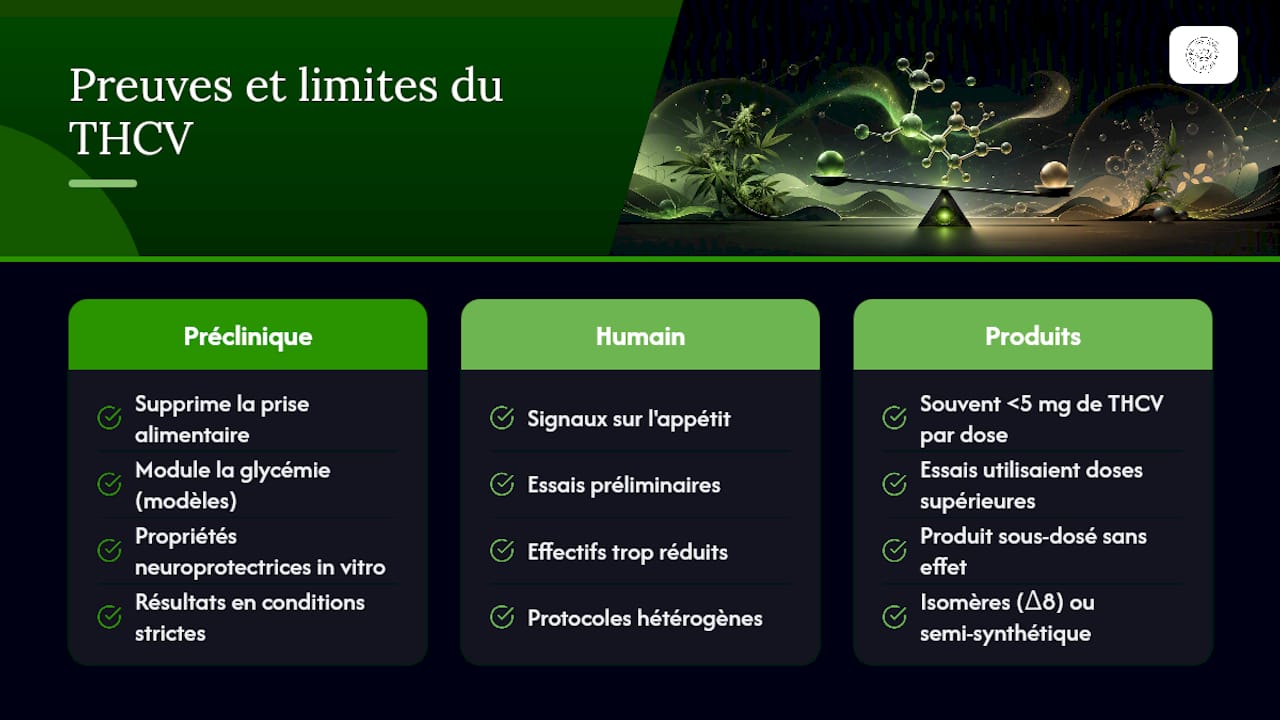
Preclinical studies paint an interesting but still fragile picture. In rodents, THCV reproducibly suppresses food intake, modulates blood glucose levels in certain metabolic models, and exhibits potentially neuroprotective properties in vitro. These are consistent results obtained under strictly controlled laboratory conditions.
In humans, the picture is less clear. A few preliminary trials suggest similar signals regarding appetite, but the sample sizes remain too small and the protocols too heterogeneous to draw any recommendations for use. THCV's reputation as an appetite suppressant therefore rests primarily on solid animal data, supplemented by still preliminary human evidence.
Pro tip: Before buying a product touted for its THCV content, compare the dosage listed on the label to the amounts actually tested in labs. Many commercial formulas contain less than 5 mg of THCV per dose, while trials that showed a noticeable effect used much higher concentrations. An underdosed product simply won't produce the effect claimed in the study cited in the marketing.
One final point of vigilance concerns analytical identification. Some products labeled as THCV actually contain isomers such as Δ8-THCV, or even semi-synthetic forms, which can significantly alter the effect profile compared to what is stated on the packaging.
THCV, THC and CBD: what are the concrete differences for you?
THC generally increases appetite and produces a clear psychoactive effect, even at moderate doses. THCV follows the opposite pattern at low doses: it tends to reduce appetite, and its psychoactive potential remains limited unless the dose is significantly increased. CBD, on the other hand, is not psychoactive and acts through largely different pathways than the other two.
Here are the practical distinctions that matter when making your choice:
- Perceived intensity: THC produces marked effects quickly; THCV often requires higher doses before a clear effect is felt.
- Duration of action: data remains limited, but nothing indicates a duration radically different from that of THC at a comparable dose.
- Intended uses: general well-being and possible metabolic support are mentioned for THCV, although no therapeutic promise has been validated at this stage.
To further explore this comparison, the page dedicated to the differences between CBD and THC also details the issues of legal status.
Where to find THCV: varieties, extracts and available products
THCV is available in several commercial forms: flowers from rare genetics, purified isolates, concentrated extracts, vape cartridges, and enriched resins. THCV levels vary enormously depending on the plant's genetics and the extraction method used, which explains why two products labeled "THCV" can deliver very different amounts.
In reality, most consumer products contain traces rather than active doses. Decarboxylation by heat or vaporization remains essential to transform THCVA into active THCV, a detail rarely mentioned on packaging.
Pro tip: Never rely solely on the phrase "high in THCV" on a label. Ask for or consult the Certificate of Analysis (COA), which indicates the actual THCV content in milligrams, the presence of any isomers, and the batch's traceability. Premium CBD flowers offered with independent analysis exemplify this level of rigor.
THCV and legislation: what to check before buying
Cannabinoid regulations almost always focus on Δ9-THC and its total threshold, rarely on THCV as such.
This ambiguity requires particular caution. Here are the checks to be carried out systematically:
- Check that the total THC content complies with the regulatory limit in force in your country of residence.
- Demand an independent certificate of analysis that specifically mentions the THCV and isomers detected, not just an overall figure for “cannabinoids”.
- Check the traceability of the batch: origin of the culture, date of analysis, laboratory that carried out the test.
- Beware of vague labeling that does not distinguish between natural THCV and semi-synthetic forms.
For an overview of the regulatory framework for CBD and cannabinoids in France and Europe, the resource on the CBD regulatory framework details THC thresholds and points of concern related to novel food status. The article on what the law says about the effects of CBD is a useful complement to this reading.
THCV: Side effects and precautions to know
Long-term safety data on THCV remain limited, calling for a cautious approach rather than definitive statements. Adverse effects reported in preclinical literature and the few human trials include changes in appetite, possible dry mouth, and, at high doses, a stimulant effect that may be bothersome to some sensitive individuals.
Key points to remember before taking any medication:
- No robust data exist on interactions with common medications; caution is advised if you are undergoing treatment.
- The lack of long-term studies makes it impossible to assess a cumulative risk over several months or years of regular use.
- Pregnant or breastfeeding individuals, or those undergoing medical treatment, should consult a healthcare professional before consuming any THCV-based products.
This caution is not an excess of caution: it simply reflects the current, still partial, state of research on this molecule.
How to choose and get started with THCV
Before buying, a few simple checks can prevent unpleasant surprises. Always consult the certificate of analysis (COA), batch traceability, extraction method used, and the seller's return policy.
For first-time use, proceed methodically:
- Start with the lowest dose indicated on the label, never with a "just to see" dose.
- Wait until the full effect is noticeable before considering increasing the amount.
- Avoid combining THCV with other active substances until you know your own reaction.
Opt for easy-to-dose forms, such as standardized isolates or oils with clear milligram labeling, rather than flowers whose actual content varies from batch to batch.
A promising cannabinoid, but still poorly understood
THCV aptly illustrates the complexity of minor cannabinoids. Its similar name to THC fuels commercial confusion that science doesn't entirely validate: a similar structure never guarantees identical effects. The scientific interest is genuine, supported by consistent preclinical data, but commercial caution remains essential until large-scale human trials are conducted. At Thefrenchhempempire, this requirement translates into a constant priority given to traceability and independent analysis rather than promises.
Controlled products for exploring cannabinoids with peace of mind
Unlike many online advertisements that boast THCV levels without verifiable proof, Thefrenchhempempire prioritizes analytical transparency above all: each product goes through independent laboratories that verify compliance with THC thresholds and the traceability of the batch, from field to shipment.
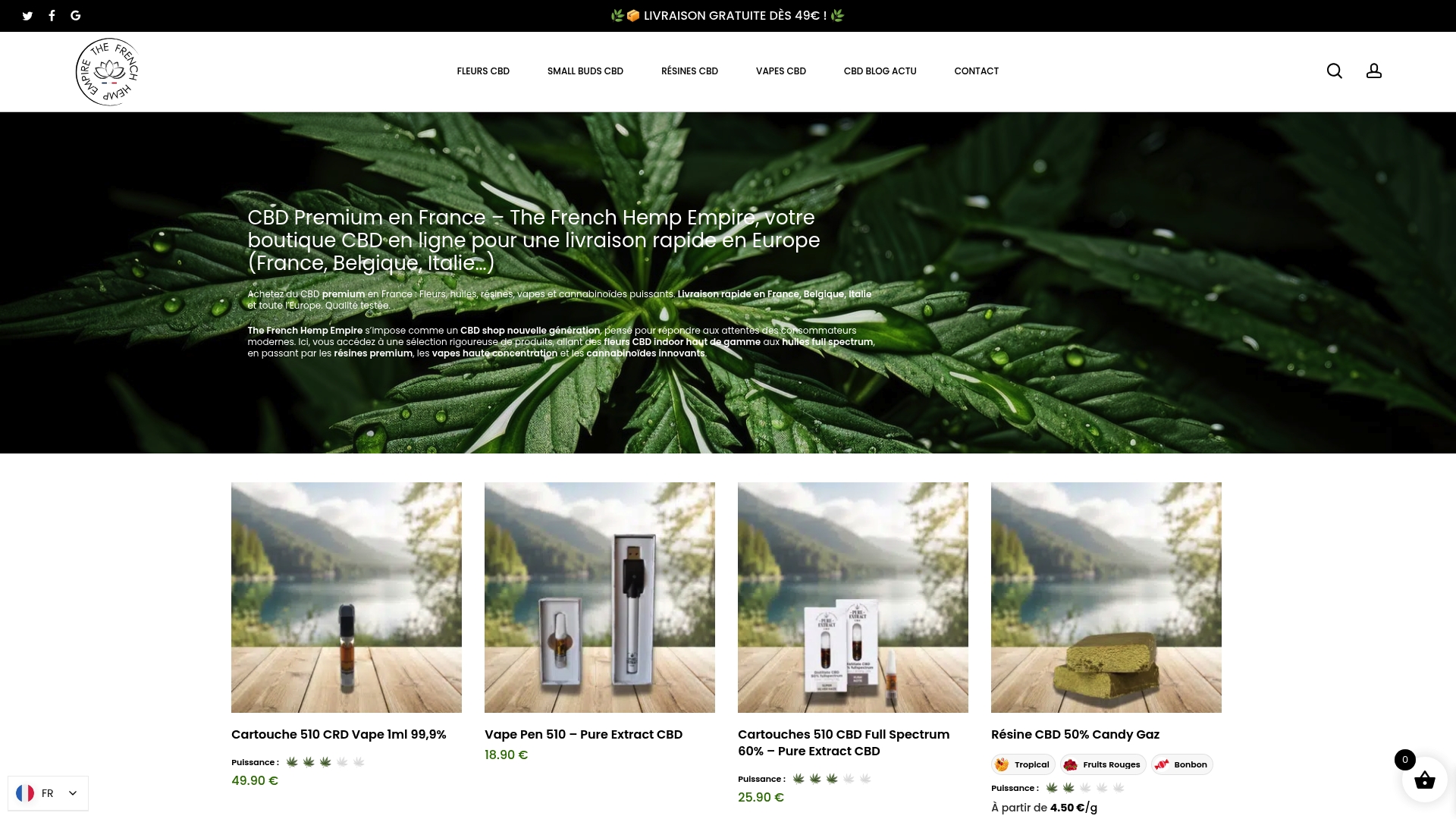
This rigorous approach applies to the entire range, from premium CBD flowers and CBD resins to cartridges and vapes that comply with European standards. Each product page links to its certificate of analysis, allowing you to verify the stated CBD content yourself before making a purchase. If you're interested in understanding the risks associated with low-priced offers that often disregard these controls, the article on the dangers of cheap CBD is well worth reading. To discover the current selection of tested and traceable products, head to the online store Thefrenchhempempire.
To learn more about THCV
- Tetrahydrocannabivarin is Not Tetrahydrocannabinol : detailed synthesis on the biosynthesis and biphasicity of THCV.
- Tetrahydrocannabivarin on Wikipedia : accessible explanation of the chemical structure and origin of THCV.
- Study on THCV and appetite (PMC) : nuances the link between THCV and weight loss.
- Tetrahydrocannabivarin (English Wikipedia) : additional pharmacological history.
Frequently Asked Questions about THCV
What exactly is THCV?
THCV is a natural cannabinoid from hemp, chemically similar to THC but derived from a distinct biosynthetic pathway, with effects that vary greatly depending on the dose received.
What is the difference between THCV and THC?
THC has a five-carbon side chain and acts as a direct CB1 agonist, while THCV has a three-carbon chain and behaves as a CB1 antagonist at low doses.
Does THCV produce the same high as THC?
At low doses, THCV produces little to no net psychoactive effect. At high doses, a stimulant or mildly euphoric effect may occur, according to available preclinical studies.
Does THCV really help with weight loss?
Animal data on appetite suppression are strong, but the evidence in humans remains preliminary and insufficient to speak of a confirmed slimming effect.
Is THCV legal in France?
Regulations focus primarily on total THC levels rather than THCV specifically; always verify product compliance via its certificate of analysis before purchase.
Where to buy quality THCV-containing products?
Favor sellers who publish independent certificates of analysis and detail the traceability of each batch, rather than unverifiable marketing claims.
This article provides general information and is not a substitute for professional medical advice. Consult a qualified healthcare professional about your specific situation before taking any action based on this content.
Sources
- Tetrahydrocannabivarin is Not Tetrahydrocannabinol – PMC
- Tetrahydrocannabivarin
- Tetrahydrocannabivarin
- Pmc