For controlled personal use, four legal cannabinoids deserve your attention: CBD, CBG, CBN, and, to a lesser extent, CBDV. Each addresses a different need, but none is worth purchasing without a Certificate of Analysis (COA) issued by the seller and a THC content below 0.3%. This is the rule that distinguishes a compliant product from one to avoid.
Here are the priorities to know before going any further:
- CBD : the most documented molecule, used for relaxation and daily stress management.
- CBG : less well known, often sought after for daytime use without marked sedative effect.
- CBN : associated with evening and falling asleep, with data still limited.
- CBDV and minor variants: profiles of interest are emerging, but the scientific literature remains limited.
Pro tip: before any purchase, open the COA of the exact batch you are about to order, not a generic analysis displayed on the category page.
Third-party analysis verification remains the primary criterion for eliminating non-compliant or potentially dangerous products. The following sections detail each cannabinoid, how to read a product information sheet, the available dosage forms, and how to evaluate a seller before making a purchase.
Key points
| Point | Details |
|---|---|
| Prioritize CBD and CBG | These are the best-documented cannabinoids for daily, daytime or relaxation use. |
| Reserve the CBN for the evening | Useful for aiding sleep, but with still limited scientific evidence. |
| Always check the COA | The certificate must correspond to the exact batch number of the product purchased, not to a generic card. |
| Think in mg, not percentage | Compare the products in mg per mL or per dose to judge the actual potency. |
| Choose Thefrenchhempempire for traceability | The shop publishes its COAs by batch and respects the legal THC threshold across its entire range. |
Table of Contents
- What are the best legal cannabinoids and what are they used for?
- How do you measure the true potency of a cannabinoid?
- How to verify a certificate of analysis and its legal compliance?
- Oil, flower, resin or vape: which form to choose?
- What are the risks and interactions to be aware of before consuming it?
- How to spot a reliable seller and avoid online CBD scams?
- Sources
What are the best legal cannabinoids and what are they used for?
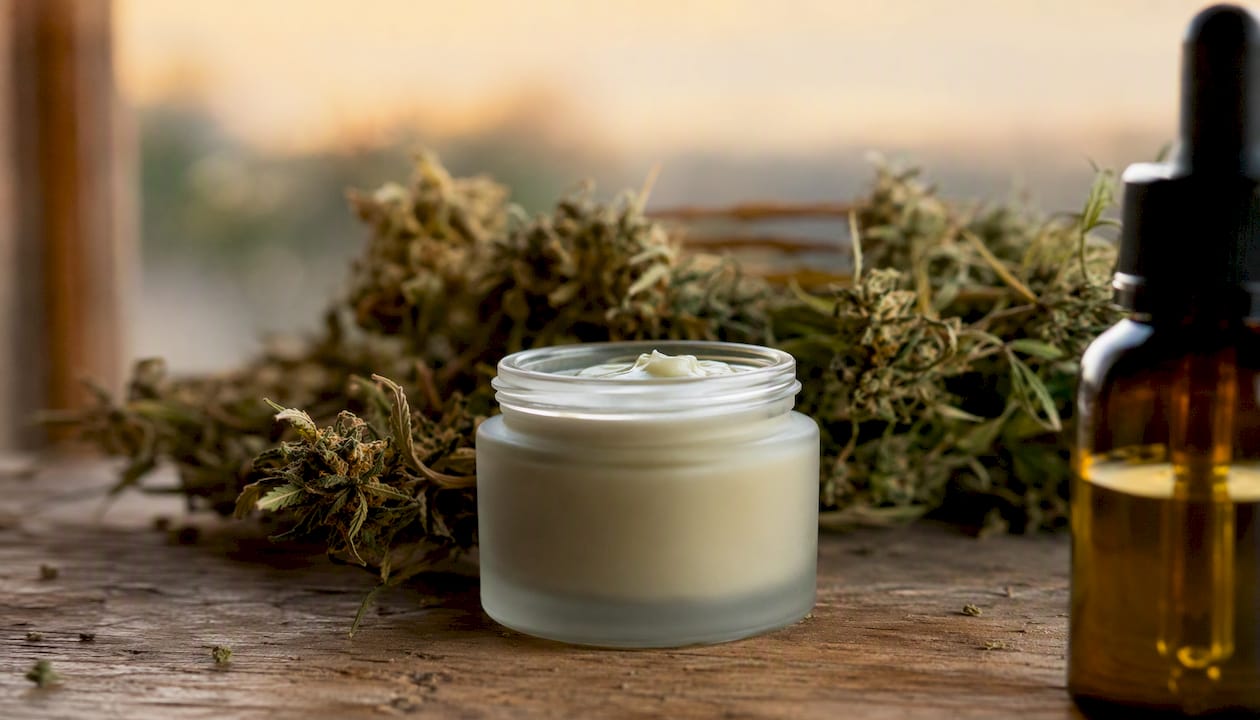
CBD (cannabidiol) dominates the market because it is the most studied and the most readily available in the form of oils, flowers, resins, and capsules. It comes in three forms: full spectrum (which retains all the cannabinoids of hemp, including traces of THC), broad spectrum (with no detectable THC), and isolate (99% pure CBD). The choice between these three forms depends primarily on your sensitivity to residual THC: a professional saliva test or a context of regular driving justifies choosing broad spectrum or isolate over full spectrum, even if it complies with the legal limit.
The main concern with CBD isn't its legality, which is largely established, but rather the gap between marketing claims and scientific evidence. A study from the University of Bath highlighted that some CBD products don't provide a clearly demonstrated analgesic effect and can pose risks when not properly controlled. This doesn't discredit the molecule, but it does suggest maintaining a measured approach to expectations, especially for chronic pain.
CBG, a daytime cannabinoid that is still underutilized
CBG (cannabigerol) is sometimes called the "mother cannabinoid" because it is the chemical precursor to both CBD and THC in the hemp plant. Consumers who seek it often describe it as less sedating than CBD at equivalent doses, making it a candidate for daytime use. However, clinical data on CBG remains significantly more limited than that on CBD, and claims found on some online marketplaces far exceed what current research supports.
The CBN for the evening, subject to still limited evidence
CBN (cannabinol) is formed through the natural oxidation of THC as the plant ages or is exposed to light and air. It is marketed almost exclusively as a sleep aid, often in combination with CBD in so-called "nighttime" oils. User feedback supports this, but independent scientific literature on isolated CBN remains limited compared to that on CBD. Treat promises of "guaranteed" sleep with the same caution you would any unsubstantiated health claim.
CBDV, CBDP and emerging minor cannabinoids
CBDV (cannabidivarin) and CBDP (cannabidiphorol) belong to a new generation of minor cannabinoids that are beginning to appear in specialized catalogs. CBDV is generating increasing interest, particularly in the context of neurological research, but its use by the general public remains anecdotal and poorly documented. CBDP, isolated more recently, clearly illustrates the risk inherent in these emerging molecules: commercial enthusiasm far outpaces scientific characterization and the regulatory framework surrounding it.
This is where the regulatory factor becomes crucial. The "novel food" assessments of cannabidiol are still awaiting further data at the European level, meaning that the status of certain hemp derivatives may still change. A cannabinoid that is legal today has no guarantee of remaining so under the same conditions in two years, especially if it is a minor, poorly characterized molecule.
- Start with CBD if you are discovering legal cannabinoids: it is the best-referenced molecule and the easiest to dose.
- Switch to CBG if you are looking for a daytime effect without associated drowsiness.
- Reserve CBN for targeted use in the evening, as a complement to CBD rather than as a replacement.
- Approach CBDV, CBDP and other minor variants with caution, systematically checking their current legal status before purchase.
To compare these molecules in more detail, our page on the differences between CBG, CBN and CBD details the reported uses and profile distinctions for each.
How do you measure the true potency of a cannabinoid?
A percentage displayed on a label tells you almost nothing on its own. The perceived potency of a product depends on the concentration of the main cannabinoid, but also on the complete profile of the compounds present and the chosen method of administration – three variables that marketing tends to reduce to a single, highly visible figure.
The entourage effect is just as important as concentration
A full-spectrum or broad-spectrum product contains, in addition to the main cannabinoid, terpenes and secondary cannabinoids in small quantities. This combination produces what researchers call the entourage effect: the hypothesis that all these compounds together act more strongly than the isolated cannabinoid alone, at the same concentration.
Terpenes are not simply aromatic agents. It is a mechanism of action linked to the endocannabinoid system that partly explains why two products with identical concentrations do not produce the same sensation.
The method of administration changes everything
The available data indicate a fairly consistent order: inhalation offers the fastest and highest bioavailability, the sublingual route is in an intermediate position, and the oral route (capsules, edibles) remains the slowest and least efficient due to hepatic passage.
Here are the key points to remember when reading a product description without being swayed by a single percentage:
- Prefer the mention in mg per mL or mg per dose rather than just the overall percentage.
- Check if the profile is full spectrum, broad spectrum or isolate, as this determines the entourage effect.
- Look for the presence of a detailed terpene profile on the COA, a sign of a serious analysis.
- Take into account the intended method of administration when estimating the actual speed and intensity of the effect.
A product claiming "ultra-potent CBD" without any quantified details or a readily available Certificate of Analysis (COA) cannot be verified. This is precisely the type of claim that French regulations address to prevent promises not supported by analytical evidence.
How to verify a certificate of analysis and its legal compliance?
The Certificate of Analysis (COA) is a document issued by an independent laboratory that certifies the actual composition of a batch of product: CBD and THC content, the possible presence of other cannabinoids, and the absence of contaminants exceeding health thresholds. Without this document, consumers cannot verify any claims about a product's composition.
A reliable COA must include several identifiable elements:
- The name of the laboratory that performed the analysis, ideally accredited and identifiable online.
- The batch number, which must exactly match the one printed on the packaging of the purchased product.
- The date of the analysis: favour a recent document, ideally less than a year old for an extract.
- The THC level, which must remain below 0.3% in accordance with current regulations.
- The results of the contaminant tests: heavy metals, residual solvents, pesticides and microorganisms.
Pro tip: Never settle for a generic COA displayed on a category page. Ask for the COA for the specific batch number printed on your packaging, and compare the two numbers before consuming the product.
Our page dedicated to the 0.3% THC threshold details the specific points to check on a product sheet before purchase.
Beyond THC, contaminant testing deserves equal attention. Hemp is a bioaccumulator, meaning it readily absorbs heavy metals present in its growing medium. A thorough traceability analysis helps reduce the risk of exposure to residual solvents or contaminants from improper extraction. A comprehensive Certificate of Analysis (COA) should therefore cover this health aspect, not just the cannabinoid profile.
Oil, flower, resin or vape: which form to choose?
The choice of dosage form depends primarily on three practical criteria: the desired discretion, the desired speed of effect, and your tolerance to inhalation. No single form is universally superior; each is suited to a different use.
- Sublingual oil allows for precise dosing thanks to the dropper and remains the most discreet form for daily use at the office or on the go. The effect generally appears within 15 to 45 minutes and lasts for several hours, making it a suitable option for regular and proactive use.
- The flowers and resins offer the fastest bioavailability through inhalation, but combustion generates byproducts that can be irritating to the respiratory tract. The characteristic odor of hemp also limits discretion, a point to consider depending on your lifestyle.
- E-liquids and vaping devices offer near-instant action without the drawbacks of combustion, provided the ingredient list is carefully checked. Public authorities remind consumers that the sale of vaping products must comply with strict traceability and transparency rules, a point often overlooked by unscrupulous sellers.
- Capsules and edibles offer the greatest convenience, with a fixed dosage and no odor, but absorption occurs through the digestive system. The effect therefore takes longer to appear, often 45 to 90 minutes, and its intensity varies more from person to person.
For a first purchase, the question to ask yourself isn't "which form is best" but "what do I intend to use it for?" Occasional use in the evening suggests a well-traceable flower or resin, while discreet daily use points to an oil or capsules. Our range of premium and legal CBD flowers and our guide to the different flower varieties and their effects will help you refine your choice according to your needs.
What are the risks and interactions to be aware of before consuming it?
CBD and other legal cannabinoids interact with liver enzymes of the CYP450 system, the same enzymes that metabolize a large proportion of common medications. This means that taking CBD concurrently with certain medications can alter their blood concentration, either increasing or decreasing it. The classes of medications most affected include anticoagulants, some antiepileptics, and certain psychiatric treatments; in all these cases, prior medical advice is essential before combining a legal cannabinoid with an ongoing treatment.
The most frequently reported side effects are mild: drowsiness, dry mouth, or slight digestive upset at high doses. These symptoms generally disappear quickly when the dose is reduced. Therefore, caution is still advised before driving or engaging in any activity requiring sustained alertness, even with a product that is perfectly compliant.
Certain populations should avoid or severely limit their consumption:
- Pregnant or breastfeeding women, in the absence of sufficient safety data.
- Minors, for whom no cannabinoid-based products are recommended.
- People undergoing chronic drug treatment, without prior medical advice.
- People with a history of liver disorders, given the metabolism of CBD by the liver.
These precautions are in line with what the official framework governing CBD : a legal product is not synonymous with zero risk, and unvalidated therapeutic claims remain prohibited in France.
How to spot a reliable seller and avoid online CBD scams?
A reputable online store is recognized by concrete and verifiable signs, not by marketing promises. Before finalizing a purchase, review this list:
- COA accessible and up-to-date for each product, with corresponding batch number.
- Origin of the hemp specified (country, farm) and extraction method clearly indicated.
- Customer service is reachable, with reasonable response times and an identifiable address.
- Clear return policy, including conditions in case of non-conforming product.
- Discreet delivery with neutral packaging, an essential comfort criterion for many new buyers.
Ask specific questions before buying if you have any doubts: What is the batch number of the product displayed? What is the date of the last available Certificate of Authenticity (COA)? What extraction method was used—supercritical CO2 or solvent extraction? A transparent seller will answer these questions directly. A website that avoids or cannot provide a current COA should raise a red flag immediately.
Pro tip: always compare the cannabinoid content in milligrams per euro spent rather than the price per bottle. A cheaper but less concentrated oil can sometimes end up costing more per milligram than a premium oil.
The industry recommends judging a website's reliability on the same basis: transparent batch analysis, genuine customer contact, and detailed product descriptions form the minimum requirements for a trustworthy online store. Converse red flags are just as revealing: abnormally low prices without justification, a complete lack of Certificates of Authenticity (COA), only recent and positive customer reviews, or promises of a cure. Each of these elements should prompt you to look elsewhere, regardless of the website's apparent quality.
Vanessa's perspective on the reliability of legal cannabinoids
Transparency cannot be decreed, it must be proven.
Experience shows that the most satisfied consumers are never those who sought out the "most powerful" product, but those who took the time to read a certificate of analysis before buying. It's a simple habit that makes all the difference.
How Thefrenchhempempire meets security and transparency criteria
You now have the criteria to judge any CBD seller: published Certificate of Authenticity (COA), traceable origin, compliance with THC limits, and genuine customer service. Thefrenchhempempire builds each product listing on precisely these foundations, without exception for any batch or product line.
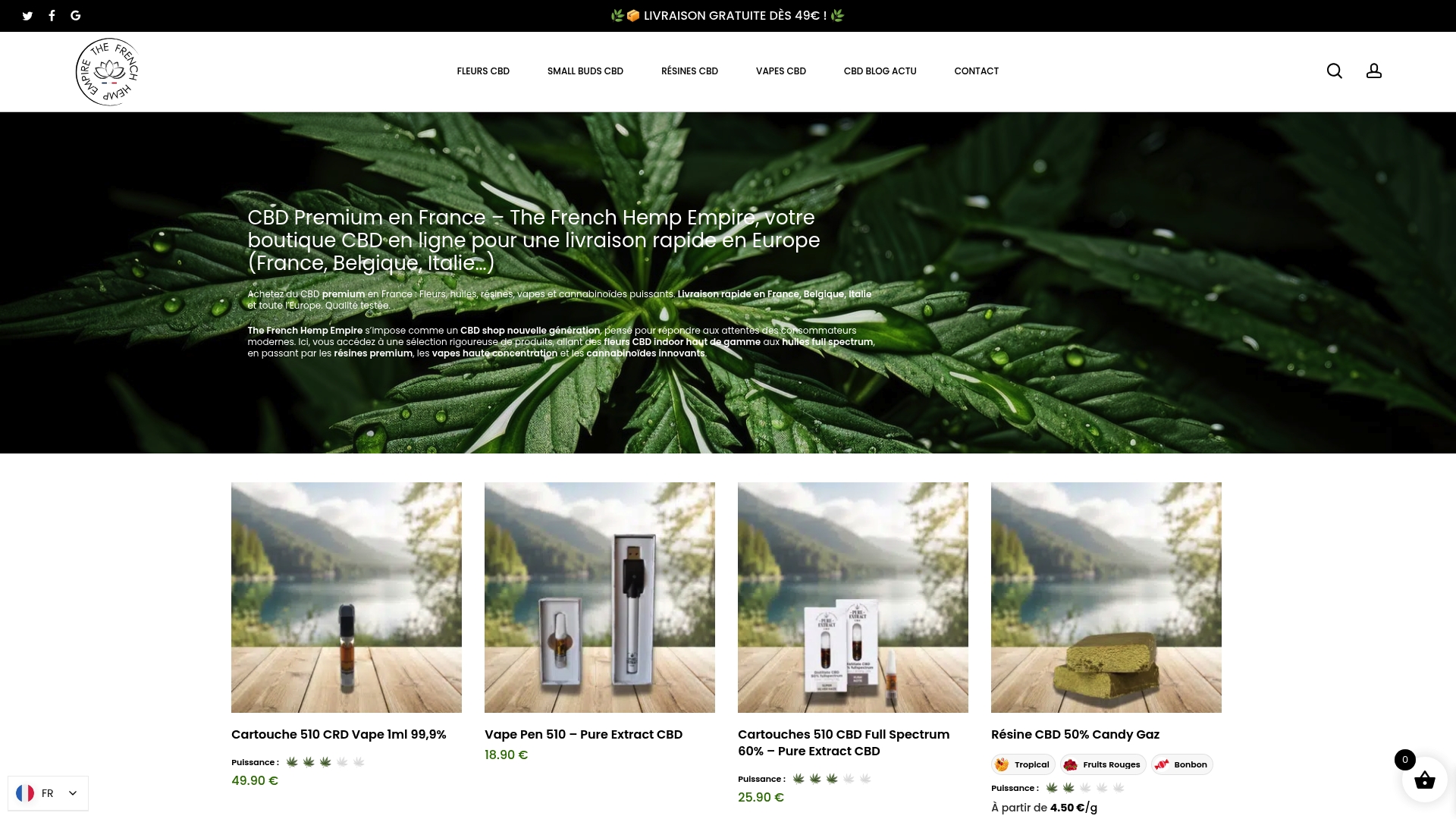
If you're looking for a discreet and easily dosed daily option, our broad-spectrum CBD oil offers a THC-free profile, ideal for those sensitive to this issue. For inhalation with complete traceability, our premium CBD flowers are analyzed batch by batch. If you have any questions about dosage or composition, our customer service team is available to answer them before you make a purchase.
Sources
To learn more about regulations and verify product safety, consult these resources:
- Drugs
- Cannabidiol: novel food evaluations hold pending new data (EFSA)
- CBD products don't ease pain and are potentially harmful, new study finds (University of Bath)
This article provides general information and is not a substitute for professional medical advice. Consult a qualified healthcare professional about your specific situation before taking any action based on this content.