Since 2024, ANSEShas recorded several hundred cases of poisoning linked to products sold as containing CBD, the majority involving synthetic cannabinoids or a THC level exceeding 0.3%. Given this situation, three immediate actions are necessary if you have any doubt:
- Stop consuming the suspected product immediately
- Keep the packaging and a sample of the product for possible toxicological analysis by the OFDT's SINTES system.
- Contact 15 (SAMU) in case of life-threatening distress, or a poison control center for any non-urgent adverse effect.
The relevant authorities to contact are ANSES, ANSM, OFDT and poison control centers, whose contact details are available on the Reporting.
Pro tip: Photograph the product label and batch number before submitting it for analysis. This precaution facilitates traceability by the SINTES/OFDT teams and speeds up the identification of the substance in question.
Key points
The safety of cannabinoids in France relies on documentary verification of products, knowledge of drug interactions and the immediate reporting of any adverse effects to the competent authorities.
| Point | Details |
|---|---|
| Check the COA before buying | Require a third-party certificate of analysis from an accredited laboratory, stating CBD, THC and the absence of undeclared cannabinoids. |
| Drug interactions | CBD inhibits CYP3A4, CYP2D6 and CYP2C19 enzymes; inform your doctor if you are taking multiple medications. |
| Driving and positive tests | The presence of THC is sufficient to characterize the offence (Court of Cassation, 21 June 2023); avoid driving after consumption. |
| Report any adverse effects | Contact 15 in a life-threatening emergency, otherwise contact a poison control center (0 800 59 59 59), and report on signalement.social-sante.gouv.fr. |
| Thefrenchhempempire | Offers COAs per batch that can be consulted before purchase, with traceability of origin and strict adherence to the THC threshold of 0.3%. |
Table of Contents
- CBD, THC and synthetic cannabinoids: what are the differences for your safety?
- What is the legal framework applicable to cannabinoids in France?
- What are the health risks and side effects of CBD?
- What to do in case of adverse effects or suspected poisoning?
- How to choose a less risky CBD product: COA, traceability and warning signs
- Why are synthetic cannabinoids more dangerous?
- Driving, work and anti-doping: what you actually risk
- How Thefrenchhempempire guarantees traceability and security
- What prudence truly demands, beyond labels
- Controlled CBD products, with analyses available before purchase
- Sources
CBD, THC and synthetic cannabinoids: what are the differences for your safety?
Cannabidiol (CBD) and tetrahydrocannabinol (THC) are two phytocannabinoids derived from hemp (Cannabis sativa), but their pharmacological profiles differ fundamentally. THC is the psychoactive molecule responsible for the euphoric effects of cannabis; CBD, on the other hand, does not induce a psychotropic effect in the strict sense, although it can cause drowsiness or sedation at high doses.
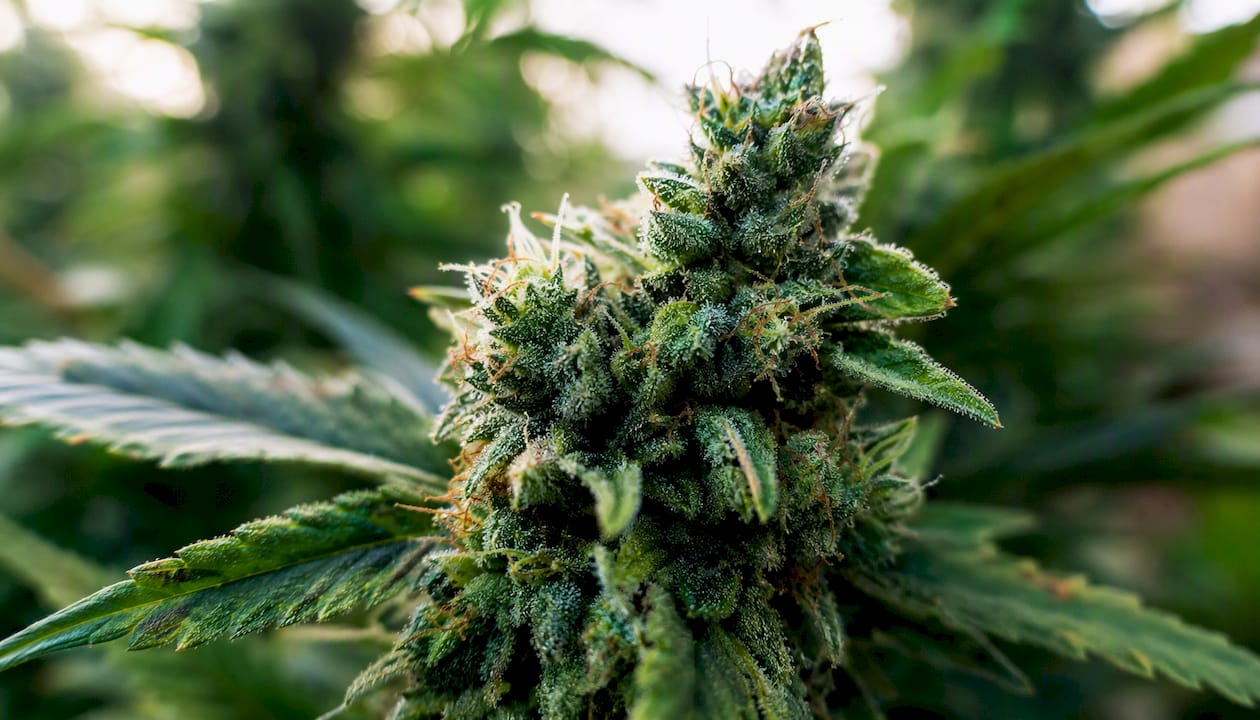
Synthetic cannabinoids constitute a distinct and significantly more concerning category. Among the names frequently encountered on the French market are HHC (hexahydrocannabinol), HHC-O, H4-CBD (4H-CBD), THCP, and MDMB-PINACA. Some of these compounds have been classified as narcotics by theANSM (French National Agency for Medicines and Health Products Safety) following health alerts, thus prohibiting their production, sale, and use in France.
The distinction between legal CBD and synthetic cannabinoids is therefore a matter of safety, not just regulation. A product labeled "CBD" may contain undeclared molecules, as demonstrated by market analyses conducted by MILDECA/CEIP/OFDT on 223 samples: a minority of the samples contained HHC or H4-CBD not listed on the label, and several had THC levels exceeding the legal limit. For a more in-depth look at the differences between CBG, CBN, and CBD, Thefrenchhempempire blog offers an accessible overview.
What is the legal framework applicable to cannabinoids in France?
French regulations on cannabinoids evolved rapidly between 2020 and 2025, under the combined effect of European and national decisions.
Any violation exposes the seller and potentially the consumer to legal action. Furthermore, theECHA has registered an intention to harmonize the classification of CBD —particularly regarding reproductive toxicity—in its public register, which could lead to additional regulatory restrictions at the European level. Official texts are available on Legifrance, and a practical summary of the French regulatory framework for CBD is available on Thefrenchhempempire website.
What are the health risks and side effects of CBD?
CBD is not without side effects, even when consumed legally. The most frequently reported acute effects include:
- Drowsiness and sedation, which may impair alertness while driving or working.
- Nausea and digestive problems, especially at high doses or when taken on an empty stomach.
- Tachycardia and cardiovascular disorders, reported in cases of intoxication, are often associated with the presence of undeclared cannabinoids.
- Hallucinations, agitation and loss of consciousnessare characteristics of intoxication from synthetic cannabinoids rather than pure CBD.
Drug interactions: an underestimated risk
CBD inhibits several cytochrome P450 liver enzymes, including the CYP3A4, CYP2D6, and CYP2C19 isoforms. This inhibition can significantly alter the plasma concentration of co-administered medications, increasing their effect or toxicity. The most affected therapeutic classes are antiepileptics (clobazam, valproate), oral anticoagulants, immunosuppressants, and certain antidepressants. The French National Health Insurance (Assurance Maladie) explicitly recommends informing your doctor before using CBD, especially if you are taking multiple medications or undergoing liver treatment.
Vulnerable groups
The populations for whom prior medical advice is particularly recommended are:
- Pregnant or breastfeeding women (insufficient data on fetal development).
- Children and adolescents (effects on neurological development not established).
- People undergoing antiepileptic, anticoagulant or immunosuppressive treatment.
- Drivers and workers exposed to mechanical or vigilance risks.
Pro tip: If you are taking a medication metabolized by the liver, always inform your pharmacist about your CBD use each time you refill your prescription. A clinically significant interaction can occur even with low doses of CBD.
What to do in case of adverse effects or suspected poisoning?
An unexpected reaction after consuming a cannabinoid product requires a structured and documented response. Here's what to do:
- Stop consuming the product immediately.
- Secure the person : place them in the recovery position if they are unconscious, closely monitor them if they are conscious but disoriented.
- Call 15 (SAMU) in case of loss of consciousness, breathing difficulties, convulsions or obvious life-threatening distress.
- Contact a poison control center for any non-life-threatening adverse effect requiring toxicological advice (national number: 0 800 59 59 59, available 24/7).
- Report the event on the official portal signalement.social-sante.gouv.fr, accessible to both professionals and individuals.
- Retain the product, packaging, and batch for toxicological analysis under the OFDT's SINTES program. Do not discard the product before receiving instructions from the authorities.
The data collected by SINTES allows the OFDT to monitor the emergence of new substances on the market and to alert health authorities. Each report contributes to this collective monitoring.
- General emergency number: 15 (SAMU)
- Poison control centers: 0 800 59 59 59
- Reporting portal: signalement.social-sante.gouv.fr
- Product recalls and alerts: rappel.conso.gouv.fr
How to choose a less risky CBD product: COA, traceability and warning signs
The reliability of a CBD product depends on elements that can be verified before purchase. The MILDECA/CEIP study showed that a large majority of products had a CBD content different from that indicated on the label, making independent verification essential.
Pre-purchase checklist
- Third-party Certificate of Analysis (COA) : require an analysis report issued by an accredited laboratory independent of the seller, stating the levels of CBD, THC and the absence of undeclared cannabinoids.
- Traceability of origin : hemp variety, country and region of cultivation, extraction method clearly indicated.
- Absence of therapeutic claims : any product displaying medical promises (“treats anxiety”, “cures insomnia”) violates regulations and must be excluded.
- Restriction of sale to adults : a reputable seller explicitly states that their products are reserved for adults.
- Instructions for use : indicative dosage, precautions for use and potential interactions must be included on the packaging or product sheet.
Warning signs to avoid
- Vague or incomplete labeling (absence of batch number, expiry date, manufacturer's address).
- THC levels not proven by independent analysis.
- Abnormally low prices without any justification for quality. A guide on the risks associated with cheap CBD details why price is an indicator of risk.
- No laboratory analysis available or refusal to provide it upon request.
- Sale without age verification, whether in physical store or online.
Pro tip: Before making any online purchase, check the name of the laboratory mentioned on the Certificate of Authorization (COA) in accreditation databases (COFRAC in France). A non-accredited laboratory cannot guarantee the reliability of its results.
Why are synthetic cannabinoids more dangerous?
Synthetic cannabinoids present a fundamentally different risk profile from that of natural CBD or THC. Their potency on cannabinoid receptors can be several dozen times greater than that of THC, making the margin between active and toxic doses extremely narrow.
French and European health authorities have documented serious cases associated with these substances, including respiratory arrest, seizures, and acute psychotic states. The most frequently reported molecules in France include:
- HHC and HHC -O (hexahydrocannabinol and its acetate ester), now classified as narcotics.
- H4 -CBD (4H-CBD), present in products sold as CBD according to the MILDECA study.
- THCP ) , whose estimated potency exceeds that of THC.
- MDMB -PINACA, a pure synthetic cannabinoid, with no connection to hemp, is classified as a narcotic.
Educational resources on these substances are disseminated by MILDECA and drogues.gouv.fr. The authorities' recommendation is unambiguous: do not consume products whose composition has not been certified by independent analysis, and report any suspicious product to poison control centers or the official reporting portal.
Driving, work and anti-doping: what you actually risk
Roadside and professional drug tests detect the presence of THC in the body, not the dose consumed or the source of the product.
The Criminal Chamber of the Court of Cassation confirmed, in a ruling dated June 21, 2023, that the presence of THC in the body is sufficient to constitute the offense of driving under the influence of narcotics, regardless of the dose detected. This legal precedent, reported by drogues.gouv.fr, has direct consequences for CBD users.
- Do not drive for several hours after consuming any cannabinoid product, even a legal one.
- Inform the occupational physician if the position involves exposure to mechanical or safety risks.
- Keep the proof of purchase and the COA of the product in case of dispute during an inspection.
- In an anti-doping context, consult the French Anti-Doping Agency (AFLD) before any consumption, as some cannabinoids remain on the list of prohibited substances in competition.
How Thefrenchhempempire guarantees traceability and security
Transparency regarding product composition is the primary criterion that distinguishes a reliable seller from an opportunistic one. Thefrenchhempempire applies a set of practices verifiable by any buyer:
- Third-party laboratory analyses : each batch is subjected to analyses carried out by accredited independent laboratories, covering CBD, THC levels and the detection of undeclared cannabinoids.
- Display of COAs by batch : certificates of analysis can be viewed directly on the site, associated with the corresponding product references.
- Origin control : the products indicate the hemp variety, the growing region and the extraction method.
- Strict adherence to the THC threshold of 0.3% : no product exceeding this threshold is put on sale.
- Restricted to sales to adults : the shop does not allow purchases without confirmation of age.
- Absence of therapeutic claims : the product sheets do not claim any medical effect not validated by the competent authorities.
Please note: The information published by Thefrenchhempempire, including this article, provides general information on the regulation and safety of cannabinoids. It is not a substitute for personalized medical advice. If you are taking medication or have a medical condition, consult a healthcare professional before use.
The French Hemp Empire blog regularly publishes updates on French and European legislation, health alerts, and quality criteria to check.
What prudence truly demands, beyond labels
The increasing number of health alerts since 2024 reveals a reality that marketing rhetoric surrounding CBD tends to downplay: the market remains heterogeneous, controls are insufficient, and the presence of undeclared cannabinoids is not a marginal phenomenon. The MILDECA study, based on 223 samples, provides the most comprehensive evidence of this to date.
What strikes me is that most consumers who experienced serious adverse effects hadn't purchased obviously fraudulent products. They had bought products presented as legal, with attractive packaging and reassuring descriptions. Vigilance, therefore, cannot rely solely on the product's appearance or the seller's reputation. It requires systematic documentary verification: third-party Certificate of Authenticity (COA), accredited laboratory reports, and traceability of origin.
The difference between information and medical advice also deserves to be clearly stated. This article provides information on known risks and precautions recommended by French authorities. It does not replace the assessment of a doctor or pharmacist, particularly for individuals undergoing treatment. Consulting a healthcare professional before starting regular CBD use is not an excessive precaution; it is a consistent approach, in line with what research on drug interactions has documented.
Controlled CBD products, with analyses available before purchase
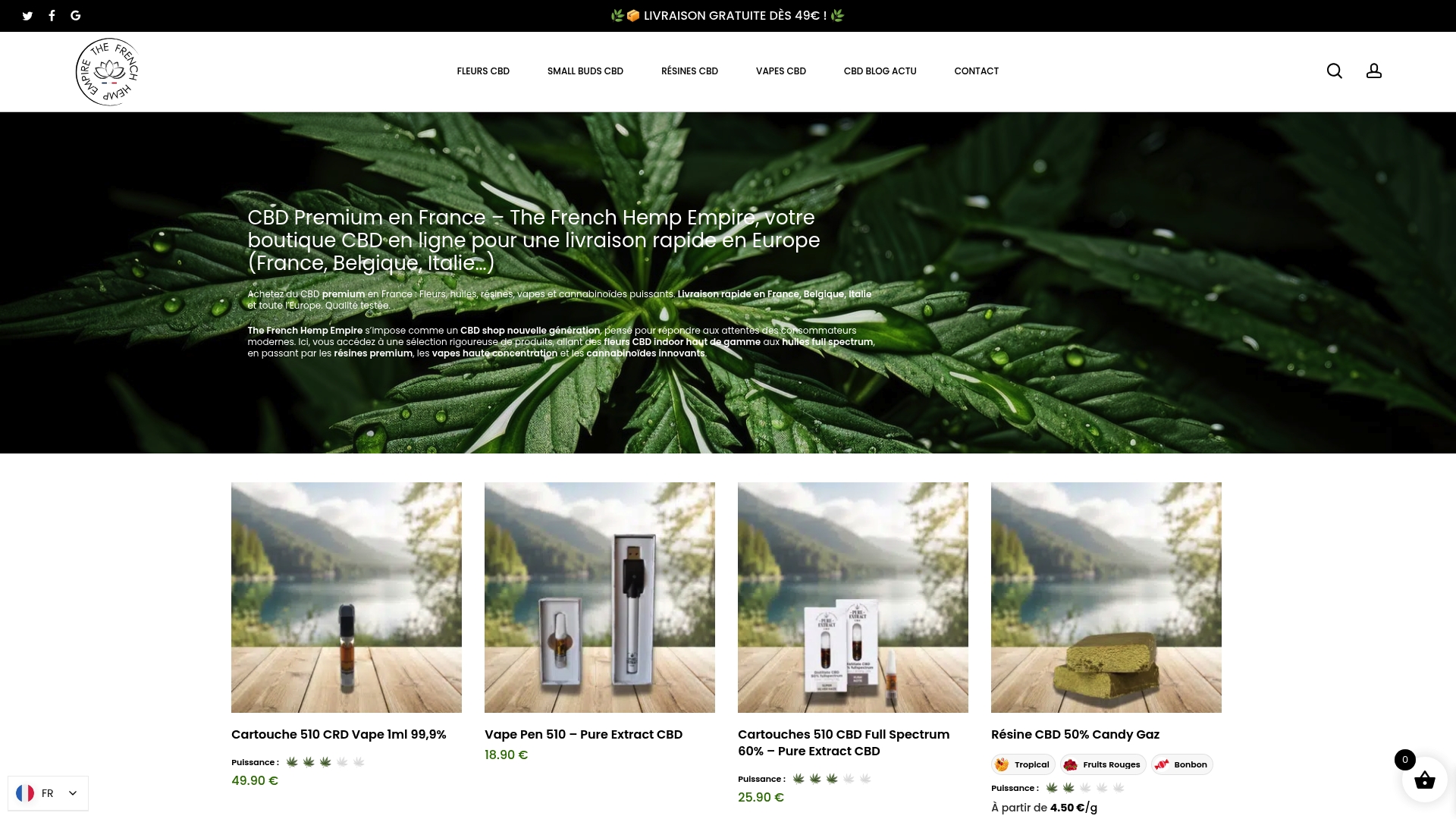
Thefrenchhempempire offers a selection of premium CBD flowers and CBD vapes, the batch analysis certificates of which are accessible directly on each product page before purchase.
These products are intended for adults only. No therapeutic claims are made. If you are currently taking medication, prior medical advice is recommended before use.
To view available certificates and browse the range, go to the certificates of analysis page or directly to the product categories.
Sources
The following resources allow you to verify the information contained in this article and to delve deeper into each regulatory or health aspect.
- Increase in poisonings caused by CBD products containing other substances | ANSES
- Cannabidiol: analysis of "non-pharmaceutical CBD" products available on the market in France (MILDECA / CEIP / OFDT)
- Cannabidiol safety data update / ANSM (Kanavape file)
- ECHA — registry of CLH intentions: CBD