THCA is an acidic precursor to THC, naturally present in cannabis. When heated, it can be transformed into delta-9-THC through decarboxylation. This chemical difference explains why a low THC content alone is not enough to describe a product as high in THCA. It also explains why you must distinguish between the effects of the isolated molecule, the composition of the finished product, and the regulations applicable in France.
On specialized websites, the terms "natural THCA," "non-activated THC," and "less than 0.3% THC" sometimes appear together without explanation. However, they do not all refer to the same thing. The first refers to an origin, the second simplifies a chemical mechanism, and the third indicates a measurement whose definition must be understood.
This guide from The French Hemp Empire helps you understand the differences between THCA and THC, the limitations of studies on their effects, and the scope of French regulations. You will also learn how to read the key lines of a certificate of analysis, without confusing a lab value with a guarantee of safety or legality.
Literature review conducted on September 24, 2026. This informational content does not constitute a prescription or legal validation of any particular products. Scientific and official sources are accessible throughout the text.
What is THCA, or tetrahydrocannabinolic acid?
The acronym THCA stands for tetrahydrocannabinolic acid. In this article, we are primarily discussing delta-9-THCA-A, the form studied in the cited publications. It belongs to the phytocannabinoids, meaning cannabinoids found in the plant. Therefore, by definition, it is not a compound that could only exist through laboratory synthesis.
THCA possesses a carboxyl group that distinguishes it from THC. When this part of the molecule is removed as carbon dioxide, the resulting compound is THC. An experimental study by Wang and colleagues, published in 2016, describes this decarboxylation and the tools used to track the acidic and neutral forms.
This relationship does not make the two names interchangeable. An analysis can measure THCA and delta-9-THC separately, or it can present a calculated value that takes both into account. To understand a label, one must therefore begin by identifying the substance specifically designated, rather than considering all entries containing the letters THC as equivalent.
Why is it found in a category dedicated to neo-cannabinoids?
The term "neo-cannabinoid" is primarily used in the marketing vocabulary. It can refer to a compound that has recently gained prominence, even if it is not a recent discovery. Placing THCA in an editorial category dedicated to new products helps explain its specific characteristics, but does not change its scientific identity.
To help you navigate the market, always separate three pieces of information: the name of the molecule, the category used by the website, and the product description. This method prevents drawing chemical conclusions from a commercial classification. Our article on the differences between hemp, cannabis, CBD, and THC revisits these key terms.
THCA and THC: the essential differences in a table
| Point of comparison | THCA | Delta-9-THC |
|---|---|---|
| Denomination | Tetrahydrocannabinolic acid. | Delta-9-tetrahydrocannabinol. |
| Chemical relationship | Acid precursor capable of decarboxylation. | Neutral form obtained in particular after decarboxylation of THCA. |
| Intoxicating effect | This should not be equated with the intoxicating profile of THC; pay attention to the composition and processing of the product. | Responsible for the intoxicating effects characteristic of cannabis. |
| Reading an analysis | Its content can be indicated separately. | The existing THC content is distinct from the calculated total THC. |
| Regulatory interpretation | The French exclusion for 2024 includes a content condition. | The framework depends in particular on the product and the applicable rules; the hemp threshold does not constitute a general permission. |
The table summarizes distinctions, without ranking products according to their potency. It should not be inferred that everything labeled THCA is ineffective, or that two products with the same percentage will necessarily produce an identical experience. The complete ingredient list remains essential.
Why does heat change the reading of a THCA-containing product?
Decarboxylation is a transformation of the molecule. It's not simply about releasing an aroma or changing the texture of a flower. The shift from the acidic precursor to the neutral form changes the chemical composition. This is why the description of a sample before transformation doesn't automatically describe what will be present afterward.
In the experimental work of Wang and his collaborators, the evolution of concentrations depended on the conditions studied. The general conclusion to be drawn is that conversion is a measurable phenomenon. However, the details of a research protocol do not guarantee the behavior of any commercial product.
"Unheated" does not mean "certain absence of THC"
The term "unheated THCA" is not a substitute for a compositional measurement. A product may contain multiple cannabinoids from the outset. In a 2017 study on the interactions of THCA-A with cannabinoid receptors, researchers discussed the influence of the THC present in their sample on the interpretation of the results.
This methodological point is important: to attribute an effect to a substance, one must know what has actually been tested. A dominant name on the packaging does not allow one to consider the rest of the composition negligible. The same vigilance applies to a scientific publication and a product information sheet.
THCA, delta-9-THC and total THC: three lines not to be confused
On a certificate, you may find a delta-9-THC content, a THCA content, and a total THC content. The first two describe distinct compounds. The third generally represents an estimate that takes into account the THC already present and the potential contribution of THCA after decarboxylation.
The NIST's CannaQAP analytical comparison program uses the following relationship:
Total THC = delta-9-THC + (THCA × 0.877)
The coefficient accounts for the difference in molecular mass due to carbon dioxide loss. It does not represent a percentage of absorption by your body, nor a probability of experiencing an effect. All values used must be expressed in the same unit and on the same basis.
A fictional example to understand the calculation
Imagine a report stating 0.10% delta-9-THC and 1.00% THCA. Using this convention, the calculated total THC is 0.977%. This instructive example demonstrates why the single line "delta-9-THC: 0.10%" does not convey all the analytical information.
This calculation describes a theoretical potential. It does not predict the actual amount absorbed or the intensity of the effect. For regulatory assessment, the applicable method and text must also be examined: a laboratory formula alone does not constitute a legal decision regarding a product.
Why the method of analysis matters
Liquid chromatography methods allow for the differentiation of acidic and neutral forms. NIST has published a method for quantifying eleven cannabinoids in plant materials and oils. The advantage of this type of separation is that it allows for a more precise measurement of what is being measured, rather than simply presenting a number without definition.
Analyses using a heated environment raise additional questions. A 2025 NIST publication on gas chromatography examines matrix effects and quantification challenges. You don't need to be an expert on the instrumentation, but you can ask how the lab defines the "THC" value shown on its report.
What are the effects of THCA according to available research?
Biological activity does not demonstrate a medical benefit
THCA is the subject of pharmacological research. A study by Palomares and colleagues published in 2020 investigated its activity in cells and in a mouse model of arthritis. This work explores mechanisms and avenues for further research; it does not demonstrate that a commercial THCA product cures arthritis in humans.
To understand a claim of "THCA benefits," look for the level of evidence. A result obtained from cell studies answers a specific biological question. A trial in patients must meet other requirements, particularly regarding endpoints, tolerability, and the comparator. Going directly from one to the other would eliminate essential steps.
Human studies on mixtures require careful reading
A human study published in 2025 focused on an oral product combining CBD, CBDA, delta-9-THC, and THCA. Its subject was a defined mixture. Therefore, even when research is conducted on humans, it is essential to determine whether it isolates the contribution of THCA before attributing observations solely to this substance.
Another 2026 publication on cannabinoid compositions and chronic pain includes a formulation combining THCA, CBDA, CBG, and CBC. The presence of multiple ingredients again limits what can be concluded about each one taken separately. These references justify continuing the research, without interpreting a single finding about one formulation as a general promise.
You can ask a simple question to any cited study: "Is this exactly the same composition as the one I'm being told about?" If the answer is no, the connection needs to be explained. A relevant quote about cannabinoids in general is not necessarily relevant evidence for a particular product.
Why avoid making absolute statements about receptors
You may sometimes read that THCA is completely incapable of interacting with cannabinoid receptors. The research cited here paints a more complex picture: the results depend, in particular, on the tests and the characterization of the samples. A difference in profile compared to THC should not be oversimplified in the absence of any biological activity.
Our article on the endocannabinoid system helps you put receptors into context. To understand an experimental result, the identity of the target is only one element; you must also consider the conditions and scope of the measurement.
Is THCA legal in France? What the laws say
THCA does not benefit from general and unconditional authorization. The ANSM decision of June 3, 2024, provides for the exclusion of THCA from the relevant classification, subject to compliance with the content stipulated in Article 1 of the decree of December 30, 2021.
TheANSM's updated explanation links this exclusion to substances that may be present in very low concentrations in industrial, textile, or agricultural hemp products. It specifies that THCA must comply with the 0.3% THC threshold. This condition is part of the information; it cannot be removed from a summary.
The 0.3% threshold is part of a specific framework
Thedecree of December 30, 2021, in its consolidated version, regulates hemp varieties and sets a maximum delta-9-THC content for extracts and products containing them. It also provides a method for determining the specific varieties. This decree should not be reduced to a mere marketing label detached from its context.
The Council of State's decision of June 6, 2025, reiterates the 2024 amendments and the conditions attached to the exclusions. It provides a useful reference for understanding the timeline, but does not issue a certificate of conformity for a product range.
Why a high THCA content cannot be ignored
Reading the sources together leads to a clear caveat: a low delta-9-THC level is not sufficient to establish the legality of a THCA-rich product. The contribution of the precursor, the analytical method, the nature of the product, and the applicable regulations must all be examined. Therefore, simply stating "legal because the delta-9-THC is low" leaves a crucial part of the argument unanswered.
For a specific case, request a justification that links the batch report to the cited text. Rules from another country, an old screenshot, or a statement without a reference are insufficient to resolve the French situation. This document presents the reference documents consulted; it does not replace a legal analysis of each formulation.
How to verify a THCA report and its certificate of analysis?
Start by matching the batch
Compare the product name, batch number, and report date with the available information. A document describing a raw material does not necessarily describe the finished product. If the correspondence is not explicit, ask how it is established, rather than assuming that all documents in a range relate to every product reference.
Read the three values together
Locate the THCA, delta-9-THC, and total THC lines where they exist. Check the units and the legend. If only a result labeled "THC" is present, ask whether it is a separate measurement or a total. Your goal is to obtain a clear definition of the number before interpreting it.
Look at the scope of the analysis
A cannabinoid test is not automatically a test for pesticides, solvents, or metals. The NIST reference material for hemp illustrates the distinction between several categories of measurements. On a commercial report, ask which tests have been conducted and which are not included in the program.
Don't confuse the presence of a PDF with the quality of the demonstration
A 2024 NIST study of 53 plant products on the US market highlighted the importance of total THC content and discrepancies with certain certificates. This study does not cover the French market or the catalog of The French Hemp Empire. It demonstrates the value of verifying the content of a document, beyond simply its availability.
A helpful approach is to keep unanswered questions. For example: "I have a dosage, but I don't know if it applies to the finished product." This precise wording makes it easier to provide a useful answer. It's better than a general judgment based on the professional appearance of the page.
THCA, driving and screening: why remain cautious?
The possible presence of THC and the conversion of THCA make it impossible to guarantee a negative test result based solely on the product name. A marketing claim such as "non-intoxicating" does not constitute a guarantee regarding its composition or the consequences of a drug test.
In France, the Court of Cassation reiterated on June 21, 2023, that the authorization to market certain low-THC cannabis derivatives has no bearing on the offense of driving under the influence of narcotics. The threshold applicable to a product therefore does not correspond to a legal tolerance for driving under the influence.
Do not rely on a time limit stated in a customer review to decide whether to drive. If you are taking medication or have a health problem, seek advice from a healthcare professional. After using a product that causes loss of consciousness, seizures, or difficulty breathing, call 15 or 112 and keep the packaging available for emergency responders.
Three situations that illustrate where the ambiguities lie
One label simply displays "THC less than 0.3%"
You don't yet know what this line covers. The first useful question concerns the complete report and the definition of THC used. Don't start by comparing prices or percentages: first verify that the products are described using the same indicators. Otherwise, the comparison is based on potentially different information.
A scientific publication is cited as evidence of benefits
Open the reference and look for the model studied. If the work involves mice, it must be presented as animal research. If it involves a mixture, the composition must be indicated. This verification doesn't require becoming a researcher; it simply ensures that the commercial formulation doesn't artificially broaden the scope of the result.
A vendor claims that THCA has been "removed from the bans"
Request the full reference and conditions that accompany the amendment. A summary may be accurate about the existence of an exception but misleading about its scope. The correct question is therefore: "Under what conditions does this exception apply to the product in question?" A well-documented answer should address this point, not simply repeat the date of the text.
FAQ: Your questions about THCA and THC
Is THCA the same as THC?
No. THCA is an acidic precursor that can yield THC after decarboxylation. The two substances must be distinguished in a scientific explanation and when reading a report. Their chemical relationship is precisely why both levels must be examined, rather than relying solely on a single figure.
Is THCA necessarily synthetic?
No. Its presence in the plant is documented. However, this does not reveal the manufacturing process of all products bearing its name. A claim about the origin of a batch must be supported by documentation specific to that batch; the mere natural occurrence of a molecule does not trace its commercial provenance.
Is THCA without psychoactive effects?
It's important to distinguish between the molecule and its formulation. THCA should not be equated with the intoxicating profile of THC, but a product may already contain THC or form it through transformation. The formulation "no effect" is therefore too broad. It doesn't describe all possible biological activities or all exposure scenarios.
Why is the total THC level different from the THCA level?
Total THC typically combines the measured delta-9-THC and the theoretical contribution of THCA, corrected by a mass coefficient. This calculated result does not represent a measurement of perceived effect. It serves to express the composition in an alternative way and should always be interpreted in light of the methodology, units, and context of the report.
Is a flower rich in THCA automatically legal in France?
No. A low THC content already present is not sufficient to prove it. The exception provided by the ANSM is conditional, and the analysis must take the product in question into account. Request a precise justification, including composition and regulatory references, instead of considering the word THCA as a marketing authorization.
Do studies prove that THCA treats pain?
The references presented do not allow us to conclude that a commercial THCA product treats pain. Preclinical studies and human research on mixtures exist. To draw conclusions about THCA alone, data specifically tailored to this question would be necessary. A research hypothesis should not be interpreted as treatment advice.
Can a flower rich in THCA be distinguished from another with the naked eye?
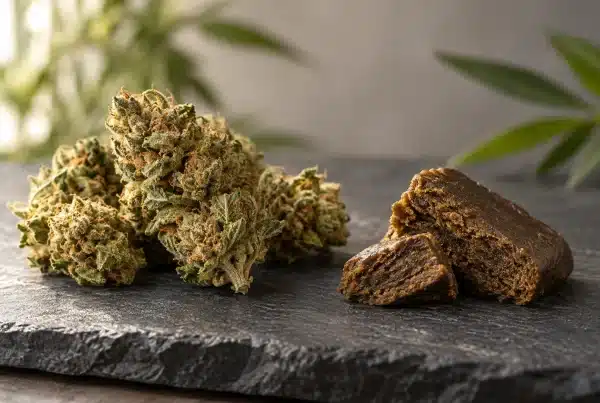
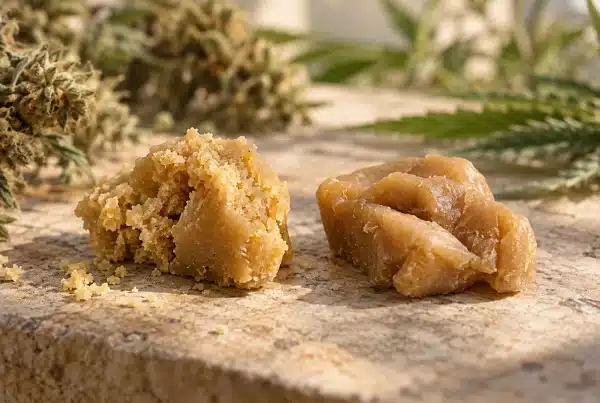
A photograph does not provide a quantified cannabinoid profile. It may show an appearance or presentation, but it cannot replace a dosage. To know what a sample contains, request a batch analysis. Aromatic descriptions and strain names do not answer this analytical question.
What is the difference between THCA and CBD?
These are distinct cannabinoids. THCA is related to THC through decarboxylation; it should not be treated as another name for CBD. Our article on the scientific definition of cannabidiol helps to put the differences into context, without attributing the properties of one to the other.
To understand THCA, look beyond the name
The most useful reading relies on four elements: the identity of the molecule, the composition of the product, the scope of the scientific data, and the regulatory conditions. A document may be convincing on one of these points while leaving the others open. Keep this distinction in mind when reviewing a new information sheet.
On The French Hemp Empire blog, the articles dedicated to cannabinoids aim to make these issues more accessible. For THCA, the key distinction remains the difference between what is directly measured and what the conversion process can produce. It is from this distinction that information on its effects and legality can be properly examined.
Sources and methodology of this report
The embedded links lead to official decisions and research publications used. Animal studies, analytical work, and human research on mixtures are distinguished. This documentation is not based on personal product testing or an independent analysis of the catalog. As The French Hemp Empire is a commercial website, this commercial relationship is part of the publication context.
- ANSM: decision of June 3, 2024 and update of information on classified cannabinoids, for the conditional scope of the exception concerning THCA.
- Légifrance: decree of December 30, 2021, decision of the Council of State of June 6, 2025 and judgment of the Court of Cassation of June 21, 2023.
- NIST: publications on total THC, assay methods, reference materials and certificate comparison.
- Scientific publications: Wang et al. (2016), McPartland et al. (2017), Palomares et al. (2020), as well as human research from 2025 and 2026 cited in the section on effects.