Cheap cannabidiol (CBD) poses a real health risk, as documented by French and European authorities since 2026. The French Directorate General of Health (DGS) has repeatedly issued warnings about inexpensive products contaminated with synthetic cannabinoids. The European Food Safety Authority (EFSA) has set a provisional safe daily intake of 2 mg of CBD per day for an adult. This data places the risks of cheap CBD in the category of concrete danger, not theoretical concern. Understanding these risks allows you to make an informed purchasing decision and protect your health.
What are the major health risks of cheap CBD?
The risks associated with low-priced CBD are not limited to poor product quality. They include direct health hazards, sometimes serious and irreversible.
Contamination by synthetic cannabinoids
The most documented danger in 2026 is the presence of synthetic cannabinoids in products sold as legal CBD. These substances, such as THCX, can be up to 10 times more potent than natural cannabis. Some synthetic cannabinoids even reach 200 times the potency of natural cannabis. At this concentration, an accidental overdose can occur even with small doses.

Severe poisonings and observed symptoms
The medical consequences of these contaminations are severe. Victims report seizures, psychotic episodes, memory problems, and intense anxiety. Nearly 500 cases of poisoning linked to CBD laced with synthetic cannabinoids have been recorded since 2025, with at least two deaths. More than 70% of the victims are between 13 and 18 years old, revealing a particularly high level of exposure among young consumers.
Side effects of improperly dosed CBD, even without contamination, include:
- Excessive sleepiness and fatigue
- Nausea and digestive problems
- Variations in blood pressure
- Dry mouth
- Interactions with anticoagulant or antiepileptic drugs
Liver risks and drug interactions
CBD is a potent enzyme inhibitor, meaning it disrupts the metabolism of many medications via liver enzymes. This property makes CBD particularly risky for people undergoing chronic treatment. Animal studies have identified a risk of liver enlargement, which led the EFSA to set its provisional daily intake based on this specific finding.
Serious poisonings do not originate from pure CBD, but from the infiltration of illegal substances into inexpensive products. This reality complicates detection for emergency services and exposes consumers to unforeseen risks.
How is the market for cheap CBD infiltrated by illicit substances?
Fraud in the low-cost CBD market relies on a simple but dangerous technique: spraying synthetic cannabinoids onto CBD flowers or e-liquids. The result is a product that looks like legal CBD but contains potent and illegal psychoactive substances.
Here's how this infiltration actually happens:
- Selection of cheap CBD flowers or e-liquids. Fraudsters choose low-cost products as a medium, often sourced from uncontrolled crops.
- Spraying with synthetic cannabinoids. Substances like THCX or other synthetic derivatives are applied to the product. These molecules are odorless and colorless.
- Sold under a legal CBD label. The contaminated product is marketed without mentioning the added substances, often at attractive prices to capture price-sensitive customers.
- Consumption without the buyer's knowledge. The consumer is completely unaware of the presence of these substances. Contaminated products are odorless and colorless, making identification impossible without laboratory analysis.
- Appearance of symptoms. The effects occur rapidly after consumption: malaise, temporary paralysis of the limbs, anxious flushes, panic attacks.
Detecting these substances poses a major technical problem. Chemical analysis of new synthetic cannabinoids requires specialized equipment costing around €600,000. This prohibitive cost explains why these substances circulate for a long time before being identified and removed from the market.
Pro tip: Before buying CBD online, always check for a Certificate of Analysis (COA) issued by an accredited independent laboratory. A reputable seller publishes these documents for each production batch.
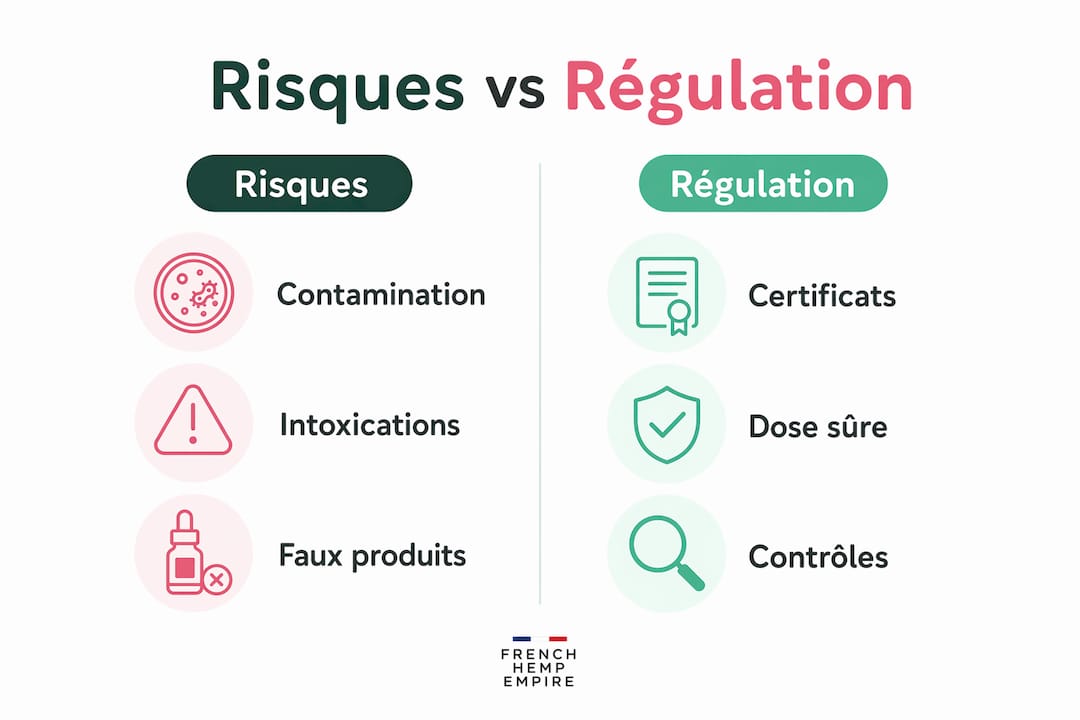
Young consumers and vulnerable individuals are the most at risk. The combination of an attractive price, a legitimate presentation, and the absence of visual signs of contamination creates a deception that is difficult to detect without prior information.
What regulations will govern CBD in 2026?
The regulatory framework for CBD is evolving rapidly in Europe, with increasingly precise health recommendations.
Provisional daily dose set by EFSA
In February 2026, the EFSA proposed a provisional safe daily intake of 0.0275 mg/kg of body weight, or approximately 2 mg per day for a 70 kg adult. This value is based on the risk of liver enlargement observed in preclinical studies. It means that the vast majority of CBD products available on the market far exceed this recommended dose.
At-risk groups excluded from consumption
| Risk group | Reason for exclusion |
|---|---|
| Under 25 years old | Brain development incomplete, documented overexposure |
| Pregnant and breastfeeding women | Risk of transfer to the fetus or infant |
| People undergoing chronic treatment | Drug interactions via liver enzymes |
| People suffering from liver disorders | Risk of worsening of liver enlargement |
These exclusions are not general recommendations. They are based on scientific data evaluated by the EFSA and national health authorities. The legality of CBD in France is conditional upon compliance with a THC threshold of 0.3%, but this does not guarantee the absence of health risks for all types of consumers.
Legal compliance of a CBD product is not enough to guarantee its safety. A product that meets the THC threshold can still pose risks to vulnerable groups or in cases of chronic overdose.
European authorities are calling for stricter import controls and improved traceability of CBD products sold online. France, through its Directorate General of Health (DGS), issued numerous public warnings in 2025 and 2026 regarding products contaminated with synthetic cannabinoids.
How to recognize quality CBD and avoid the risks associated with low prices?
High-quality CBD is distinguished by objective and verifiable criteria. Price alone is not enough to assess a product's reliability.
Essential quality criteria
The traceability and quality of a CBD product depend on several concrete elements:
- Certificate of Analysis (COA) per batch: each production batch must be analyzed by an accredited independent laboratory, with published and accessible results.
- Controlled origin of hemp: the plant must come from certified crops, ideally European, with traceability from seed to harvest.
- Full labeling: the CBD concentration, THC level, list of ingredients and manufacturer's contact details must be included on the packaging.
- Absence of synthetic cannabinoids: analyses must cover a broad range of cannabinoids, including the most recent synthetic substances.
- Compliance with European regulations: the product must comply with the legal limits for THC (0.3% in France) and the standards applicable to novel foods if consumed orally.
Comparison between high-quality CBD and low-end CBD
| Criteria | quality CBD | Low-end CBD |
|---|---|---|
| Certificate of analysis | Batch published, accredited laboratory | Absent or unverifiable |
| Traceability of origin | Complete, from seed to finished product | Opaque or non-existent |
| Labeling | Complete and compliant | Incomplete or misleading |
| Control of synthetic cannabinoids | Included in the analyses | Rarely performed |
| Price | Justified by quality control costs | Attractive but without guarantee |
To identify high-quality CBD, the most reliable rule is to favor sellers who publish their lab analyses transparently and consistently. A very low price should be interpreted as a warning sign, not an opportunity.
Pro tip: Always compare the certificate of analysis with the product label. If the CBD concentration stated on the packaging does not match the lab results, avoid the product and report it to the DGCCRF (French Directorate General for Competition Policy, Consumer Affairs and Fraud Control).
Key points
Low-priced CBD exposes consumers to serious health risks, including contamination by synthetic cannabinoids up to 200 times more potent than natural cannabis, and only purchasing from transparent and certified sellers guarantees safe consumption.
| Point | Details |
|---|---|
| Invisible contamination | Contaminated products are odorless and colorless, undetectable without laboratory analysis. |
| Documented cases of poisoning | Nearly 500 cases have been recorded since 2025, with more than 70% of victims aged 13 to 18. |
| EFSA dose very low | The provisional daily dose is set at 2 mg per day for a 70 kg adult. |
| Identified at-risk groups | People under 25, pregnant women and people on chronic treatment should avoid CBD. |
| Priority purchasing criterion | Require a batch analysis certificate issued by an accredited independent laboratory. |
What field experience reveals about cheap CBD
After years of following the evolution of the CBD market in France and Europe, one observation is becoming increasingly clear: low prices have become the main vector of health risk in this sector.
Most consumers who buy cheap CBD aren't looking to take risks. They're simply looking for a wellness product at a reasonable price. This is precisely the logic that fraudsters exploit. A product contaminated with THCX is sold exactly like regular, legal CBD. The buyer has no way of distinguishing it with the naked eye.
What worries me more than the poisonings themselves is the slowness of the regulatory response. The cost of a suitable analytical device is around €600,000. Few laboratories have one. Meanwhile, new synthetic molecules are appearing faster than they can be classified. The low-cost CBD market is structurally ahead of the authorities' regulatory capacity.
The solution isn't to avoid CBD. It's to buy only from vendors who publish their batch lab analyses, indicate the precise origin of the hemp, and comply with legal THC limits. These criteria aren't absolute guarantees, but they significantly reduce exposure to documented risks. Affordable alternatives to premium CBD exist. They simply require a little more vigilance when purchasing.
— Vanessa
Controlled and traceable CBD products at Thefrenchhempempire
Thefrenchhempempire offers a range of legal CBD products, each batch of which undergoes independent laboratory analysis. Traceability is complete, from the hemp's origin to the finished product. Strict adherence to the 0.3% THC limit is documented and verifiable by the consumer before any purchase.
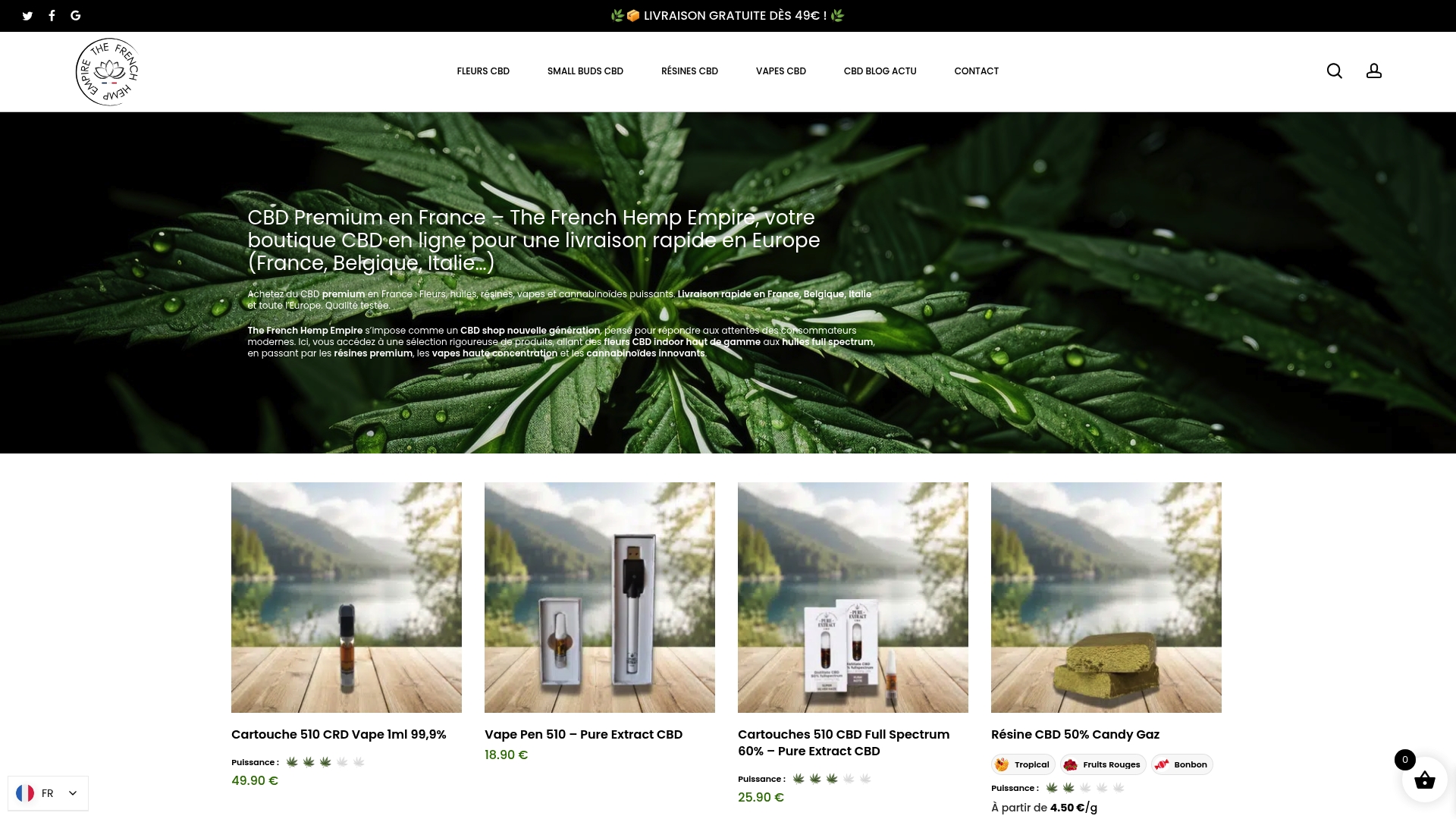
The premium CBD flowers and small CBD flowers available in the shop offer transparent value for money, with no compromise on health controls. For consumers seeking an alternative to vapes of unknown quality, certified CBD vapes are subject to the same rigorous testing requirements. Every purchase comes with discreet and fast delivery throughout Europe.
Frequently Asked Questions
Is cheap CBD dangerous?
Low-priced CBD presents high potential risks due to frequent contamination by synthetic cannabinoids, invisible to the naked eye and undetectable without laboratory analysis. Nearly 500 serious cases of poisoning have been recorded in France since 2025.
What dose of CBD is considered safe according to the EFSA?
In February 2026, the EFSA set a provisional daily intake of 2 mg of CBD per day for a 70 kg adult, based on the risk of liver enlargement. The majority of products available on the market far exceed this value.
How can you tell if a CBD product is of good quality?
A quality CBD product has a batch analysis certificate issued by an accredited independent laboratory, full traceability of the hemp origin and compliant labeling including the exact CBD concentration and THC level.
Can CBD interact with medications?
CBD inhibits liver enzymes involved in the metabolism of many medications, which can alter their effectiveness or increase their toxicity. People undergoing chronic treatment should consult a doctor before using CBD.
Who should not consume CBD?
People under 25, pregnant or breastfeeding women, and people undergoing chronic treatment or suffering from liver disorders are excluded from consumption recommendations according to European health authorities.