DC10 Super Foam 50% resin or 40% resin: which to choose?
On the same online store page, two DC10 resins might be labeled 40% and 50%, offer the same weight, and even cost the same price. Which one should you choose? The answer requires looking beyond the number printed in the name. DC10 Super Mousse 50% resin boasts a higher advertised concentration and an earthy, woody, and slightly lemony aroma. At 40%, MimoZz, Cartel Mousseux, or Space Static offer different profiles. The product pages consulted on September 28, 2026, show prices for these resins ranging from €14.50/g for 2g to €6.20/g for 50g. Price, quantity, texture, and aroma are therefore key factors in the comparison.
This guide is for adults who want to buy DC10 resin, helping them understand what each product description says and what to check. The term "DC10" is a marketing name; it is not sufficient to definitively identify a single molecule. The percentages listed correspond to the concentrations stated on the product information sheets, subject to batch analysis. They do not indicate an equivalence to THC or a guaranteed potency. We compare available information, calculate the prices of the different formats offered, and answer important questions before you order.
Super Mousse 50%: a precise reference, three dimensions to examine
The Super Mousse product information sheet combines a resin, the designation DC10, a stated percentage of 50%, and a promised texture suggested by its name. Each of these elements answers a different question. "Resin" designates the product family. "DC10" is the commercial name of the formulation. "50%" expresses a stated proportion that must be related to a precisely identified substance. "Super Mousse" directs the expectation toward a specific consistency, without, on its own, documenting the manufacturing process.
The aromatic families mentioned on the product sheet are lemon, wood, and spices. Its description also includes earthy, vegetal, and resinous notes. This creates a rather different portrait from a resin dominated by orange or dark fruit. These words can guide olfactory preference; they do not replace a terpene analysis and do not guarantee that two batches will have a strictly identical scent.
Looking at the price tag, this Super Mousse doesn't automatically command a premium compared to the 40% higher-concentration alternatives discussed here. This is precisely what makes the decision less straightforward than a simple "more concentrated = more expensive" argument. At equal weight, the aroma, the desired texture, the available batch information, and the necessary caution are just as important as the price point.
40% versus 50%: reading a stated concentration without attributing an effect to it
The difference between 40% and 50% is ten percentage points. If both data sheets measured the same substance using the same method, 50 would mathematically be 25% higher than 40 based solely on the stated value. However, this arithmetic calculation does not prove any difference in sensation, duration, or risk in the same proportions. Nor does it, on its own, explain what the 50% measurement represents when "DC10" is not chemically defined in the available information.
To transform a percentage displayed on a display case into usable data, four questions must be answered: what exact compound did the laboratory identify; what method and standard were used to measure it; which batch does the measurement concern; and what other cannabinoids does the product contain? If the answer is limited to the same trade name on the product information sheet and on the certificate, the compound's identity remains insufficiently documented. A certificate of analysis is only informative if its terms, scope, and connection to the sold package are clear.
It would also be misleading to convert the percentage into "THC equivalent" or a promise of potency. Cannabinoids have distinct pharmacological profiles, and publicly available data on a commercial formulation may be lacking. To decide between 40% and 50%, use the concentration as a key advertised attribute to verify, then examine other concrete criteria. If the composition cannot be clarified, the best purchase decision may simply be to wait for more precise information.
Four DC10 resins to be compared based on observable criteria
The examples below are from The French Hemp Empire product pages accessed on September 28, 2026. Their availability and prices are subject to change. Aromatic descriptions are provided as advertised profiles and may vary depending on the formulation and batch. The table facilitates an initial selection before consulting each product and its documentation.
| Reference | Announced concentration | Aromatic orientation displayed | Decisive question |
|---|---|---|---|
| Super Mousse | DC10 50% | Lemon, wood, spices; earthy and resinous base | Does the actual texture of the batch match your preference? |
| MimoZz | DC10 40% | Orange, mandarin, zest; vegetal and resinous base | Do you prefer a citrus-dominant flavor? |
| Sparkling Wine Cartel | DC10 40% | Earth, wood, plant matter, resin, spices | Are you looking for a 40% deep profile? |
| Space Static US | DC10 40% | Earth, resin, wood, lemony and spicy nuances | Is the name "Static" supported by a process datasheet? |
One difference is immediately apparent: MimoZz doesn't cater to the same aromatic desires as Cartel Mousseux, even though both are 40% ABV. Super Mousse and Space Static are closer in their woody and citrusy character, but they differ in their stated concentration and product line identity. Choosing solely based on percentage would therefore miss out on a significant part of the desired experience.
The actual price from 2g to 50g: what the table shows
The product pages for Super Mousse, MimoZz, and Space Static all show the same price per gram in each price range. The category also features Cartel Mousseux starting at €6.20/g; you should confirm the exact price variations on its product page at the time of purchase. The following calculation multiplies the weight by the price per gram displayed on the three verified product pages. It does not include any delivery charges or promotional discounts.
| Format | Price displayed per gram | Total calculated | Practical reading |
|---|---|---|---|
| 2 g | €14.50/g | 29 € | Lowest financial commitment to discover a reference. |
| 5 g | €11.20/g | 56 € | Unit price lower by €3.30/g in the 2g format. |
| 10 g | €9/g | 90 € | Intermediate level for a reference that is already known. |
| 25 g | €7.20/g | 180 € | Higher total amount despite the decrease in price per gram. |
| 50 g | €6.20/g | 310 € | Lowest unit price, budget and storage to anticipate. |
At these listed prices, comparing 10g of Super Mousse and 10g of MimoZz results in €90 for each product. The advertised 50% discount therefore does not, in this example, introduce any additional price per gram. This observation is limited to the product pages and price tiers viewed. A promotion, a price change, or a basket containing other items would alter the final total.
The temptation to go straight to 50g deserves further consideration. While the price drops to €6.20/g, the total cost jumps to €310, and you're tying up a significant amount of money on a single flavor and batch. For a first-time experience, paying €29 for 2g might be more sensible than searching for the lowest unit price without knowing the product. The best starting point depends primarily on your budget and your familiarity with the specific item.
Aromas: pronounced citrus, dark notes, or lemony wood?
MimoZz is aimed at those who prefer orange and mandarin. The description mentions zest and a tangy note, on a vegetal and resinous base. This composition promises a more vibrant perception than a profile dominated by earth. The word "sweet" can describe an olfactory impression; it doesn't necessarily mean that a sweet ingredient is present. You should consult the ingredient list to see which aromatic components are actually added or naturally occurring.
Cartel Mousseux shifts the focus towards earth, wood, and spice. Its similar name to Super Mousse might suggest that the two products differ only by ten points in concentration. However, the descriptions suggest a different interpretation: Cartel Mousseux is a 40% ABV sparkling wine with a very deep character, while Super Mousse gives more prominence to lemon on its label. The difference remains descriptive and will depend on the batch actually shipped.
Space Static US shares a triad of lemon, wood, and spices with Super Mousse in the shop's pictograms. Its description adds earth and resin. To differentiate between these two products, request a more detailed description of the batch or consider the texture and concentration listed as additional criteria. "US" here indicates inspiration or positioning until a documented American geographical origin is established.
Super Mousse, finally, appeals to resin lovers who prefer an earthy and woody base without completely sacrificing freshness. The major aromatic families are useful for eliminating a fragrance that doesn't suit you; they don't serve as a certificate of botanical authenticity. Without a terpene chromatogram, it's impossible to deduce which specific compounds dominate or their proportions. The product information sheet can describe an olfactory result without detailing all the materials that produce it.
Foamy texture: something that the eye and the name cannot guarantee
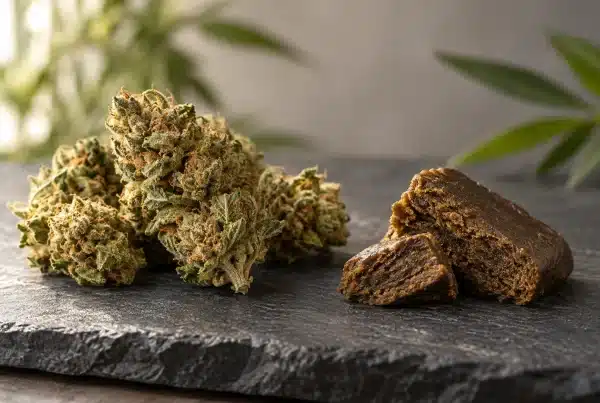
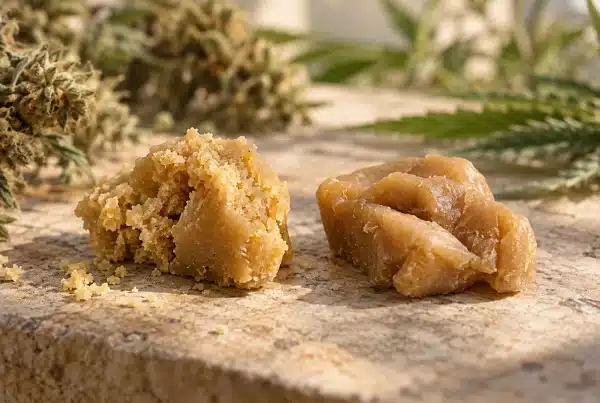
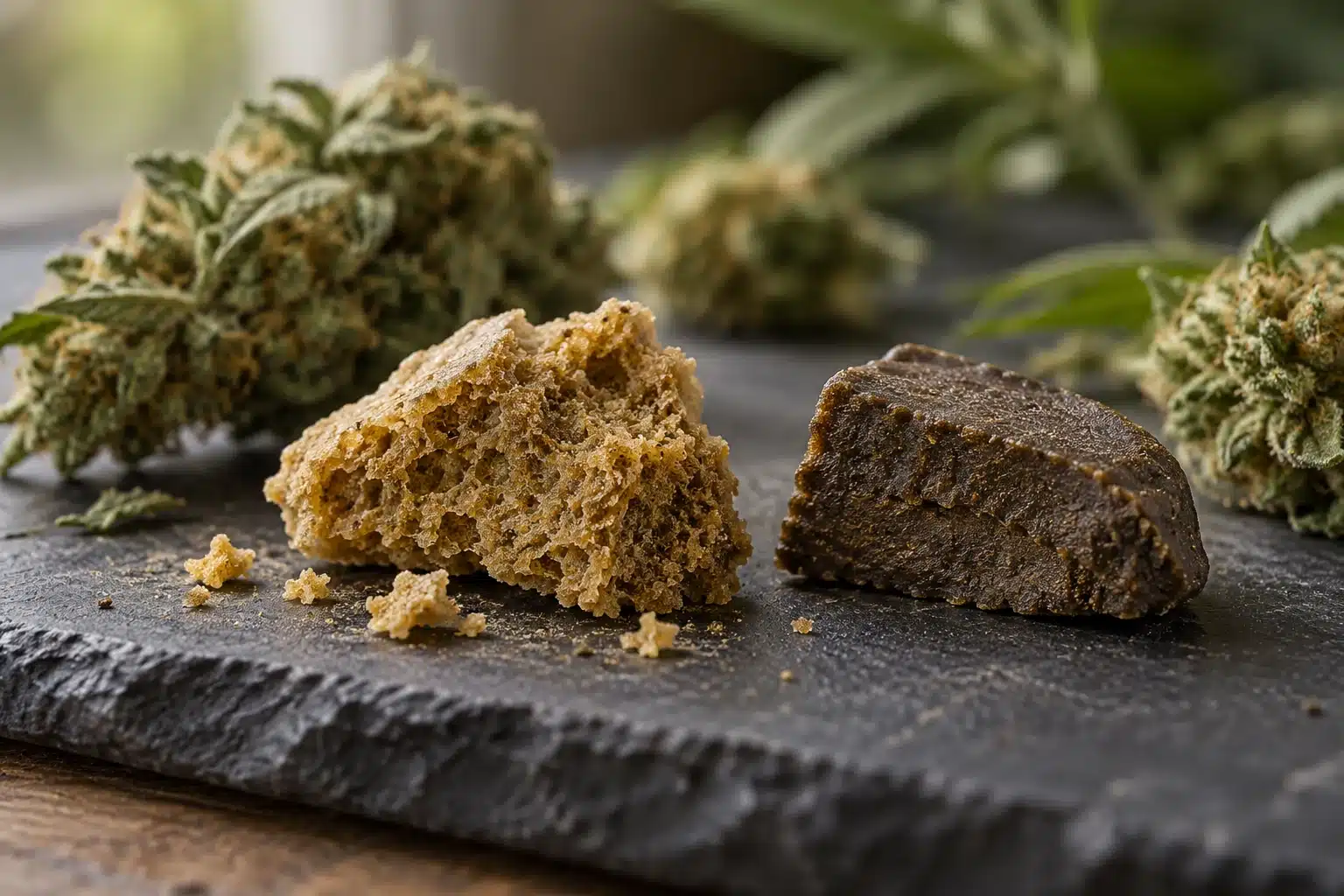
In the world of resins, "foamy" often evokes a material that is more airy or flexible than a very compact block. This image helps to visualize the desired style; it does not prove any manufacturing technique. A resin can be more brittle at low temperatures, more flexible when it warms up, or change its behavior after storage. Consistency depends in particular on the composition, humidity, packaging, and batch.
When comparing Super Mousse to Cartel Mousseux, don't assume that the same term means the same texture. Promotional photos may show a different batch, and lighting can accentuate porosity or color. Check if the product description specifies "soft," "crumbly," or "compact," if a recent photograph matches the available stock, and if customer service can describe the product actually shipped. A dated response that includes the batch number is more helpful than a generic statement.
Color is no more indicative of the stated concentration. Blonde resin isn't automatically richer in cannabinoids than brown; a dark surface doesn't necessarily indicate a defect. Differences between the exterior and interior can also occur. Appearance provides information about the product you're buying, but only a proper analysis can characterize its chemical profile. In a commercial comparison, consider the image as an indicator of appearance, never as proof of composition.
The same reasoning applies to "Static" in Space Static. This word might evoke a separation method familiar to concentrate enthusiasts, but the product name alone is insufficient to prove that such a method was used. To claim a process, technical information from the manufacturer is required. Buyers benefit from distinguishing between what is indicated in the name, what is described in the product information, and what is confirmed by documentation.
A useful certificate of analysis answers specific questions
For a formulation marketed as DC10, the certificate of analysis, often called a COA, is crucial. Start by verifying the batch number: the one on the document must match the bag or label that will be delivered. Then check the sampling date, the name of the laboratory, and the method of analysis. A result for an older formulation, a different product, or a non-comparable mixture does not directly document your purchase.
The most critical point is identification. "DC10" written in a results line sometimes simply reflects commercial jargon. Ask which chemical substance this line corresponds to, which standard was used, and how the measurement is expressed. In an enriched product, also inquire about the origin of the formulation and its distribution within the product. An overall figure without this information can give an impression of certainty that exceeds the actual available data.
The section on other cannabinoids is also important. It helps determine if the batch contains CBD, CBG, THC, or other compounds tested for by the method. A "not detected" result does not mean absolute absence: it depends on the detection limits and the list of substances tested. If the safety of the raw material is a concern, look for relevant contaminant testing and verify that it applies to the final resin.
A simple step before ordering is to ask the seller: "Can you send me the certificate for the batch of Super Mousse 50% currently being shipped and tell me the chemical definition of DC10 used for the dosage?" This question requires no additional jargon. It allows you to determine if the displayed data is verifiable and to honestly compare the 50% product to a 40% product.
DC10, regulations and caution: check the substance, not just the name
A trade name does not constitute regulatory authorization. To assess the status of a resin sold in France, it is necessary to know the actual substances it contains and compare their identification with the regulations applicable at the time of purchase. The presence of the word "DC10" on packaging does not establish either automatic conformity or automatic classification. To assert either based solely on the name would be excessive.
The ANSM (French National Agency for Medicines and Health Products Safety) has already classified several emerging cannabinoids as narcotics and draws attention to the potential discrepancies between the stated and actual composition of certain products. This official information warrants checking the batch and carefully reading the new product names. The list and its amendments should be consulted in the official decisions; their scope depends on the substance actually identified. A commercial product cannot replace this identification.
The store presents these products as being for adults only and recommends not driving after exposure. This precaution is consistent with the uncertainty surrounding emerging formulations. Keep the product out of reach of children and do not use it before driving or operating machinery. Therapeutic claims or promises of specific effects are not deductible from a declared rate of 40% or 50%.
If you have a personal question related to a treatment, pregnancy, or medical condition, a healthcare professional is better equipped to answer it than a product information sheet. This guide focuses on understanding the product offering and its documentation. It does not transform a resin into a health product and does not provide instructions for a substance whose precise identity may be unknown.
How to choose a first format without relying solely on the price per gram
The 2g size costs €29 on the compared pages. This is the most affordable total amount for comparing a product, even if the unit price is the highest. If your priority is to explore a particular fragrance, two small, separate purchases can provide a more interesting comparison than a large quantity of a single scent. However, you should recalculate your final basket, as any applicable fees or discounts depend on the terms displayed at checkout.
With 5g, each verified resin costs €56. The total is almost double that of the 2g sachet, even though the weight is 2.5 times greater: the lower unit price explains the difference. This price point might be suitable if the aromatic description already matches your preferences and you are satisfied with the batch information. However, if the DC10's identity or texture remains unclear, the price reduction per gram does not resolve either of these unknowns.
At 10g, the calculation gives €90. This size can serve as a reference when you already know the reference and want to compare prices between two DC10 resins. At 25g and 50g, the difference in cost becomes much more significant. A poorly stored supply will lose its value even if its price per gram was attractive. Examine the container, the closure, and the storage recommendations provided by the seller before choosing these weights.
Promotions displayed on the website, minimum order quantities, or discounts based on the number of products ordered can affect the total. Don't confuse the number of items in your cart with the quality of the information provided. Always compare the actual price paid for the actual weight delivered, once the offer conditions have been applied. Keep a screenshot of the product details and batch number if you need to find the information that influenced your choice.
Three purchasing situations that lead to three different choices
You especially want to explore citrus fruits
MimoZz 40% is the most straightforward choice in the comparison: orange, mandarin, and zest are prominent. Super Mousse has a lemony note, but this is set against a darker, more vegetal and woody background. At the same price for the same verified strength, choosing MimoZz instead of Super Mousse isn't about saving money: you're primarily buying a different aromatic profile. Ask for the batch details if orange notes are crucial for you.
You like earthy and mossy resins
Cartel Mousseux 40% and Super Mousse 50% both evoke a similar texture. Their aromatic profile is similar, with earthy and woody notes; Super Mousse adds a lemony facet, as indicated by the pictograms. The decision depends on the actual consistency, your preferred profile, and the quality of available analyses. Start by checking the exact prices of the Cartel Mousseux variation you're considering, then compare the same volume.
You are looking for the highest advertised rate in these examples
Super Mousse boasts a 50% discount, compared to 40% for the other three products. This criterion can guide catalog selection, but it should trigger stricter documentation requirements: identification of the active ingredient, proof of dosage, and a complete ingredient list. If this information is missing, the highest number on the label alone does not guarantee a better purchase. The 2g format reduces the amount spent while still requiring the same level of verification.
Frequently asked questions before buying DC10 resin
Is Super Mousse 50% necessarily "stronger" than a 40% resin?
No, we can only observe a stated . Without a precisely established composition and relevant pharmacological data, no reliable conversion to perceived intensity or duration is possible. Furthermore, two products may differ in their other components and resin base. Compare the batch documents before interpreting the figure in practical terms.
Why can Super Mousse and MimoZz have the same price?
The price of a product sheet is a business decision; it doesn't necessarily follow the advertised rate. Both products display the same price ranges of 2 to 50 g in the price lists. This allows you to choose based primarily on flavor and the information available for a fixed weight. Check your final shopping cart before purchase, as website prices may change.
Does the word "foam" guarantee a resin that is easy to crumble?
No. It suggests a style of texture, without specifying a measure of friability. Temperature, packaging, and formulation all affect consistency. A recent photo of the batch and a concrete description from the seller will tell you more than the name alone. Also, avoid inferring the extraction method or chemical composition from an airy appearance.
Is a label showing 50% sufficient to verify the THC content?
No. The 50% stated refers to the formulation designated "DC10" on this sheet, not necessarily to THC. The THC level must be identified separately in a proper batch analysis. A document stating only "DC10 50%" does not establish the complete composition or regulatory status of the product.
Is it better to buy 2g or 50g to take advantage of the price?
The 50g size reduces the advertised price from €14.50 to €6.20/g, but increases the calculated cost from €29 to €310. To discover a fragrance and check the texture of the product actually sent, a small sample size avoids committing this amount immediately. A larger size makes more sense if you know the fragrance code, batch number, and storage conditions.
The most useful decision can be made using four checks
Before finalizing your order, start by choosing your flavor family: pronounced citrus notes for MimoZz, earth and spice for Cartel Mousseux, or lemony wood for Space Static or Super Mousse. Then, compare the same weight to get a fair total price. Ask for a realistic description of the batch's texture if the foamy quality is your main reason for buying. Finally, request an analysis to identify what the DC10 level actually measures, as well as any other cannabinoids present.
The French Hemp Empire's DC10 category allows you to browse available products and check current options. With the same specifications and weight, Super Mousse stands out with its advertised 50% concentration and woody, citrus, and spicy notes; MimoZz emphasizes citrus; and the other resins offer deeper profiles. The choice becomes simpler when each number, name, and fragrance retains its true purpose: to help you select a well-documented product that matches your preferences.