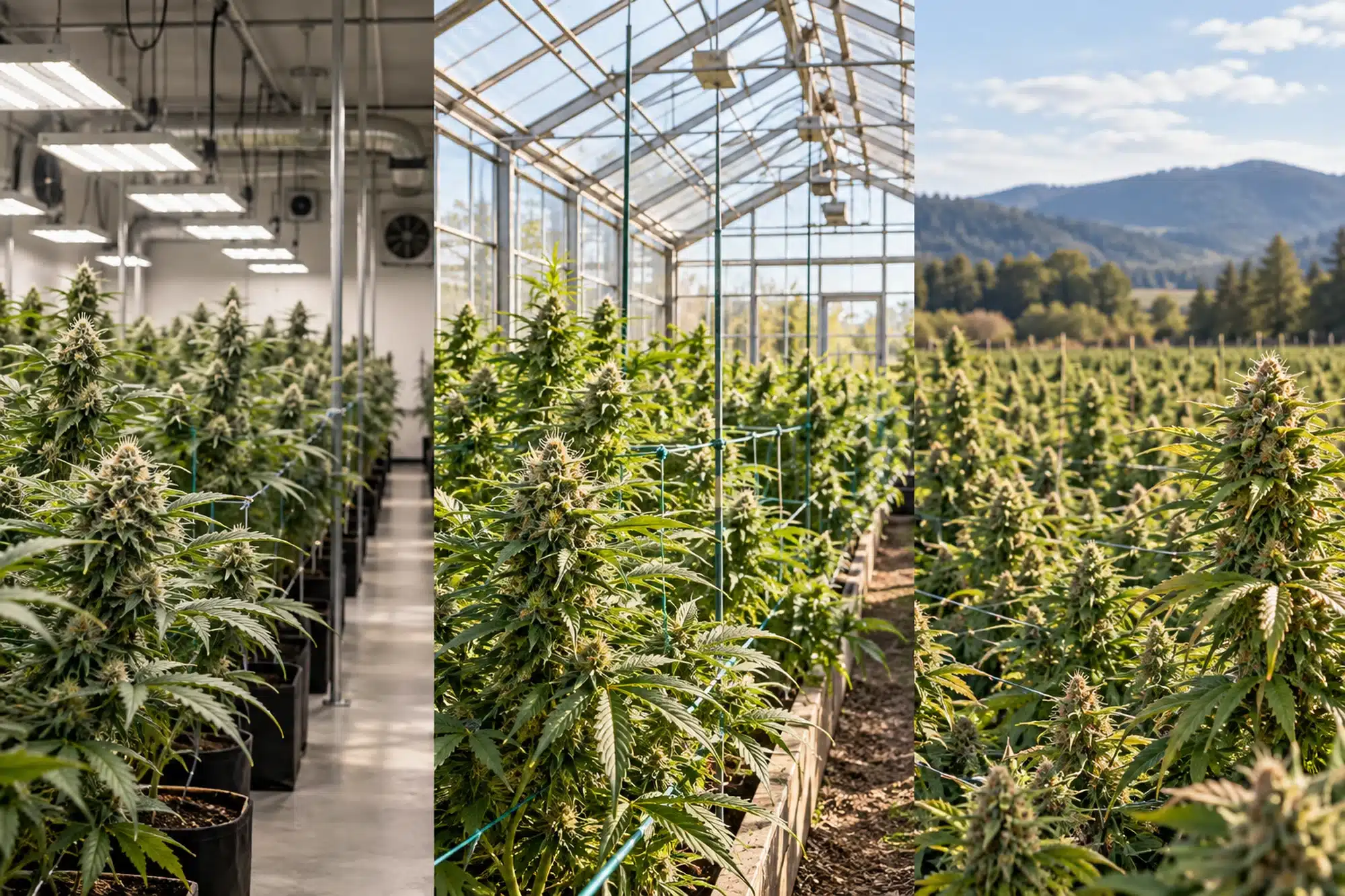
Indoor, greenhouse, or outdoor CBD flowers: what difference does it make to your purchase? These three terms primarily indicate where and under what conditions the plants were grown: indoors, in a greenhouse, or outdoors. They can guide your expectations regarding visual consistency, the influence of climate, and production costs. However, they are not enough to determine the CBD content, the absence of contaminants, the conformity of the batch, or the quality of its storage.
When browsing a CBD flower shop, you sometimes see three products with the same strain name but very different prices. One is advertised as "indoor premium," the second as "greenhouse," and the third as "outdoor." It's tempting to immediately rank them. This quick glance overlooks several crucial steps: strain selection, cultivation methods, harvesting, drying, sorting, any post-harvest additives, and final product analysis.
This guide from The French Hemp Empire helps you understand the terminology used by sellers, compare offers on a common basis, and ask specific questions before ordering. It does not rank all flowers in one category above those in another: a given batch must be judged based on its own characteristics. The scientific and regulatory references consulted on September 24, 2026, are listed at the end of the article.
Indoor, greenhouse and outdoor: what do these terms mean?
Indoor CBD flowers: growing indoors
"Indoor" means that the plants are grown in an indoor space where certain parameters can be controlled: lighting, air circulation, temperature, irrigation, and sometimes humidity. It doesn't refer to a particular variety or a single technique. Two indoor growers can use very different setups, substrates, protection strategies, and harvesting procedures.
The main advantage of this environment is the degree of control it offers. A producer can mitigate certain weather variations and more precisely plan their cycles. However, this control requires equipment, energy, monitoring, and expertise. A poorly managed installation can also experience problems with heat, ventilation, or contamination. Therefore, the indoor label does not guarantee that these parameters have been properly controlled.
In a product description, this information can help you understand part of the price and the expected appearance. It doesn't allow you to deduce the CBD percentage or conclude that the flowers are free of pesticides or mold. Ask for information about the batch rather than using the growing location as a guarantee of quality.
Greenhouse CBD flowers: grown in a greenhouse
"Greenhouse" refers to cultivation in a greenhouse. A greenhouse typically allows natural daylight to enter while providing protection and climate control. Depending on the setup, the grower may also use supplemental lighting, heating, active ventilation, shade screens, or automated irrigation systems. The term thus encompasses a wide range of practices.
A simple greenhouse exposed to the elements doesn't perform like a fully equipped one. That's why the term "greenhouse" describes a general framework rather than a fixed, universal compromise between indoor and outdoor growing. The outcome depends on factors such as the variety, the location, the growing season, and the greenhouse management practices. You might find flowers grown in a greenhouse that are very well sorted and preserved, or more heterogeneous batches.
If the label only specifies "greenhouse grown," ask what this actually means: origin, harvesting method, post-harvest processing, analyses, and composition of the finished product. This information will be more useful for comparing two bags than the vague notion of "the best of both worlds.".
Outdoor CBD flowers: outdoor cultivation
"Outdoor" means that the plants grow outdoors, exposed to the natural conditions of the location. Sunlight, rain, temperature, and seasonal variations play a significant role. The soil or growing medium, the choice of plot, and agronomic practices also influence plant development.
Outdoor cultivation can offer different yields and eliminate some of the need for artificial lighting. However, it exposes plants to unpredictable weather and biological pressures that the grower must manage. A harvest followed by rigorous drying can produce a desirable batch; a poorly harvested or improperly stored batch will not be satisfactory simply because it was grown in the sun.
Outdoor does not mean "organic" or "untreated." Nor does it automatically mean that the flower is coarse or low in CBD. These shortcuts confuse a growing environment with properties that require separate observations, documentation, or measurements.
Important differences to remember before comparing CBD flowers
The following table summarizes what the three designations usually suggest. It describes production possibilities, not guarantees attached to each product sold. Actual practices may deviate from these guidelines, particularly when greenhouses use equipment comparable to that of an indoor facility.
| Question | Indoor | Greenhouse | Outdoor |
|---|---|---|---|
| Environment | Interior space fitted out | Greenhouse, natural light and variable equipment | Outdoors and local climate |
| Possible control | High if the installation is properly managed | Variable depending on the greenhouse | Depends more on external conditions |
| Presentation of the flowers | May be regular; to be checked on the batch | Variable; to be checked on the batch | May be heterogeneous; to be checked on the batch |
| Price displayed | May reflect equipment and operating costs | Depends on the level of equipment and production | Depends on harvesting, sorting, and marketing |
| CBD content | This cannot be deduced from the method of cultivation | This cannot be deduced from the method of cultivation | This cannot be deduced from the method of cultivation |
| Batch security | To be verified through appropriate traceability and controls | To be verified through appropriate traceability and controls | To be verified through appropriate traceability and controls |
You will notice that the last part of the table is identical in all three columns. This is intentional: when the question concerns composition and contaminants, the relevant answer is found in information associated with the batch and the final product, not in an imaginary hierarchy between three English words.
Does culture really influence composition and aromas?
Yes, growing conditions can influence a plant's composition. However, this influence isn't uniform across all varieties and growers. Genetics, light, nutrition, water, temperature, and harvest stage all interact. Post-harvest conditions then alter the plant's appearance and certain aspects of its aromatic profile.
A study published in 2026 in the Journal of Chromatography A analyzed the chemical profiles of three cultivars grown indoors, in a greenhouse, and outdoors. In this experimental setup, the cultivar contributed more to the observed differences than the growing method. The authors did, however, note an effect of the production method on certain profiles. This illustrates the complexity of the subject, not a universal classification of flowers available in stores: three cultivars and a given protocol do not represent the entire market.
Another research publication comparing crops grown under natural and artificial light also shows that the cannabinoid and terpene profile depends on the context studied. The conditions and samples used in these studies do not allow for predicting the COA (Certification of Alcohol Content) of a specific product from a particular vendor. If a product label states "18% CBD," only an analysis properly linked to the batch can substantiate this claim.
Terpenes contribute to the aroma of hemp. A flower can exhibit vegetal, fruity, spicy, or resinous notes depending on its composition and storage conditions. However, the strength of an aroma is not a measure of CBD concentration, and the scent alone cannot guarantee the absence of contaminants. Ask whether the aromatic description is based on human perception or terpene analysis, and then interpret it according to its true nature.
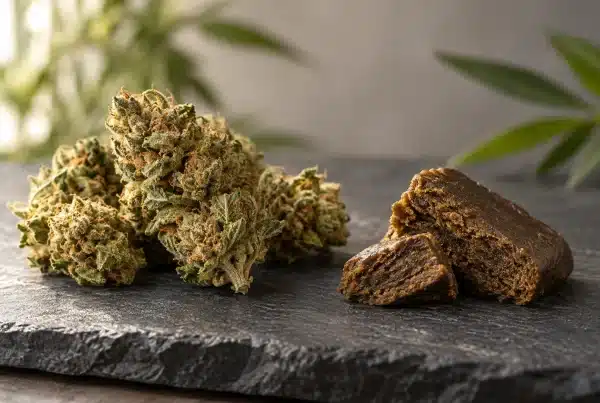
Finally, the presence of visible trichomes or compact flowers can contribute to your visual assessment. These are observations, not a numerical result. A flattering photograph taken of a previous batch does not replace examination of the product received or the documentation for the currently available product.
Why drying, sorting, and storage matter as much as cultivation
The plant does not become a finished commercial product the moment it leaves the field or growing room. After harvesting, drying, packaging, sorting, and storage must be organized. These operations can affect the appearance of the flowers, their scent, their moisture content, and their microbiological state. Two batches from the same plot can therefore have different characteristics if they have not undergone the same post-harvest conditions.
A flower that is too dry can crumble easily; a flower stored in poor conditions can develop a suspicious odor or show visible signs of spoilage. Conversely, a pleasing appearance does not rule out the presence of substances invisible to the naked eye. If you observe an unusual appearance, fuzzy areas, or a musty odor, do not use the product and contact the seller to have the batch examined. A photo and the order number will facilitate the exchange.
Sorting and trimming also alter the appearance. A flower composed of small buds is not necessarily from a different cultivation method than a large bud sold separately. Size can be determined by post-harvest grading. The Small Buds CBD specifically presents a commercial format; compare its actual contents, price, and batch documentation before assigning it a specific profile.
Storage at the seller's premises and at your home adds a final step. Keep the product in its original packaging, away from intense heat, direct sunlight, and inappropriate humidity, and follow the instructions on the packaging. Do not prolong the storage of a product showing signs of deterioration under the assumption that its indoor or greenhouse origin will protect it.
What documents are required for an indoor, greenhouse or outdoor CBD flower?
Start with a simple question: "Does the document I'm reviewing correspond to the batch currently being sold?" Look for a batch ID, product name, date, laboratory name, sample type, and a list of parameters tested. Then verify exactly what the results measure: CBD, CBDA, delta-9-THC, possibly THCA, other cannabinoids, and, where relevant, contaminants.
A certificate limited to the cannabinoid profile does not confirm the absence of pesticides, metals, or microbiological contamination. Conversely, a document on contaminants without a cannabinoid profile does not verify the stated CBD content. The guide to certificates and laboratory analyses can serve as a starting point; our CBD journal compiles other articles on traceability.
Pay attention to the nature of the sample. An analysis of plant material before the addition of an extract does not necessarily describe the enriched flower subsequently sold. An analysis of a previous variety or harvest does not automatically characterize the batch in stock. If the product information sheet uses the words "boosted," "infused," or "enriched," ask for the exact list of added substances and the results pertaining to the final product.
To understand the units, 1% by mass is equivalent to 10 mg per gram in the same sample. This conversion can be helpful when two reports use different display formats. It does not resolve differences in methodology, humidity, or definition between "measured CBD" and "total CBD." The coefficient sometimes used to estimate a conversion of the acidic form CBDA should not be applied without understanding the laboratory's preferred format.
An analysis can be authentic and still only cover a limited sample. The sampling method, the technique, the quantification thresholds, and any potential uncertainties all matter. To delve deeper into these points without getting bogged down in the numbers, consult the specific guide on reading analysis certificates, then ask the seller what their tests actually establish.
Does indoor mean "pesticide-free" and outdoor mean "organic"?
No. The cultivation method and the potential use of plant protection products are two different pieces of information. An indoor facility may use inputs. Outdoor cultivation may involve various practices. A greenhouse can be managed using several methods. The absence of desired residues must be linked to appropriate analysis, and an organic claim requires certification elements relevant to the production in question.
The phrase "naturally grown" is particularly vague. Does it refer to natural light, the absence of supplemental lighting, a specific farming practice, a geographical origin, or a marketing preference? Ask for a concrete answer. A transparent seller can explain the production location, the declared methods, and the available controls without promising zero risk.
The same reasoning applies to "premium," "artisanal," and "superior quality." These expressions can describe a marketing positioning, but they are not analytical tools. They become more useful when accompanied by observable criteria: the advertised format, batch preparation, composition, and the possibility of requesting documentation related to your purchase.
Why do CBD flower prices vary so much?
The cultivation method can influence costs: buildings, equipment, energy, and labor for some indoor production; investment in and maintenance of greenhouses; exposure to risks and the organization of large areas for some outdoor crops. These costs are not passed on to the price of each packet using a fixed formula. Yield, sorting, losses, flower size, packaging, order quantity, and marketing strategy also play a role.
First, compare the same weight and type of product. A five-gram bag of small flowers and a two-gram unit of large buds don't necessarily meet the same needs. Calculate the price paid per gram after the actual discount, then add any applicable delivery charges. If the website displays a tiered pricing system, don't simply apply the price of the highest tier to the small quantity you intend to buy.
Price alone doesn't reveal analytical quality. A more expensive product doesn't automatically have a better cannabinoid profile; a cheaper product isn't necessarily poorly cultivated. What you can expect at all price points is an accurate description and sufficiently precise information to know what you're ordering.
If your goal is to discover the aromas and presentation, a small quantity of your chosen strain can be more informative than a large volume purchased simply because the price per gram is lower. If you are already familiar with a particular flower, verify that the new order corresponds to the same batch or inquire about any harvest variations before assuming the result will be identical.
What role do geographical origin and variety play?
Origin addresses a different question than cultivation method. A greenhouse flower can be grown in various countries; an outdoor flower can come from regions with very different climates. The place of production can tell you about the stated traceability, agricultural conditions, and available documentation. However, it does not, on its own, establish the composition or general conformity in the country where you receive the package.
Similarly, a variety name does not guarantee the genetics of a batch. Names often circulate as marketing and aroma markers. To understand what a product actually promises, separate four pieces of information: its name, the variety or cultivar indicated, the stated cultivation method, and the batch's results. If one is missing, don't invent a connection between the others.
A laboratory study of several cultivars may show differences between plants and production methods; it does not validate the labels of all sellers. You can ask for the declared origin of the flowers and maintain a preference for a particular region or growing method, while separately verifying the evidence related to the product received.
What changes does the French legal framework make for CBD flowers?
The situation regarding hemp flowers in France is not simply a matter of the phrase "legal CBD" or a number printed on the packaging. Article1 of the decree of December 30, 2021, in its applicable version, specifically regulates the varieties of Cannabis sativa L. concerned, certified seeds, and certain industrial and commercial uses. It specifies a threshold of 0.30% delta-9-THC for the varieties and for extracts and products containing them, under the conditions defined by the text.
the Council of State overturned the general ban on the sale to the public of hemp flowers and leaves without narcotic properties. This decision does not mean that any product marketed as CBD is authorized regardless of its composition, intended use, and other applicable regulations. The addition of cannabinoids, claims, food presentations, and cross-border trade each require appropriate verification.
The cultivation method is not a legal status. "Indoor," "greenhouse," and "outdoor" do not address the question of the variety used, the substances present, the type of product sold, or its intended use. For orders shipped outside of France, also check the regulations of the destination country before relying on a French website.
The method of use requires particular attention.Health insurance providers remind consumers of the restrictions applicable to CBD-containing foods and flowers intended for consumption. Do not consider a commercially available flower as a food product authorized for ingestion or infusion. This distinction must be clearly indicated on the product packaging and in accordance with applicable regulations.
Precautions: effects, driving and enriched products
CBD is not a guaranteed cure for stress, insomnia, or pain. Its presence also does not guarantee that a product is free of side effects. According to the FrenchNational Health Insurance (Assurance Maladie), CBD can interact with medications; products marketed as containing CBD have also been linked to poisoning, particularly when their actual composition differed from the advertised one. If you are undergoing treatment, are pregnant, or have a specific medical condition, consult a healthcare professional.
A flower may contain THC within the limits permitted by applicable regulations. Its consumption may result in a positive result during a roadside check. Products enriched with other cannabinoids may have different effects and are subject to specific regulations; the name of the original crop does not indicate these risks. Avoid driving and operating machinery after exposure to a product that may impair alertness.
The products and information in this category are intended for adults. If a product description lists CBD blends, trade names for new cannabinoids, and overall percentages without a detailed breakdown of the substances, ask for the exact composition before making a purchase. For flower advertised as pure, check if any additives have been added after harvest.
How to choose between indoor, greenhouse and outdoor in five steps
- Define what you're looking for. Is it a preference for appearance, a curiosity about a particular culture, a specific size, or a budget? Formulating your criteria prevents you from expecting the word "indoor" to answer all your questions.
- Compare similar products. Distinguish between whole flowers, small buds, mixes, and enriched flowers. Check the weight, final price, and presentation of the contents being sold.
- Read the information sheet as a description, not as universal proof. Note the declared origin, the cultivation method, any additives, and whether the percentages are precise or indicative.
- Relate the results to the batch. Request a relevant analysis of the marketed product and verify the laboratory, dates, analytes, and identifier.
- Examine the product you received. Check the label, the condition of the packaging, and the appearance of the batch. Contact the seller if the information does not match your order.
You can browse The French Hemp Empire's CBD flower category by applying these five steps to each product that interests you. The category page allows you to locate the offer; the batch-specific information then helps you make your decision. If you have any doubts, a targeted question to customer service will be more helpful than an impromptu classification based on cultivation methods.
Example of comparison: three cards, three different questions
Let's imagine three hypothetical five-gram offers. The first is labeled "indoor, 18% CBD," the second "greenhouse, fruity flavor profile," and the third "outdoor, reduced price." These formulations highlight distinct elements. You cannot deduce that the first will be the most aromatic, that the second will contain more CBD, or that the third will be less controlled.
For the first, ask if the 18% refers to the measured CBD, an estimate of the total CBD, or a maximum value; look for the ratio associated with the batch. For the second, check if the flavor profile is a sensory description and what the seller says about the strain and harvest. For the third, calculate the actual price, identify the format, and request the same traceability information as for the others.
If all three vendors provide complete answers, your choice can then reflect your preferences and budget. If a vendor refuses to specify the composition of an enhanced flower or to link their analysis to the product being sold, the issue of verifiability becomes paramount, regardless of the listed price. This example does not describe any actual catalog references.
Frequently asked questions about indoor, greenhouse and outdoor CBD flowers
Is indoor-grown CBD flower always better?
No. Indoor growing offers the possibility of controlling several parameters, but the result depends on the strain, growing techniques, drying, storage, and batch. Compare actual products and available documentation, then choose according to your criteria. "Indoor" alone does not guarantee a higher CBD content or the absence of contaminants.
Is a greenhouse flower grown only in the sun?
Not necessarily. Greenhouses generally use natural light, but some also employ supplemental lighting and other equipment. The term "greenhouse" covers a variety of practices. Ask the seller for clarification if the cultivation method influences your purchase decision.
Are outdoor CBD flowers less concentrated?
It's impossible to draw conclusions based solely on the word "outdoor." The cannabinoid profile depends on several factors and is measured on an identified sample. Compare values from specific batches, expressed in comparable units, rather than using a general rule without analytical results.
What is the difference in taste between greenhouse and outdoor?
Greenhouses and open fields expose plants to different environments, which can contribute to variations in flavor profile. Cultivar, harvesting, and storage also play a role. Describing taste remains subjective; a terpene analysis describes measured compounds without perfectly predicting your personal taste.
Does an indoor flower necessarily contain fewer pesticides?
No. The growing location does not demonstrate which inputs were used or what residues are present in the final product. To answer this question, one must know the declared practices and examine test results relevant to the lot or sample in question.
Can the legality of a flower be deduced from its method of cultivation?
No. The regulations focus specifically on the varieties, composition, intended use of the product, and other applicable conditions. A flower grown in a greenhouse is not legally equivalent to another simply because it bears the same "greenhouse" label. The often-cited THC threshold alone does not constitute a license for all formulations.
How can we compare a whole flower to small buds?
Start by considering the type of product and the actual price per gram. "Small buds" refers to small flower heads, while "whole flowers" may indicate a different size. Next, check the composition and batch number of each. Differences in size alone do not determine the difference in cannabinoid content.
Does a strong smell prove that the flower is potent?
No. A scent primarily informs you about an aromatic perception and can be influenced by terpenes and preservation. The word "potent" can refer to the scent itself, its concentration, or a perceived effect. Ask which property is being discussed and, if applicable, on what level the statement is based.
From cultural words to the evidence of the lot
Indoor, greenhouse, and outdoor growing conditions are good starting points for comparison. They tell part of the plant's story, but the story doesn't end with harvest. The variety, post-harvest processes, the nature of the product sold, and the ability to verify your batch all determine the information you actually have.
When choosing CBD flower, prioritize your questions in this order: what's in the bag, which batch is it from, what are the results for this batch, what price will you pay, and what precautions should you take? You can then consider the cultivation method according to your preferences. This approach remains useful whether you're looking for a visually appealing indoor flower, a greenhouse-grown variety, or an outdoor harvest.
Sources and documentary methodology
This article was prepared on September 24, 2026, for The French Hemp Empire using the sources listed below. The cited studies describe their own samples and do not constitute independent analyses of the shop's products. The quality indications and commercial comparisons in this article are for guidance only, not guarantees regarding any particular batch.
- Caruso et al., Journal of Chromatography A, 2026 : original research on the effect of cultivar and cultivation method on chemical profiles, with the limitations of the sample studied.
- Comparative study published in Molecules, 2023 : cannabinoid and terpene profiles under natural and artificial growing conditions.
- Légifrance, decree of December 30, 2021, article 1, version in force : French provisions relating to varieties of hemp and to certain extracts and products.
- Council of State, December 29, 2022 : annulment of the general ban on the sale of flowers and leaves without narcotic properties.
- Health insurance, non-medical CBD, December 19, 2025 : health precautions, product composition and distinctions concerning food.