THV-N10 flowers or resins: how to choose based on price and aromas?
A single THV-N10 product might contain a Pineapple flower advertised at 20%, a 4x Filtered resin at 40%, and a Peach Cream Foamy resin at 50%. These three products differ in shape, aroma, and price per gram. When browsing Revuelto's selection, the first important question to ask is about format: do you want to examine a whole flower, with its botanical appearance and varietal notes, or a processed resin, whose texture and formulation require a different approach? The percentage alone won't decide.
The French Hemp Empire's THV-N10 category , as of our review on September 25, 2026, featured eleven 20% THC-rich flowers and six 40% or 50% THC-rich resins. This guide compares their purchasing attributes: advertised flavor profiles, 2g to 50g sizes, observed prices, and batch verification. It is intended for adult customers. Since THV-N10 is not a publicly recognized chemical name as standardized as CBD or THCV, the advertised THC level should always be considered in conjunction with a precise composition and analysis before drawing any conclusions.
Flower and resin: two different materials in the same range
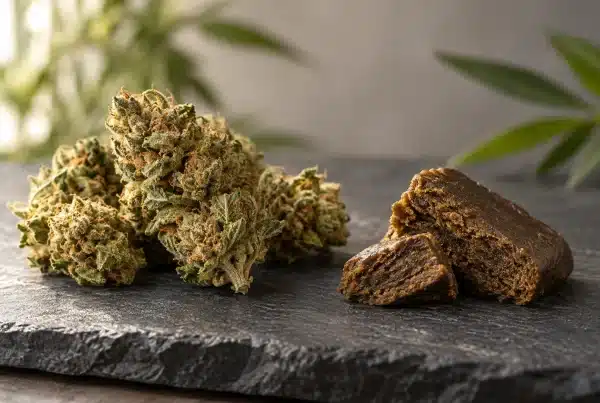
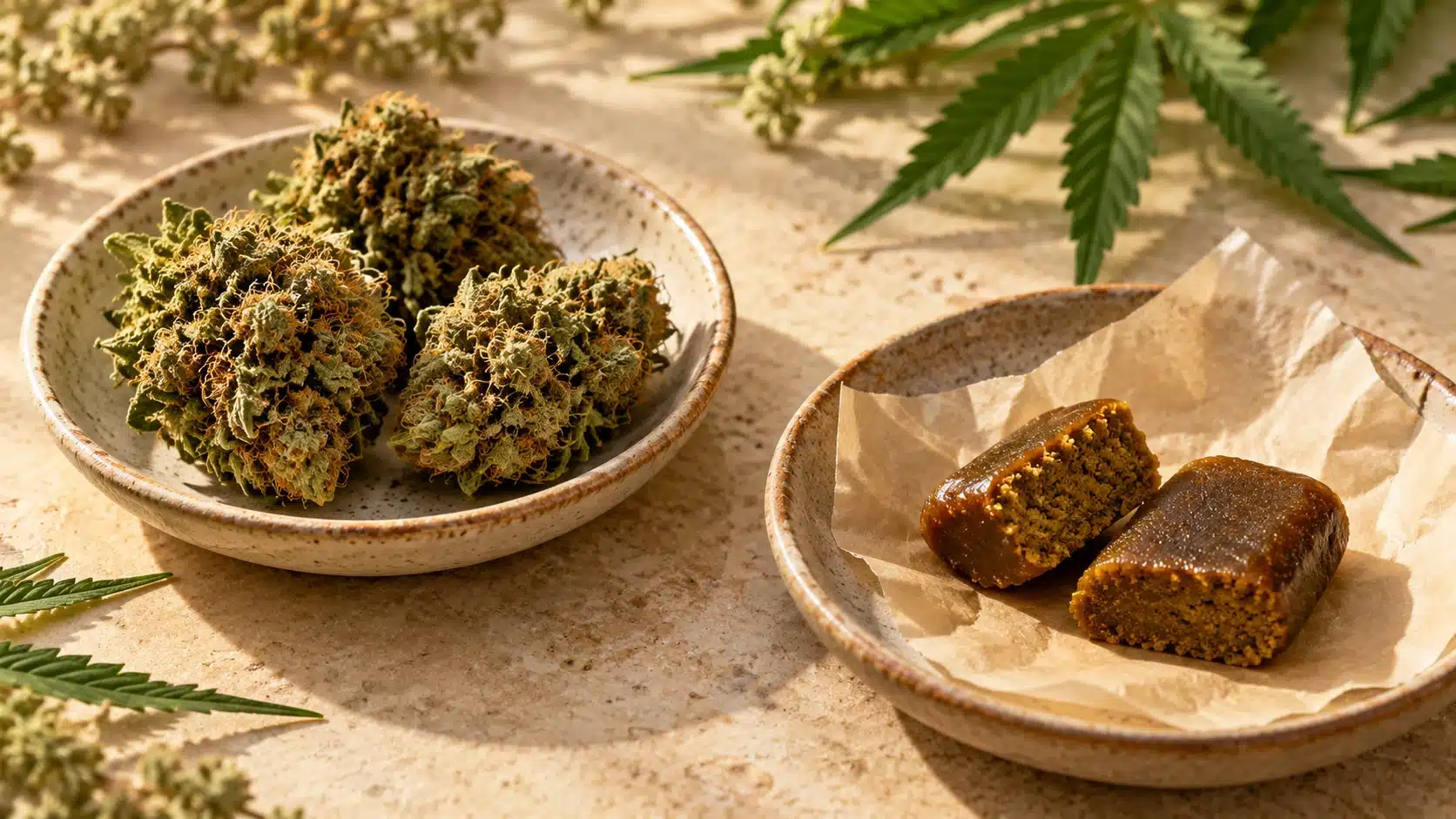
A flower retains the recognizable structure of a hemp bud: plant material, calyxes, small leaves depending on the trimming, and the surface bearing trichomes. You can examine its size, density, color, apparent moisture content, and the quality of the trimming. A THV-N10 flower "enriched to 20%" is presented as such on several product pages. This wording prompts you to check how the enrichment was carried out, what the final measured content is, and what the material contains before and after this step.
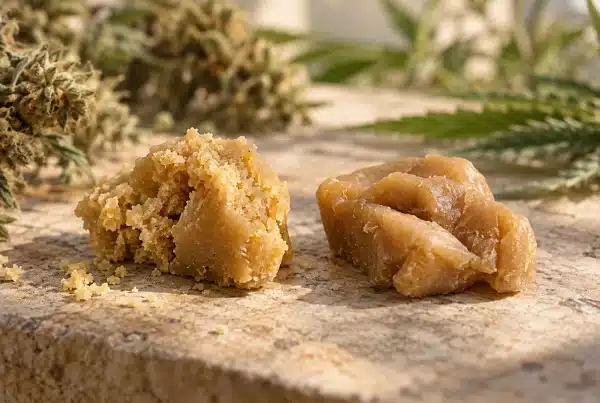
A resin is a processed hemp preparation, more visually or tactilely homogeneous depending on the method used, but also less easily discernible to the naked eye. The terms "foamy," "filtered," or "Revuelto" refer to different commercial characteristics. They do not, on their own, provide a complete description of the process, the details of the extraction, or a guarantee of purity. The texture can vary depending on the batch and the temperature. Ask for a current description if this is important to you.
We must avoid transforming this material distinction into a universal hierarchy of quality. A beautiful flower is not necessarily better documented than a resin; a darker resin is not necessarily of lower quality. These are simply two ways of presenting a material and a formulation. Quality is judged based on the batch, its measured composition, its preservation, and its conformity with the product information sheet.
A quick comparison of the two THV-N10 families
| Criteria | THV-N10 Flowers | THV-N10 Resins |
|---|---|---|
| References in the category consulted | Eleven varieties displayed | Six references displayed |
| Announced rates | 20% off on visible listings | 40% or 50% depending on the reference |
| Aspect to examine | Whole heads, manicure, caliber, apparent moisture | Flexibility, friability, homogeneity, batch appearance |
| Featured aromatic families | Tropical, citrus, pine, biscuits, red berries, wood | Earth, wood, spices, peach, caramel, fruit |
| Starting prices in the category | €9/g | €6.20/g |
| Point of analysis | Formulation of the finished plant product, cannabinoids and contaminants sought | Formulation of the finished resin, identity of the declared substance, and batch controls |
The pricing might seem surprising: resins here have a lower minimum price per gram than flowers, despite higher advertised percentages. This isn't a mathematical anomaly. The price depends on the marketing strategy, the raw material, the processing method, the volume, and the product range's positioning. The lowest price in a category generally corresponds to a large package and doesn't reflect the perceived potency or the analytical quality. Check the exact price difference to compare two purchases of the same quantity.
THV-N10 flowers: first choose an aromatic direction
The selection of flowers allows you to start with a very specific preference. Pineapple 20% offers tropical, sweet, and pineapple notes. Monster Cookie 20% offers vanilla, biscuit, and caramel. London Pound Cake US 20% combines red berries, vanilla, and biscuit. These three varieties demonstrate that the same percentage can correspond to very different sensory experiences.
If you like fresh notes, Amnesia US highlights lemon, citrus, and pine; Gorilla Glue combines lemon, wood, and pine; Kryptonite blends citrus, pine, and spices. If you prefer an exotic fragrance, Banana displays tropical, sweet, and banana notes, while Guava Ice US adds guava and mint. A more vibrant style might lead you to Atomik Apple, described with apple, red berries, and floral notes. These descriptors are taken from the fragrance descriptions and are used for pre-selection purposes; they are not the results of an independent sensory panel.
The flower then allows you to check the physical presentation of a batch. See if recent images are consistent with the expected size, trim, and structure. Variety names or the "US" designation alone do not guarantee a specific geographic origin or genetics. If plant origin is a purchasing criterion, request the corresponding agricultural and traceability information.
For an initial comparison, choose two very different strains: for example, Pineapple versus Monster Cookie, or Amnesia US versus London Pound Cake. Two flowers both described as lemony will give you less of a contrast than comparing a citrus strain with a dessert strain. A smaller size makes sense when it comes to testing your preferences before committing a larger budget to a single variety.
THV-N10 resins: a palette from earthy to luscious
The six resins in this category do not constitute a single hash profile. 4x Filtered Revuelto 40% displays woody, spicy, and earthy notes. Pablo Revuelto 40%, Sparkling Yellow Revuelto 50%, and Fast & Furious Revuelto 3.0 50% also share this woody, spicy, and earthy combination within the category. For a buyer drawn to a deep, subtly fruity aroma, these products form a natural pre-selection. The names and percentages do not guarantee that they have the same texture or composition.
At the other end of the spectrum, Peach Cream Mousseux 50% highlights sweet, earthy, and peach notes. Mochi Revuelto 50% combines woody, caramel, and fruity aromas. Someone who finds very earthy resins unappealing might start with these two descriptions. Peach and caramel are olfactory markers, without any evidence that these ingredients are actually used in the formulation.
The name of a resin can also draw your attention to its advertised appearance. "4x Filtered" suggests a filtration process; it doesn't specify the mesh size, four verified stages, or guarantee superior purity. "Foamy" might evoke a particular consistency, without describing the actual flexibility of each batch at all temperatures. If texture is crucial, look for a current photograph, a description of the material, and a clear answer from the seller. The appearance upon arrival can vary depending on the shipping temperature.
Resins with 40% and 50% potency should not be automatically ranked from lowest to highest. To understand what each percentage represents, THV-N10 must be defined in the manufacturer's documentation, the analytical method specified, and the finished formulation examined. The presence of other cannabinoids and batch-to-batch variations can also be significant. A comparison based solely on "50 is higher than 40" will tell you nothing about the aroma or the individual effect.
Price per format: the same weight changes the comparison result
Two verified product pages, Pineapple for flowers and 4x Filtered Revuelto for resins, feature a pricing grid from 2 to 50 g. The table below calculates the total cost of the products based on the prices per gram displayed on these pages on September 25, 2026. It does not take into account delivery charges, promotions, or subsequent price changes. The figures are intended to compare baskets of the same quantity and not to establish an equivalence between their contents.
| Format | Pineapple flower 20% | 4x Filtered resin 40% | Difference in this format |
|---|---|---|---|
| 2 g | €13/g, or €26 | €14.50/g, or €29 | The flower costs €3 less |
| 5 g | €12/g, or €60 | €11.20/g, or €56 | The resin costs €4 less |
| 10 g | €11/g, or €110 | €9/g, or €90 | The resin costs €20 less |
| 25 g | €10/g, or €250 | €7.20/g, or €180 | The resin costs €70 less |
| 50 g | €9/g, or €450 | €6.20/g, or €310 | The resin costs €140 less |
The price difference between 2g and 5g is the most useful lesson from the table. In the smallest size, the Pineapple flower is cheaper than the 4x Filtered resin; from 5g onwards, in the price lists consulted, the resin becomes cheaper overall for the same weight. It would therefore be misleading to answer "flower or resin, which costs less?" without asking for the quantity. This variation reflects the pricing of the compared sheets, not a general rule for the industry.
The total cost increases significantly with larger formats, even when the price per gram decreases. At 50g, the price differences are substantial, but choosing this option also commits you to a larger budget for a single product and requires proper storage conditions. When trying out a product, the lowest price per gram isn't necessarily the best buy. Check the exact prices of each other flower or resin before ordering: the example of Pineapple and 4x Filtered doesn't allow for automatically applying the same pricing grid to all listings.
Why a higher percentage doesn't prove better value
One might be tempted to divide the price per gram by 20, 40, or 50 to calculate a "THV-N10 price." This calculation would assume that the percentages measure the same, perfectly identified substance in the finished products, using comparable methods and representative batches. The THV-N10 designation alone does not offer all these guarantees. Furthermore, a quantity of material purchased is not a quantity of the compound actually available, nor is it a prediction of its effect.
The value of a flower includes its appearance, its grading, its preservation, and the aromatic profile of the product. The value of a resin includes the raw material, the process, the formulation, the texture, and its quality control. If the price of the resin is lower per 10 grams, this may reflect its market price, but it doesn't necessarily mean it's objectively "twice as good" simply because it's priced at 40% compared to 20%. Market concentration and customer preferences address different issues.
Before buying based solely on a percentage, check the certificate for the substance measured, the method, the laboratory, the batch number, and the complete composition. The test name should be clear enough to understand what "THV-N10" represents. If the certificate uses this term as the analyte, it's helpful to ask for its chemical definition or the analytical standard. This level of detail allows you to compare products based on documentation rather than the impression created by a number.
Which format is best for a first purchase?
For a discovery, start by defining what you want to observe. Do you enjoy looking at and smelling flower heads, comparing their manicures and varietal nuances? A flower like Pineapple, Monster Cookie, or Amnesia US fits this description. Are you primarily looking for a resinous texture and more earthy, woody, or pastry-like aromas? Examine 4x Filtered, Peach Cream, or Mochi. The desired format is a material preference, distinct from the advertised percentage.
The 2g quantity reduces the total cost of entry, even if its price per gram is high. In the example shown, 2g of Pineapple costs €26 and 2g of 4x Filtered costs €29, before fees. A trial purchase of each variety would cost €55 for a total of 4g, again before any discounts or fees. This would allow you to compare two varieties without tying up the amount required for 25g or 50g. This illustrative basket is only relevant if you are genuinely interested in both varieties.
For a familiar product, a 5g or 10g size can improve the price per gram while keeping costs more manageable than a 50g size. If you like to switch between flavors, two smaller packages might be more economical than one large one. Always compare the total price with your ability to store each package, especially when switching products and unsure if you'll like the new flavor.
How to read the documents of an enriched flower and a resin?
For a flower advertised as enriched, ask if the certificate refers to the finished flower as sold. An analysis of the plant before enrichment does not necessarily describe the product after the addition of a preparation. Also, inquire about the identity of what was applied, the stated distribution, the THC content, and relevant contaminant controls. The phrase "controlled cultivation" may indicate the flower's origin, but it does not automatically describe the entire formulation process.
For a resin, the question is similar: does the result refer to the finished resin or to an extract used among its ingredients? A mention of filtration, a clear color, and a pleasant texture do not demonstrate the absence of contaminants. Check the batch identifier and the results for the substances tested, as well as the origin and process when these are claimed. A "compliant" result without data and sample identification is insufficient to reconstruct the composition.
Within both categories, a distinction must be made between measured THC, other cannabinoids, and the advertised THV-N10. The THC threshold often cited for hemp products does not, on its own, indicate the status of all other substances. A product's compliance depends on its actual chemical identity, its composition, and the regulatory framework applicable at the time of sale. Trade names can change more rapidly than testing methods, making batch documentation particularly important.
Appearance, odor and storage after receipt
Once you receive your order, compare the label and batch number to the information sheet and documents provided. For flower, check the integrity of the buds, look for any fragments, examine the stems, check the color, and observe any unusual moisture levels. For resin, check that the texture and surface match the description. An abnormal odor or damaged packaging warrants an exchange with the seller. Your senses can help you spot discrepancies, but they are not a substitute for contaminant testing.
Keep products in suitable, tightly sealed containers, away from light, excessive humidity, and high temperatures. Flowers may lose their aromatic clarity or change texture if stored improperly. Resins may become softer or harder with temperature fluctuations. These physical changes alone cannot be used to determine cannabinoid concentration or sanitary quality. Follow the manufacturer's instructions and keep products out of reach of children and pets.
For a 25g or 50g size, consider how often you'll open it and how long you plan to keep the pack. Buying more to reduce the unit price assumes the flavor will remain to your liking and that you can preserve the quantity. A smaller size, while more expensive per gram, might be more economical if you haven't yet tried the particular flavor or if you like to switch flavors frequently.
Precautions specific to emerging cannabinoid formulations
There is less independent scientific data on formulations sold under the name THV-N10 than on clearly defined, conventional cannabinoids. A label stating 20%, 40%, or 50% does not reliably predict an individual's effect, duration, or level of alertness. The finished product may also contain other substances, whether intentionally added or not, hence the importance of knowing its formulation and analysis.
These products are for adult use only. Avoid driving or operating machinery after exposure that may impair your attention. If you are taking medication or have a medical question, consult a healthcare professional. Do not infer therapeutic properties from potency ratings or aroma. In case of any unexpected or concerning effects, seek medical help and retain batch information.
The French Agency for Food, Environmental and Occupational Health & Safety (ANSES) and the French National Agency for Medicines and Health Products Safety (ANSM) have issued a warning about cases of poisoning involving certain products marketed as containing CBD but actually containing other substances or unexpected levels of THC. This warning does not constitute an analysis of products in the THV-N10 category. It serves as a reminder why identifying the actual contents and conducting batch checks are more important than the appearance or name of a product line.
Concrete choices based on your preferences
You love the scents of pineapple and exotic fruits. The Pineapple 20% flower is the first profile to examine: its description advertises tropical, sweet, and pineapple notes. A resin in the range doesn't become tropical simply because it has a higher percentage. Check if its description also corresponds to this category before changing formats.
You may prefer notes of biscuit or caramel. The Monster Cookie 20% flower offers vanilla, biscuit, and caramel. The Mochi Revuelto 50% resin displays woody, caramel, and fruity notes. Both varieties share a gourmand theme, but one is a flower and the other a resin; their composition and actual fragrance may differ significantly.
You're looking for a woody and earthy profile. Resins 4x Filtered, Pablo, Mossy Yellow, and Fast & Furious all fall into this category. As for the flowers, Gorilla Glue, Kryptonite, and G13 US each offer a different combination of wood, pine, citrus, or herbaceous notes. Compare the detailed descriptions rather than assuming all resins are earthy and all flowers are fruity.
Your priority is the budget per 10g. The two verified examples show €110 for the Pineapple flower and €90 for the 4x Filtered resin. This doesn't automatically make the resin preferable: it doesn't have the same composition, aroma, or advertised potency. If you're looking for a Pineapple flower, the €20 difference reflects the cost of your chosen size and profile.
Frequently Asked Questions: THV-N10 Flowers and Resins
Is THV-N10 50% resin necessarily stronger than a 20% flower?
The figures reported are different, but they are not sufficient to classify the effects or the quality. It is necessary to define what is being measured under the name THV-N10, to verify the analyses of the finished products, and to avoid directly converting a percentage into perceived value.
Why do resins have a lower minimum price than flowers?
The category indicated "from €6.20/g" for resins and "from €9/g" for flowers, prices linked to larger formats. Pricing policies and materials differ. However, at 2g on two verified product pages, the Pineapple flower cost €26 and the 4x Filtered resin €29. The quantity selected changes the comparison.
What does "4x Filtered" mean?
This is the name of a resin marketed with advertised filtration. It doesn't, on its own, document four precise stages, the mesh size, or the degree of purity. Ask for information about the process if this criterion is a factor in your purchase.
Does a flower enriched with 20% retain exactly the profile of the original plant?
This should not be assumed. Enrichment can change the final formulation. To know what the sold product contains, consult an analysis of the finished batch and the information on the added material.
Is THC included in the THV-N10 percentage?
The 20%, 40%, or 50% percentage refers to the advertised THV-N10 content and does not, on its own, indicate the THC content. THC and other cannabinoids must be identified and reported separately in the analytical documentation.
Which format should I choose to discover the range?
A 2g sachet reduces the overall cost and allows you to examine the appearance and aroma of a particular product. If you're truly undecided between flower and resin, compare two products with the aromatic profiles you're interested in, and then note the batch number of each.
Can the quality of a resin be judged by its color?
No. Color and texture provide clues about its appearance, but do not prove a percentage, purity, or the absence of contaminants. The batch record, composition, and analyses are necessary for these questions.
Compare by weight, decide based on the material sought
The THV-N10 collection offers two purchasing options. The 20% flower allows you to choose from a wide variety of plant profiles, from pine to pineapple and biscuit. The 40% or 50% resins offer different textures and aromas ranging from earth and spice to peach and caramel. The price depends heavily on the packaging: in the example shown, the flower is cheaper at 2g, while the resin is cheaper at 5g and above.
Your decision is best made by following this order: choose the material and aromatic notes that appeal to you, select a quantity that fits your budget, and then check the composition and batch analysis. The THV-N10 designation and its percentage are not enough to guarantee a clear chemical identity, effect, or conformity. An informed purchase begins with what the product information sheet actually allows you to verify.
Sources: THV-N10 category, Pineapple product sheet, 4x Filtered product sheet , and other related documents, accessed September 25, 2026; ANSES and ANSM alerts regarding the composition of certain products sold as CBD. Price comparisons are calculated using the price lists from the two aforementioned product sheets. Prices and availability are subject to change.