CBD may alleviate some symptoms associated with cannabis withdrawal, but there is no evidence that it alone can achieve sustained abstinence. The Cochrane of Treatments for Cannabis Use Disorder concludes that the available evidence remains too weak to recommend CBD preparations as an effective way to increase abstinence rates. This does not mean that CBD is useless, but rather that it should be considered as a possible support, never as a substitute for structured support.
Before any use, three things must be done:
- Talk to a doctor or addiction specialist, especially if withdrawal is accompanied by marked anxiety or severe sleep disturbances.
- Check the quality of the chosen product (laboratory analyses, compliant THC levels, hemp traceability).
- Combine CBD with psychological support rather than using it as the sole strategy.
What the reference scientific synthesis says: according to Cochrane, trials conducted on CBD in cannabis use disorder have not demonstrated a sufficient effect on abstinence at the end of treatment, the methodological quality of the studies remaining limited.
In short:
- evidence indicates that CBD does not significantly increase abstinence rates during cannabis withdrawal, except as symptomatic support.
- CBD may reduce anxiety and improve sleep quality, but its effectiveness remains to be confirmed by more robust and standardized studies.
- Product quality is crucial, requiring laboratory analysis, traceable origin and the absence of contaminants to guarantee safety.
- CBD does not have a psychoactive effect comparable to THC, which limits its use as a substitute for the desired effect by regular users.
- Caution is advised in case ofdrug interactions or psychiatric treatments; consult a professional before use.
Table of Contents
- State of knowledge on CBD and cannabis withdrawal
- What withdrawal symptoms can CBD really relieve?
- How to use CBD during withdrawal, in practical terms?
- Precautions, interactions, and warning signs
- Recognizing a reliable CBD product to support your withdrawal
- What The French Hemp Empire guarantees about the quality of its products
- Things to remember before getting started
- Why I think we overestimate what CBD can do on its own
- Find a reliable CBD product to support your journey
- Sources
State of knowledge on CBD and cannabis withdrawal
The scientific literature on this specific topic remains surprisingly sparse, and this is precisely what should encourage caution. The Cochrane review of medications for cannabis use disorder reviewed the available randomized controlled trials and concluded that CBD preparations are probably ineffective in increasing abstinence at the end of treatment. The quality of the evidence was rated as low to moderate, which prevents any generalization.
This observation is largely explained by structural weaknesses in existing research:
- The available clinical trials often involve small samples, sometimes only a few dozen participants.
- The protocols vary enormously from one study to another: different dosages, different galenic forms, incomparable follow-up durations.
- Unlike other substances, there is still no consensus on a reference dose for cannabis withdrawal.
This methodological heterogeneity isn't a technical detail reserved for researchers. It has a direct consequence for you: no one can currently say with certainty that a precise dose of CBD will produce a given effect on your withdrawal. TheEMCDDA reports on cannabinoids point in the same direction: they describe interesting biological avenues, but emphasize the lack of robust clinical trials to validate a systematic use. Larger studies, with standardized dosages and comparable follow-up periods, are still needed before we can speak of a validated treatment rather than a promising avenue.
What withdrawal symptoms can CBD really relieve?
The benefits of CBD for smoking cessation are based on plausible biological mechanisms, not on a magical effect comparable to that of a conventional substitution medication. CBD interacts with the endocannabinoid system, modulates the activity of certain serotonergic receptors (5-HT1A), and acts on TRPV1 channels involved in the perception of pain and stress. This multifaceted action explains why the reported effects primarily concern anxiety and sleep, two common symptoms in the first few weeks of quitting.
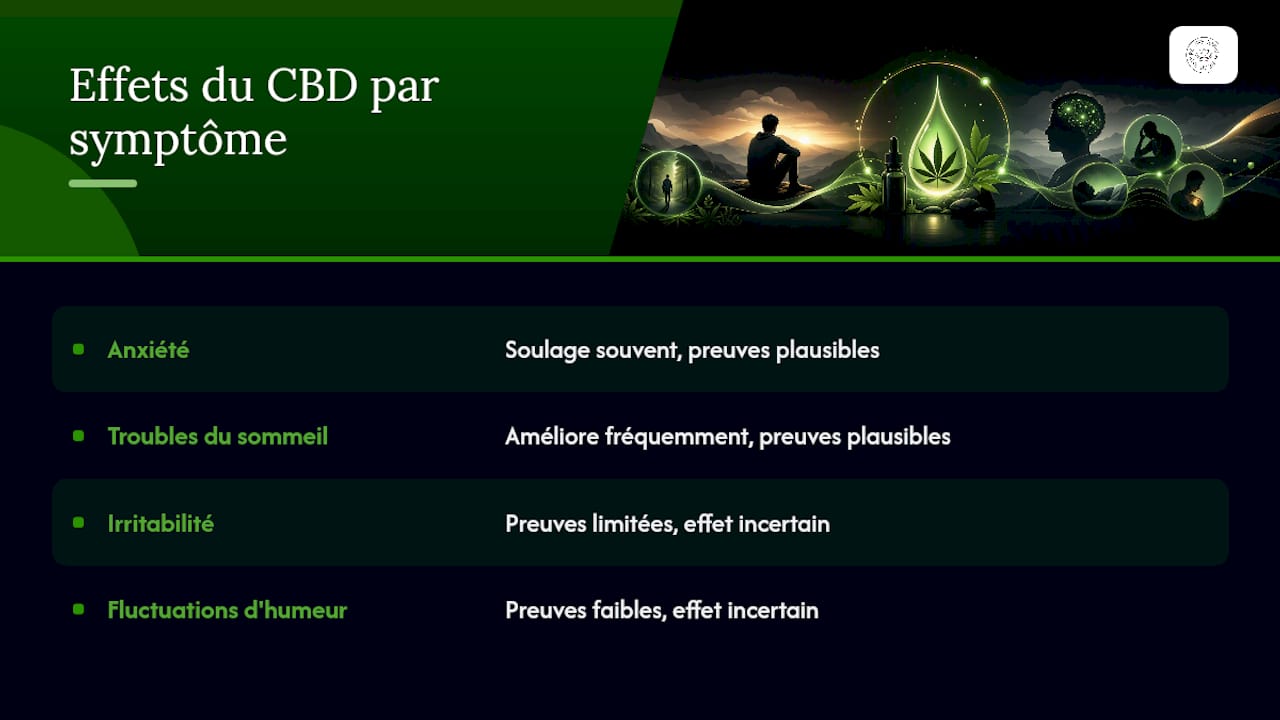
Drugs Info Service also indicates that CBD can help some people better manage anxiety and sleep disorders during withdrawal, while recommending caution and medical supervision.
However, for irritability or more pronounced mood swings, the data remains significantly less robust. CBD is not intended to reproduce a feeling of profound calm equivalent to that provided by smoked cannabis.
One point deserves to be clearly reiterated: CBD does not produce any psychoactive effects comparable to those of THC. It does not get you "high," it does not provide euphoria, and therefore does not replace the sensation sought by a regular user. This fundamental difference between the two molecules is detailed in our article on the differences between CBD and THC.
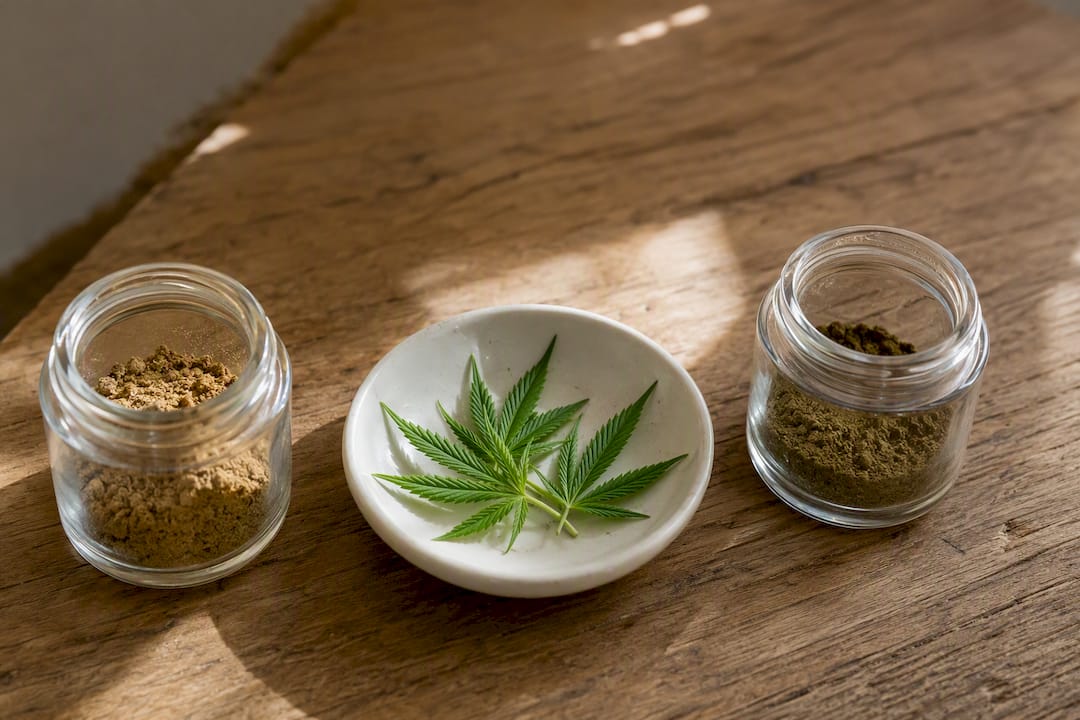
Pro tip: Each night, note your anxiety level and sleep quality on a scale of 1 to 10 on your phone. After ten days, you'll see more clearly whether CBD is actually making a difference for you, rather than relying on a vague impression.
How to use CBD during withdrawal, in practical terms?
The choice of form is almost as important as the product itself. Here's a reasonable progression for incorporating CBD into your smoking cessation plan:
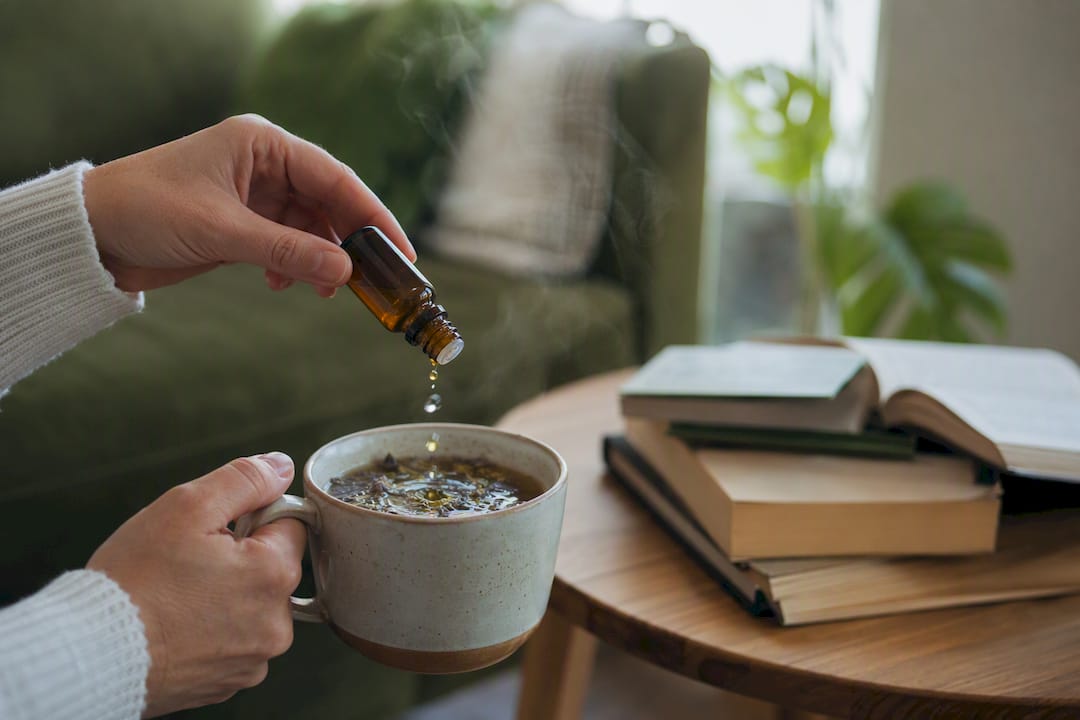
- Opt for sublingual oil. Placed under the tongue, it offers gradual absorption and easy dose adjustment drop by drop, unlike smoked or vaped forms which replicate the gesture associated with cannabis consumption.
- Avoid CBD vapes in the first few weeksif your goal is to break the inhalation ritual. The act itself can perpetuate cravings, even without THC in the product.
- Start with a low dose, often around 5 to 10 mg per dose depending on the concentration of the product, and observe the reaction over two or three days before adjusting.
- Increase gradually if necessary, noting the effects felt, without exceeding the doses usually described on the manufacturer's label.
- Combine this approach with broader support : professional guidance, breathing or relaxation techniques, and a concrete plan to replace the consumption ritual with another habit.
Our guide to getting started with CBD details this progression step by step, useful if this is your first experience with this cannabinoid.
Pro tip: If your withdrawal involves quitting smoking, change the habit first before changing the substance. Replacing cannabis cigarettes with CBD oil drops immediately breaks the mental association between stress and smoke.
Precautions, interactions, and warning signs
CBD is not withoutside effects. Fatigue, mild diarrhea, and changes in appetite are among the most frequently reported effects in clinical trials, generally at high doses.
One technical point deserves your attention: CBD is metabolized by cytochrome P450 enzymes, the same enzymes that process many common medications, including certain anxiolytics, antidepressants, and anticoagulants. An interaction is possible, and it can alter the effectiveness of these treatments in one way or another.
- If you are taking regular medication, consult your pharmacist or doctor before starting.
- Pregnant or breastfeeding women should refrain from using this product due to insufficient safety data.
- Individuals with a history of unstable psychiatric conditions should consult a doctor before use, as CBD may interact with certain psychiatric treatments.
Important note: According to Drugs Info Service, CBD should never replace medical supervision in case of severe withdrawal symptoms. Stop and consult a doctor if anxiety worsens or if new symptoms appear.
Recognizing a reliable CBD product to support your withdrawal
The quality of the product directly affects your safety. Poorly controlled CBD may contain THC levels exceeding the legal limit or traces of undesirable contaminants.
- Demand a third-party Certificate of Analysis (COA) that accurately indicates the cannabinoid levels, including THC.
- Check the origin of the hemp and the extraction method used, two elements that influence the purity of the final product.
- Make sure that the analyses also cover contaminants: heavy metals, pesticides, residual solvents.
- Opt for a shop that is transparent about its traceability, with responsive customer service and a clear return policy.
Our guide to recognizing high-quality CBD details each criterion to check before buying, label by label.
| Point | Details |
|---|---|
| Laboratory analysis | A third-party certificate of analysis must confirm the CBD and THC levels. |
| Traceable origin | The hemp used must have an identifiable and documented origin. |
| Absence of contaminants | The analyses must cover heavy metals, pesticides and residual solvents. |
What The French Hemp Empire guarantees about the quality of its products
Thefrenchhempempire applies the vigilance criteria described above to each item sold in its store.
- Independent laboratory analyses for each batch sold.
- Complete traceability from the origin of the hemp to the finished product.
- Strict adherence to the legal THC limit set at 0.3%.
Analytical transparency, with a consultable certificate of analysis, remains the most useful signal for a consumer who wants to limit their exposure to THC or contaminants.
For more information, see our guide on cannabinoid safety in France.
Things to remember before getting started
CBD may relieve some symptoms of cannabis withdrawal, but there is no solid scientific evidence that it guarantees abstinence, which necessitates its systematic combination with human support.
| Point | Details |
|---|---|
| Limited evidence | The Cochrane review judges the evidence insufficient to recommend CBD as a primary treatment. |
| Targeted symptoms | Anxiety and sleep are the symptoms where the effect of CBD is most plausible. |
| No psychoactive effect | CBD does not replicate the high produced by THC. |
| Drug vigilance | Check for possible interactions with a doctor or pharmacist before use. |
| Verifiable quality | Thefrenchhempempire provides laboratory analyses and complete traceability on each product. |
Why I think we overestimate what CBD can do on its own
The temptation is strong to treat CBD as a discreet substitute for cannabis, a kind of gentler version that replicates the ritual without the addiction. This is precisely where the prevailing discourse goes wrong. CBD does not act on the same pathways as THC, and trying to make it play this role means misunderstanding why withdrawal is difficult in the first place: it's not just a question of the molecule itself, it's a question of ritual, underlying anxiety, and deeply ingrained habits.
What the data actually shows is a modest potential for specific symptoms, primarily anxiety and sleep, and nothing more. Cochrane's cautious conclusion isn't bad news; it's an invitation to put CBD in its proper place: one supplement among others, never a strategy in itself. Readers seeking a one-size-fits-all solution should instead invest their energy in structured support and choose a product whose quality won't create a problem where they were looking for a solution.
— Vanessa
Find a reliable CBD product to support your journey
If you are looking for a product where you can check every parameter before purchase, rather than a vague marketing promise, Thefrenchhempempire systematically publishes laboratory analyses of its premium CBD flowers, with cannabinoid levels and compliance with the legal THC threshold clearly indicated on each product page.
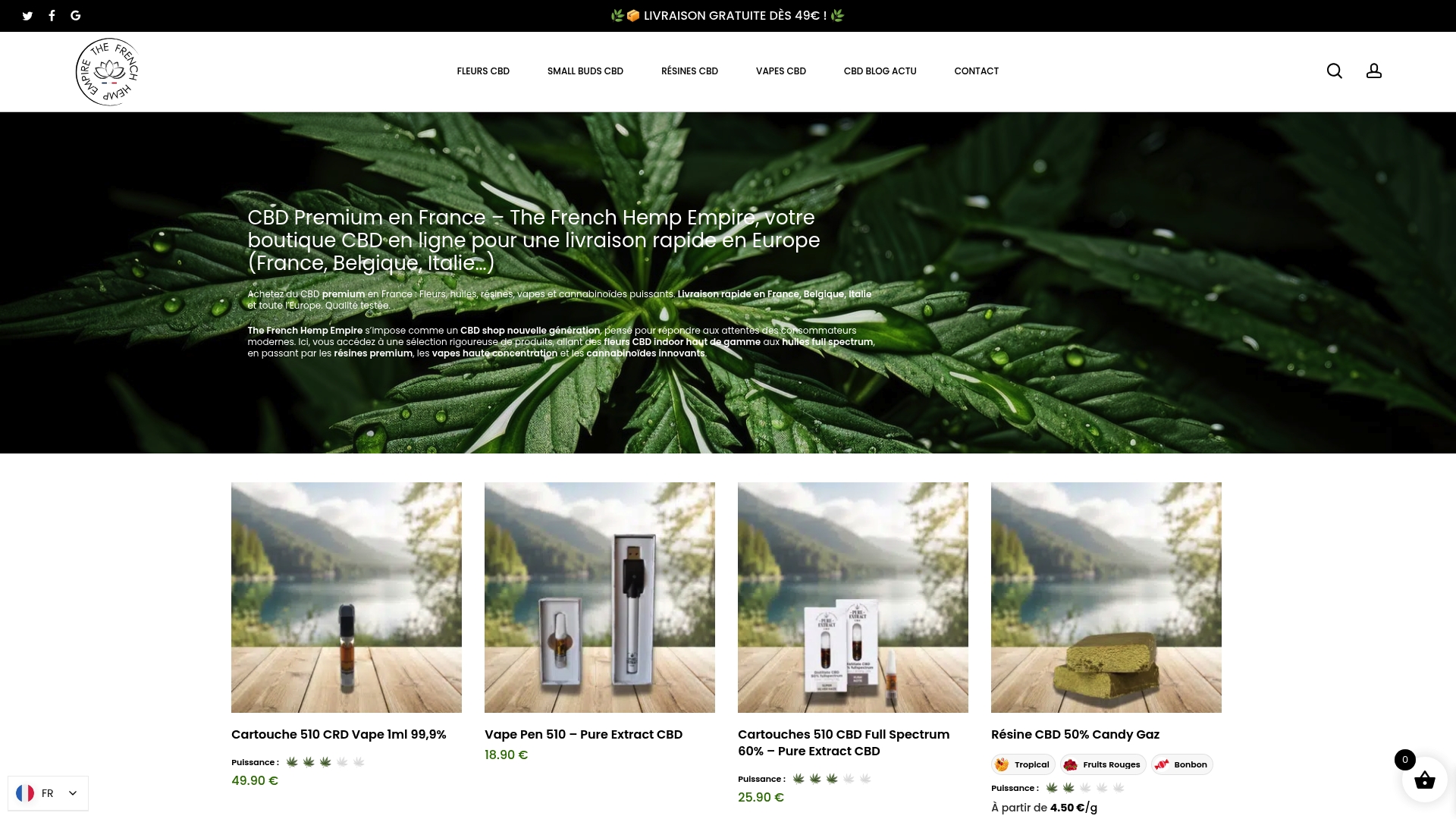
Whether you prefer sublingual oil for precise dosing or CBD resin for occasional use, each product comes with complete traceability, from the hemp field to delivery. You don't have to guess what's actually in the bottle you're holding.
Browse our selection of CBD flowers now and check the certificates of analysis yourself before placing your order.
This article provides general information and is not a substitute for professional medical advice. Consult a qualified healthcare professional about your specific situation before taking any action based on this content.
Sources
- Medications for the treatment of cannabis use disorder | Cochrane
- Drugs Info Service
- EMCDDA — report on cannabinoids