CBD may relieve some women's period pain, but it is not a proven treatment for dysmenorrhea. Current data is based primarily on preclinical observations and self-reported surveys, not on robust randomized controlled trials. Before considering cannabidiol for your menstrual pain, keep three principles in mind:
- Check for any interactions with your current medications
- Always start with a low dose, and adjust it gradually as needed
- Consult a doctor if you experience intense, recurring pain or pain associated with other symptoms
Key points
CBD acts on plausible anti-inflammatory mechanisms, but no randomized clinical trial has yet confirmed its specific efficacy against dysmenorrhea.
| Point | Details |
|---|---|
| Evidence still limited | Preclinical surveys and studies are encouraging, but no randomized controlled trial confirms the effect on painful periods. |
| Plausible mechanisms | CBD modulates anandamide, cytokines, and potentially prostaglandins related to uterine contractions. |
| Start low, increase slowly | Start with a low dose and gradually adjust over several cycles while keeping a tracking log. |
| Check the interactions | CBD is metabolized by CYP450 enzymes and may interact with anticoagulants, antiepileptics, or hormonal treatments. |
| Require a certificate of analysis | A recent and independent COA guarantees the regulatory THC level and the absence of contaminants. |
| Choose a traceable product | Thefrenchhempempire offers CBD oils and flowers with verifiable laboratory analyses before purchase. |
This article provides general information and is not a substitute for professional medical advice. Consult a qualified healthcare professional about your specific situation before taking any action based on this content.
Table of Contents
- How CBD might work on menstrual pain
- What do studies on cannabidiol and painful periods actually show?
- What form of CBD should I choose and what dose should I take during my period?
- Is CBD safe to take during menstruation?
- How to recognize a reliable CBD for menstrual use?
- What exactly is CBD, and how does it differ from THC?
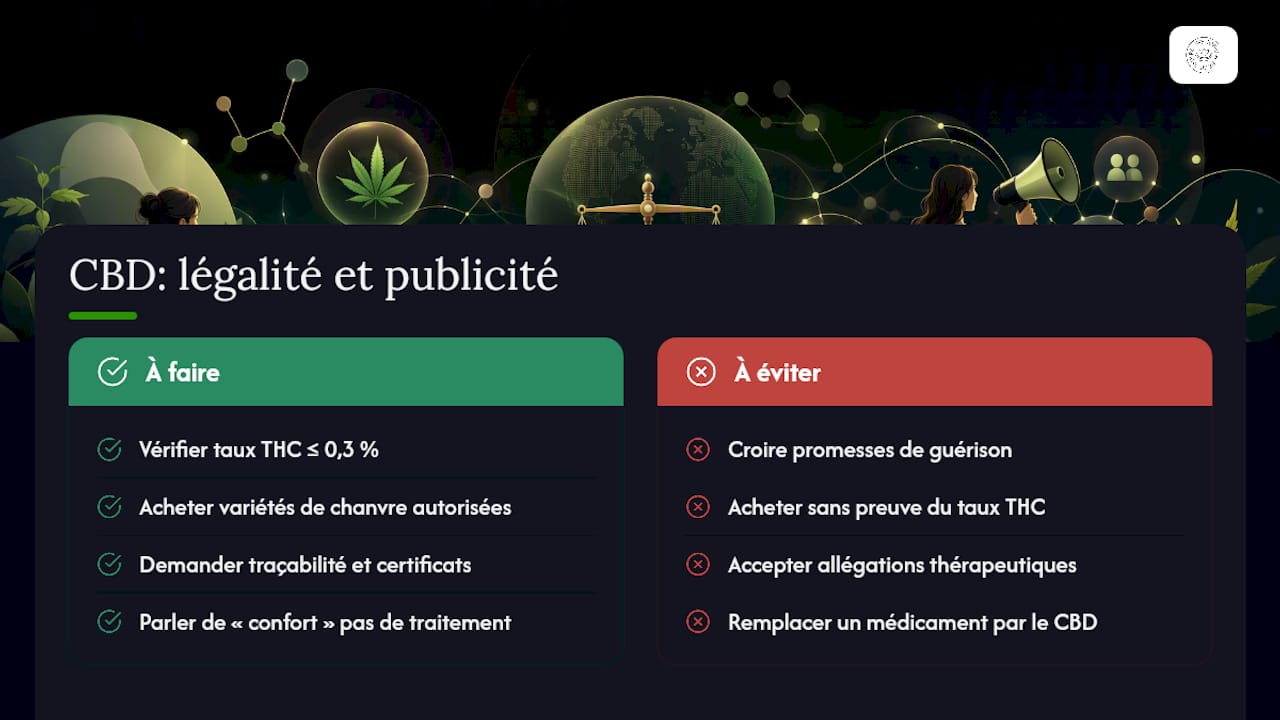
- Is CBD legal in France for use against menstrual pain?
- Sources
How CBD might work on menstrual pain
The human body possesses an endocannabinoid system (ECS), a network of receptors that regulates pain, inflammation, and mood. CBD does not act directly on CB1 and CB2 receptors as THC does. Rather, it modulates their activity indirectly, notably by inhibiting the breakdown of anandamide, a molecule sometimes called the "happy molecule" for its role in pain regulation. A higher concentration of anandamide may reduce the perception of pain during uterine contractions.
Cannabidiol also interacts with TRPV1 receptors, which are involved in the transmission of pain and inflammation signals. Biologically, several avenues point to a calming effect:
- Modulation of pro-inflammatory cytokines, which could reduce local inflammation
- Partial inhibition of certain COX enzymes, the action of which is similar to that of classic anti-inflammatories
- Possible reduction in the synthesis of prostaglandins, the molecules responsible for painful uterine contractions
Key point: a 2023 review published in Frontiers in Pharmacology confirms that CBD has plausible anti-inflammatory and antioxidant properties, while stressing that randomized trials are still needed to validate these benefits in humans.
Most of these mechanisms are derived from in vitro or animal studies. This doesn't mean they're wrong, but rather that they haven't yet been confirmed in the specific context of painful periods in humans. Understanding how the endocannabinoid system helps to clarify what CBD can, and cannot, claim to do.
What do studies on cannabidiol and painful periods actually show?
The available data falls into three distinct categories: self-reported surveys, small pilot studies, and preclinical work on cells or animals. None of these categories is equivalent to a randomized, double-blind clinical trial, the gold standard for proving therapeutic efficacy.
A critical review published in 2026 notes that some surveys report that approximately 60% of users experience relief, but it immediately points out the major limitation of these figures: to date, there are no randomized controlled trials specifically testing isolated CBD for dysmenorrhea. Such a self-reported figure is interesting, but it says nothing about the placebo effect, which remains particularly strong in pain studies.
This distinction bears repeating: a plausible mechanism in the laboratory does not equate to a proven result in humans. Non-steroidal anti-inflammatory drugs (NSAIDs) like ibuprofen, on the other hand, have benefited from decades of robust clinical trials demonstrating their effectiveness on painful uterine contractions. CBD does not yet have this level of evidence, even though its action profile presents some interesting similarities.
Research conducted in other contexts provides further insight. Controlled trials in sports settings have measured small effects on certain inflammatory biomarkers after exercise, with cautious conclusions regarding their practical implications. This work does not directly address menstruation, but it illustrates a consistent pattern: when the effects of CBD are rigorously measured, real but modest signals are often found, far from the promises sometimes seen on certain forums.
- Self-reported surveys: encouraging signal, but strong selection bias
- Preclinical studies: plausible mechanisms, but transposition to humans is uncertain
- Sports clinical trials: measurable but limited effects on inflammation
What form of CBD should I choose and what dose should I take during my period?
Not all forms of CBD react the same way to cyclical abdominal pain. The choice depends on the desired speed of action and the type of discomfort being treated.
- Sublingual oil takes effect in approximately 15 to 45 minutes, a useful timeframe for pain that develops rapidly. It is the most studied form and the easiest to dose using a dropper.
- Topical products (balms, roll-ons) target pain localized to the lower abdomen or lower back, without significant systemic absorption. They complement oral medication rather than replacing it.
- Eggs remain an emerging option, still poorly documented scientifically, to be reserved for women already familiar with CBD.
- Capsules offer a fixed and convenient dosage, but their effect takes longer to manifest due to the digestive process.
Regarding dosage, the principle "start low, increase slowly" remains the most cited rule by specialists, due to a lack of official consensus.
Two timing strategies exist: preventative use, one to two days before your expected period, to anticipate inflammation, and adjunctive use, as soon as the first cramps appear. Record your experiences in a simple notebook, noting the dose, the time of intake, and the intensity felt over three consecutive cycles; this is the only reliable way to judge if CBD actually works for you.

Pro tip: Always test a new form of CBD outside of your period to check for any sensitivity before relying on it during a painful cycle.
Is CBD safe to take during menstruation?
CBD is metabolized by cytochrome P450 enzymes, the same liver pathways that process many common medications. This enzymatic competition can alter the blood concentration of certain medications, including anticoagulants, antiepileptics, and some antidepressants.
- Anticoagulants: risk of increased blood concentration, therefore increased bleeding
- Antiepileptics: documented interactions that may alter their effectiveness
- Hormonal treatments (contraceptive pill): caution is advised due to a lack of specific data
The World Health Organization considers the overall safety profile of CBD acceptable in the short term, while acknowledging the lack of data on many long-term uses. This assessment does not preclude caution, especially in cases of pregnancy, breastfeeding, or a pre-diagnosed gynecological condition: these situations require medical advice before taking any CBD, regardless of the form chosen.
If any side effects occur (unusual drowsiness, digestive problems, mood changes), stop taking the product and consult a doctor. Unusually severe menstrual pain or pain that worsens from one cycle to the next always warrants medical advice, whether or not you are using CBD.
How to recognize a reliable CBD for menstrual use?
A reputable CBD product always comes with an independent Certificate of Analysis (COA), issued by a third-party laboratory and not by the manufacturer itself.
- Demand the COA : it must indicate the exact concentration of CBD, the THC level (below the regulatory threshold of 0.3%) and the absence of contaminants such as heavy metals or pesticides.
- Check traceability : origin of hemp, extraction method (supercritical CO2 is generally considered the cleanest) and recent analysis date.
- Look at the spectrum : full spectrum, broad spectrum or isolate, each option changes the cannabinoid profile and therefore the effect felt.
- Opt for clear instructions, with suggested dosage and warnings, rather than packaging that makes many vague promises.
Our guide on traceability and laboratory analysis details how to read a COA line by line.
Pro tip: A COA that is more than a year old, or is missing from the seller's website, should raise a red flag: the composition of a flower or oil can vary from batch to batch.
What exactly is CBD, and how does it differ from THC?
Cannabidiol (CBD) is one of the main active compounds extracted from hemp, a plant in the cannabis family legally cultivated in Europe for its non-psychoactive uses. Unlike tetrahydrocannabinol (THC), CBD does not produce a high or alter consciousness.
This difference lies in their mode of action on cannabinoid receptors. THC binds directly to CB1 receptors in the brain, triggering the psychoactive effects sought in recreational use. CBD, on the other hand, acts indirectly on the endocannabinoid system, without activating these same receptors in the same way, which explains the absence of a "high" while still offering potential benefits for pain, anxiety, and sleep.
In France and Europe, legally sold products must contain a THC level of less than 0.3%, a threshold which guarantees the absence of psychotropic effects while allowing the natural presence of traces of THC from the whole plant.
This distinction is particularly important for women who wish to use CBD for their menstrual pain without risking a positive THC test or feeling impaired during their workday.
Is CBD legal in France for use against menstrual pain?
In France, CBD is legal to sell when it meets the regulatory threshold of 0.3% THC and comes from authorized hemp varieties. According to the official Service-public , these products are marketed as food supplements or cosmetics, never as medicines.
This legal distinction has a direct impact on what a seller can legally claim. No brand can claim that its CBD oil "treats" or "cures" dysmenorrhea, a therapeutic claim reserved for products authorized for sale as medicines. Therefore, honest communication about CBD and painful periods should always focus on potential relief, comfort, or support, never on treatment in the medical sense.
In practical terms, this means you can legally buy and use CBD oil, flowers, or topicals in France for menstrual comfort, provided the product has a compliant THC level and a traceable origin. Be wary of sellers who make numerous promises of a cure. A compliant product is also characterized by transparency regarding THC levels and the applicable legal framework, a point that any serious purchase should verify before payment.
What Vanessa takes away from this data
What's striking in the literature on CBD and painful periods is the gap between the enthusiasm of personal accounts and the caution of researchers. The two aren't necessarily contradictory: a plausible anti-inflammatory mechanism can coexist with a lack of robust clinical evidence, simply because no one has yet funded the randomized trial that will settle the question specifically for dysmenorrhea. My advice remains simple: try it over several cycles, with a product whose certificate of analysis is verifiable, and talk to your doctor if you're already taking regular medication.
— Vanessa
Traceable CBD oils and topicals to support your cycles
Thefrenchhempempire offers a direct alternative to anonymous online sellers: each product comes with an independent certificate of analysis that can be consulted before purchase, with complete traceability from the origin of the hemp to the exact THC level.
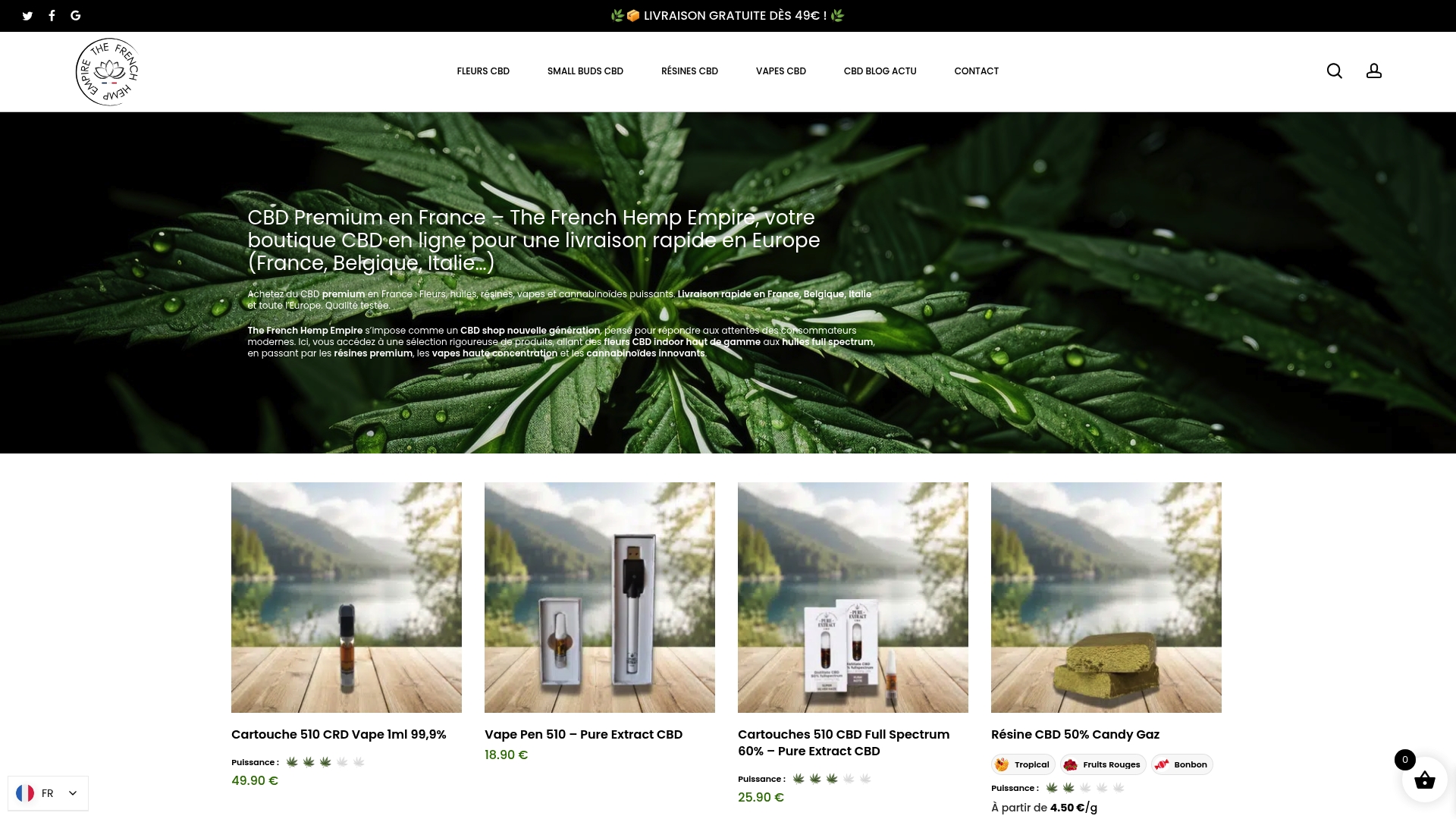
For use against menstrual pain, sublingual oil remains the most documented and easiest form to dose gradually, while a topical application directly targets the abdominal or lumbar area. Our premium CBD flowers and full-spectrum products strictly adhere to the legal limit of 0.3% THC, with compliance verified batch by batch. Before ordering, consult the Certificate of Analysis (COA) of the product you are interested in: it's the only way to know exactly what you are putting into your body. Find our entire range on Thefrenchhempempire and choose the form best suited to your next cycle.
Sources
- Public service
- Surgery-Gynecology — CBD and menstrual pain: what does science say?
- MDPI Nutrients — Study on CBD and recovery (2021)