


CBD concentrate refers to a category of hemp extracts with a significantly higher cannabidiol concentration than traditional flowers or oils. These extracts come in several distinct forms: wax, crumble, shatter, crystals, and isolate, each with specific physical properties, CBD levels, and methods of consumption. All legal products comply with the regulatory THC limit of 0.3% set by European and French regulations. Understanding the different forms of CBD concentrate available allows you to choose the product best suited to your individual profile, experience level, and wellness goals.
What are the main forms of concentrated CBD available?
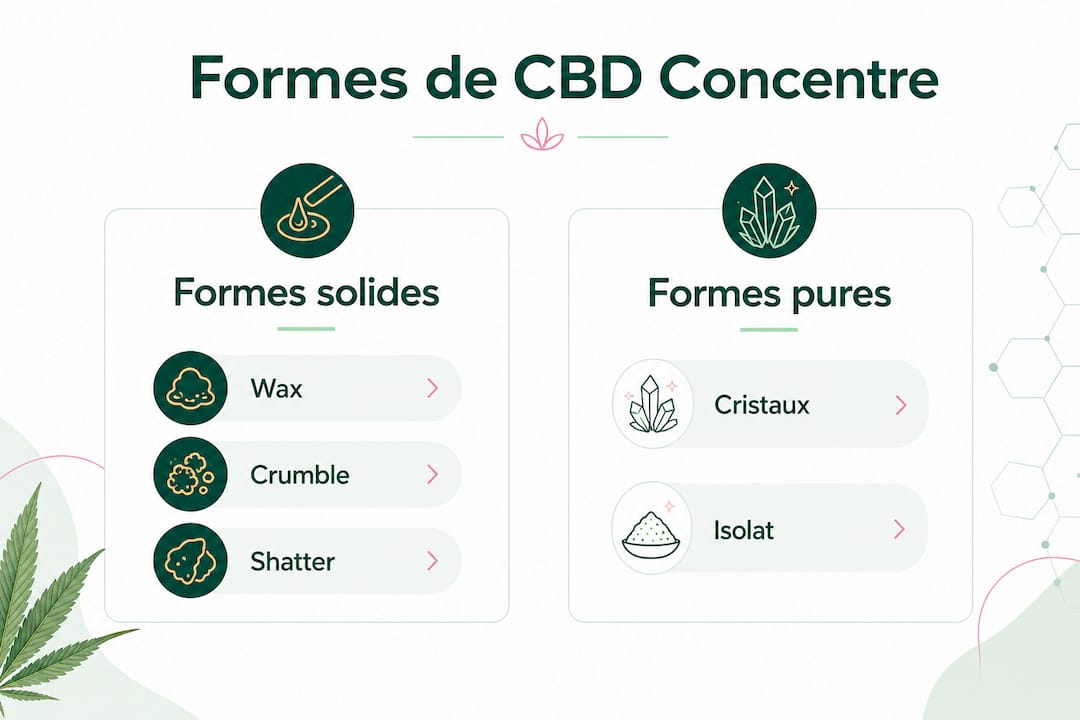
CBD concentrates are distinguished primarily by their texture, manufacturing method, and cannabidiol concentration. Each form is designed for a specific use and targets a different consumer profile.
Wax: waxy texture and rich aromatic profile
Wax is a malleable, waxy concentrate, primarily obtained through supercritical CO2 extraction. It boasts CBD levels between 60% and 90%, making it one of the most potent extracts on the market. Its high terpene content gives it a pronounced aromatic profile, appreciated by both curious beginners and experienced users. The wax's malleable texture makes it easy to handle with a dabber, but it becomes sticky when touched.
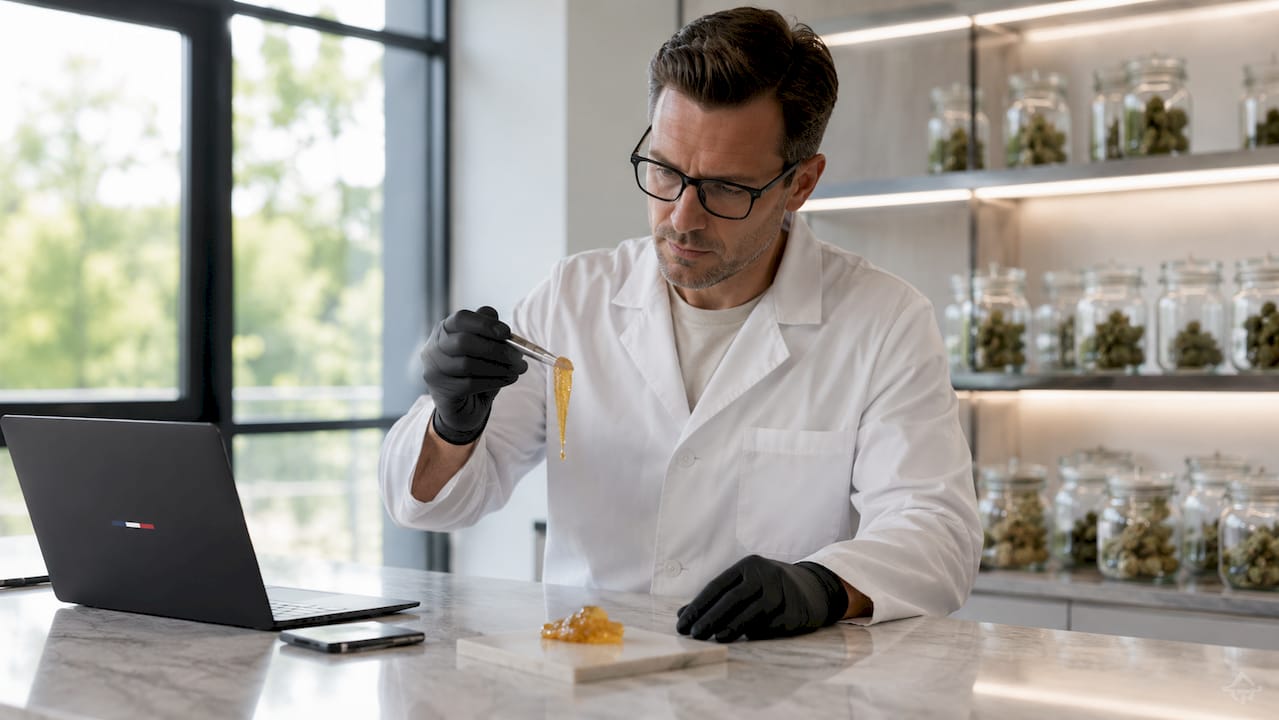
The crumble: easy to crumbly and easy to measure
The crumble is distinguished by its honeycomb texture, achieved through a specific purging process that eliminates solvents while creating an airy and crumbly structure. This texture facilitates dosing with a spoon or dabber, without the risk of material loss. The crumble is vaporized at temperatures between 170°C and 200°C to preserve the terpenes. One gram of crumble contains as much CBD as 4 to 6 grams of high-quality hemp flower, illustrating the concentrated potency of this extract.
Shatter: purity and vitreous consistency
Shatter is a glassy, brittle extract, recognizable by its amber transparency. Its high CBD concentration makes it suitable for vaporization, allowing for precise dosing. Its fragility requires careful handling, preferably with a metal tool. Shatter is best suited for consumers with prior experience using concentrates.
Crystals and isolate: maximum purity
CBD isolate is the purest form available. It contains over 99% CBD, with no THC or other cannabinoids, making it the ideal choice for those wishing to avoid any trace of THC. The crystals come in the form of a white powder or small crystalline aggregates. Their neutral aroma allows them to be easily incorporated into food preparations, infusions, or homemade oils.
Pro tip: Always use a stainless steel dabber to handle wax or shatter. Direct contact with your fingers heats the concentrate, makes it sticky, and throws off the dosage.
How to choose the right form of concentrated CBD for your needs?
Choosing a concentrate depends on three main criteria: experience level, desired method of consumption, and expected effects. Here is a structured approach to guide this decision.
-
Assess your experience level. Beginners start best with crumble or wax. These forms offer an easier-to-handle texture and allow for gradual dosing. Shatter and pure isolate are better suited to consumers already familiar with concentrates.
-
Define the method of consumption. Vaporizing remains the most common method for concentrates. Dabbing, which involves vaporizing the concentrate on a heated surface, produces a dense vapor and is particularly well-suited to wax. Isolate, on the other hand, can be incorporated into food or beverages without any special equipment.
-
Choose the right spectrum. Full-spectrum concentrates contain all the cannabinoids and terpenes of hemp, including trace amounts of THC below 0.3%. Broad-spectrum extracts remove the THC while retaining the other compounds. Isolate, on the other hand, contains only pure CBD. Each spectrum produces a different effect profile, often described as the "entourage effect" for full-spectrum products.
-
Consider the concentration. CBD oils available in France have concentrations ranging from 5% to 40%, while solid concentrates frequently exceed 60%. This difference necessitates strict dosage adjustments to avoid excessive consumption.
-
Gather the necessary equipment. Vaporizing concentrates requires a vaporizer compatible with solid extracts or a dabbing device. Powdered isolate is the only format that can be used without dedicated equipment. Consulting concentrate safety guide will help you approach this step methodically.
Which extraction methods influence the quality of concentrates?
The extraction method directly determines the purity, texture, and aromatic profile of a CBD concentrate. Two main approaches dominate the industry.
Supercritical CO2 extraction
Supercritical CO2 extraction is the gold standard for producing high-quality concentrates. It guarantees high purity and a preserved aromatic profile, without any chemical solvent residues. Supercritical CO2 acts as a natural solvent that dissipates completely after extraction, leaving a clean and safe product. This technique is also more environmentally friendly than methods using organic solvents.
The purging process and its impact on texture
Purging is the step following extraction that determines the final texture of the concentrate. A low-temperature, vacuum purge produces crumble, with its characteristic honeycomb structure. A faster purge at a slightly higher temperature yields wax, which is more malleable. Shatter results from minimal purging that preserves the extract's transparency. The final quality of a concentrate depends heavily on controlling purging temperatures to preserve terpenes while eliminating residual solvents.
Comparison of extraction methods
| Method | texture obtained | Solvent residues | Terpene profile |
|---|---|---|---|
| Supercritical CO2 | Wax, crumble, shatter | None | Preserved |
| BHO (butane) | Shatter, wax | Possible if the purge is insufficient | Variable |
| Ethanol extraction | Isolate, powder | Possible traces | Reduced |
Products extracted using supercritical CO2 are the most recommended to guarantee the absence of harmful residues. Compliance with French and European standards requires independent laboratory analysis for each batch.
How to consume CBD concentrates: methods and precautions
Consuming CBD concentrates differs fundamentally from consuming flowers or oils. The equipment, dosage, and precautions vary depending on the chosen form.
-
Vaporization with a dedicated vaporizer. Concentrate-compatible vaporizers heat the extract to precise temperatures, between 170°C and 200°C for crumble, preserving the terpenes and producing high-quality vapor. This method offers controlled dosing and rapid absorption.
-
Dabbing. Dabbing involves vaporizing a concentrate onto a heated surface, called a "nail" or "banger." This method produces dense vapor and is particularly well-suited to wax and shatter. It requires specific equipment and a certain level of technical skill.
-
Incorporation into food or beverages. The powdered isolate dissolves easily in fats such as coconut oil or butter. This method allows for discreet consumption, but absorption is slower and the effects appear with a delay.
-
Mixing with CBD flowers. Wax or crumble can be incorporated into a CBD flower to increase concentration. This approach is suitable for consumers wishing to gradually adjust their dosage.
-
Gradual dosage. Start with a very small amount, about the size of a grain of rice for solid concentrates, and gradually increase according to individual tolerance. The legal compliance of potent CBD products does not negate the need for a cautious approach to dosage.
Pro tip: Store your concentrates in an airtight glass container, away from light and heat. Exposure to air degrades terpenes and alters the texture, especially for wax and crumble.
The need for a dabber for precise dosing applies to all forms of solid concentrates. Avoiding direct contact with fingers preserves product quality and ensures consistent dosing.
Key points
The choice of a CBD concentrate is based on the match between the form, the spectrum, the extraction method and the method of consumption adapted to the consumer's profile.
| Point | Details |
|---|---|
| Main forms available | Wax, crumble, shatter, crystals and isolate cover all consumer profiles. |
| Concentration and dosage | The isolate contains over 99% pure CBD; the wax ranges between 60% and 90% depending on the extraction. |
| Extraction method | Supercritical CO2 guarantees the absence of residues and preserves the terpene profile. |
| Essential equipment | A concentrated dabber and compatible vaporizer are required for accurate and safe use. |
| Legal framework | All legal concentrates comply with the THC threshold of 0.3% according to European regulations. |
My perspective on the evolution of CBD concentrates in France
By Vanessa
The CBD concentrate market in France has diversified rapidly in recent years. What strikes me most is that many consumers approach these products with the same reflexes as they would oils or flowers, without adapting either their equipment or their dosage. This is precisely where the difficulties arise.
Wax and crumble remain the most accessible formats for beginners with concentrates. Their texture makes them easy to handle, and dosing is intuitive with a basic dabber. Shatter and pure isolate require more precision but offer a level of accuracy that other forms don't always allow.
What I also observe is that the quality of the extraction is often neglected in favor of price. A concentrate produced by supercritical CO2 extraction generally costs more, but it guarantees the absence of residues and an aromatic profile faithful to the original plant. Paying less for a poorly purified product is not saving money.
Finally, consumer education remains the sector's primary challenge. Understanding the difference between full spectrum, broad spectrum, and isolate is not a technical detail reserved for experts. It is fundamental information for choosing a product suited to one's actual needs. The legal framework for CBD in France is evolving, and well-informed consumers are better protected.
— Vanessa
The French Hemp Empire's selection of CBD concentrates
Thefrenchhempempire offers a range of CBD resins and concentrates that comply with French and European regulations, with a THC content strictly below 0.3%. Each product comes with an independent laboratory analysis, guaranteeing the traceability and purity of the extract.
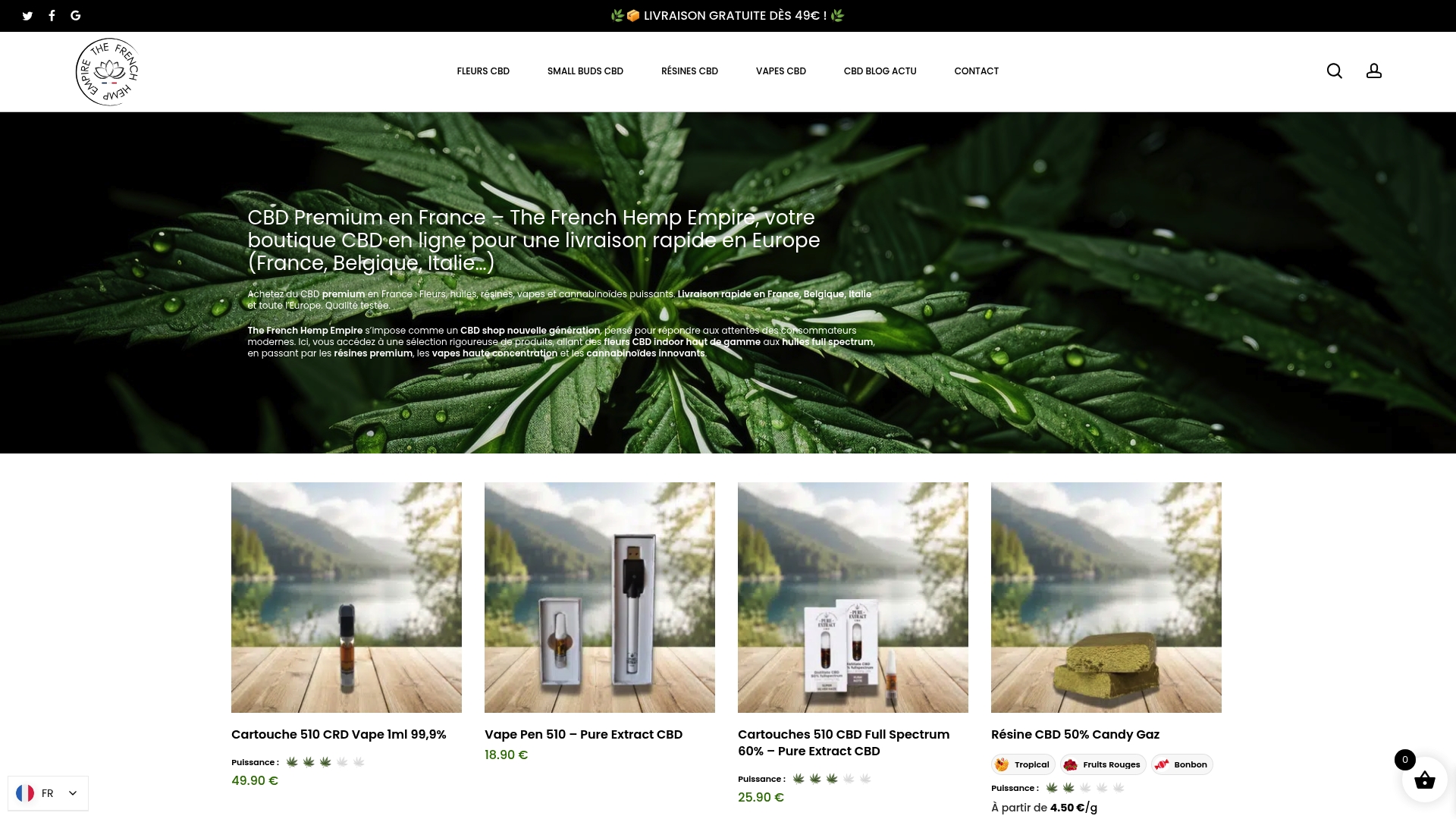
The online shop offers discreet and fast delivery throughout Europe. Consumers wishing to learn more before purchasing will find practical guides on the website regarding dosage, safety, and legal compliance of high-concentration CBD products. For those who wish to combine concentrates and flowers, the premium CBD flower range naturally complements the concentrate offerings.
Frequently Asked Questions
What is the difference between wax, crumble and shatter?
Wax is waxy and malleable, crumble is friable and easy to dose, and shatter is glassy and brittle. These three forms differ in texture and purging process, but all have high CBD concentrations.
Does CBD isolate contain THC?
No. CBD isolate contains over 99% pure cannabidiol, with no THC or other cannabinoids. It's the recommended form for people who want to avoid any trace of THC.
What equipment is needed to consume CBD concentrate?
A vaporizer compatible with concentrates and a dabber are the basic equipment. The dabber allows for precise dosing without direct contact with the fingers, thus preserving the quality of the concentrate.
Are CBD concentrates legal in France?
Yes, provided the THC level remains below 0.3%, in accordance with European and French regulations. Legal products are accompanied by laboratory analyses certifying their compliance.
How to store a CBD concentrate?
Concentrates should be stored in an airtight glass container, away from light, heat, and humidity. Improper storage degrades the terpenes and alters the texture, especially for wax and crumble.


