CBD can help alleviate stress, improve sleep quality, and provide support for certain mild to moderate pains, provided it is used regularly and at an appropriate dosage. These effects are based on the interaction of cannabidiol with the endocannabinoid system, a regulatory network present in the human body. CBD does not produce any psychoactive effects: it does not cause euphoria or altered consciousness, unlike THC. In France, CBD products are legal as long as their THC content does not exceed 0.3%, in accordance with current European regulations. The effects are generally not immediate: regular use over several weeks is necessary to observe stable results. The dosage section, further down in this article, details practical guidelines for getting started.
Key takeaway: According to a study published in The Permanente Journal, 66% of adults who took CBD daily reported an improvement in their sleep quality.
Table of Contents
- How does CBD affect your body?
- What are the benefits of CBD for your daily well-being?
- Which form of CBD should I choose for daily use?
- What dosage should be used and when should effects be observed?
- What side effects and drug interactions should you be aware of?
- How to incorporate CBD into your daily routine?
- Key points
- A measured approach is better than ill-informed enthusiasm
- Thefrenchhempempire: traceable CBD products for informed everyday use
- Sources and useful reading
How does CBD affect your body?
Cannabidiol (CBD) is one of the main cannabinoids extracted from the Cannabis sativa. Its fundamental distinction from THC (tetrahydrocannabinol) lies in the absence of psychoactive effects: CBD does not bind significantly to CB1 receptors in the brain, which are responsible for the "high" associated with recreational cannabis.
The human body has an endocannabinoid system that regulates several essential physiological functions: the stress response, sleep quality, pain perception, and certain inflammatory processes. This system relies on two main types of receptors: CB1 (found primarily in the central nervous system) and CB2 (concentrated in immune and peripheral tissues). CBD modulates the activity of these receptors indirectly, without directly activating them, which explains its milder and better-tolerated effects.
Regular intake plays a crucial role. Daily administration helps maintain a stable level of cannabinoids in the body, thus promoting a gradual and lasting modulation of receptors. This is why experts recommend continuous use rather than occasional use during a crisis.
The forms available on the French market are varied:
- Sublingual oil : rapid absorption, precise dosage
- Capsules and softgels : practicality and discretion, delayed effect
- Topical products (creams, balms) : targeted local application
- Flowers and resins : for use in infusions or inhalations, depending on the legal products.
- Infusions : lower bioavailability but comfortable to use
Pro tip: Start with sublingual oil if you're a beginner. It offers the best balance between speed of action and ease of dosage, two essential criteria for adjusting your intake during the initial phase.
What are the benefits of CBD for your daily well-being?
The available data distinguishes between effects for which there is strong clinical evidence and those that remain at the observational or field experience stage. Here are the ten most frequently reported benefits.
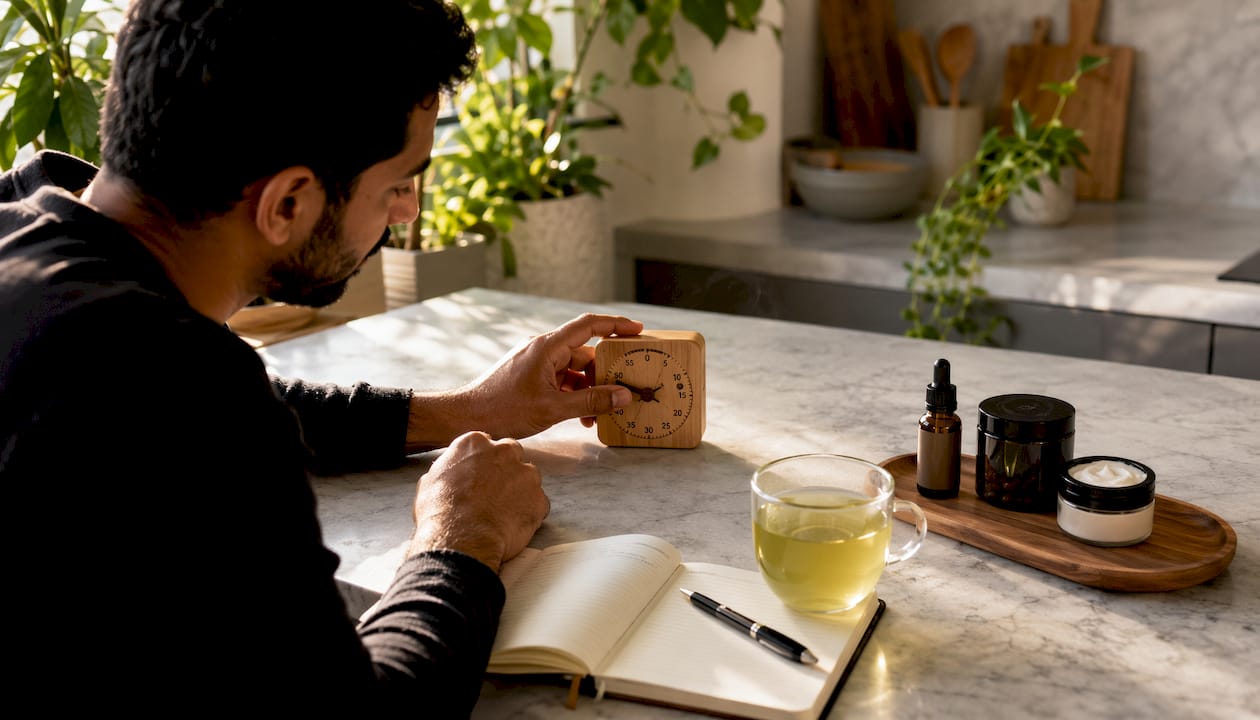
1. Stress and Anxiety Reduction:
CBD acts on serotonergic receptors (5-HT1A), which are involved in regulating mood and the stress response. Public surveys indicate significant improvement rates for anxiety, with notable individual variability depending on dosage and profile. The level of clinical evidence remains moderate but is growing. For a more in-depth look at the mechanisms, Thefrenchhempempire's page dedicated to CBD and chronic stress offers a helpful overview.
2. Improved Sleep Quality:
Among the best-documented benefits, improved sleep consistently emerges in clinical studies. According to The Permanente Journal, 66% of adults reported improvement with daily doses ranging from 25 to 175 mg. CBD appears to work by reducing nighttime anxiety rather than directly inducing sleep. Level of evidence: moderate to good.
3. Relief of mild to moderate pain:
Modulation of CB1 and CB2 receptors helps reduce pain perception and limit certain inflammatory responses. Post-exercise muscle soreness and mild joint pain are the most frequently cited indications. Level of evidence: moderate for chronic pain, limited for acute pain.
4. Support for athletic recovery:
The anti-inflammatory properties of CBD are attracting increasing interest from athletes. Topical application after exercise, combined with oral intake, may help reduce muscle soreness and accelerate muscle recovery. Level of evidence: preliminary.
5. Mood Regulation
: By modulating the serotonergic and endocannabinoid systems, CBD may contribute to greater emotional stability on a daily basis. The effects are subtle and gradual, not comparable to those of antidepressant medication. Level of evidence: limited, studies ongoing.
6. Concentration Support:
Paradoxically, by reducing background anxiety, CBD may promote a calm state conducive to concentration. This effect is indirect and highly dependent on individual profile. Level of evidence: observational.
7. Effects on the skin (topical use)
The anti-inflammatory and antioxidant properties of CBD are used in cosmetic formulations to soothe sensitive skin, reduce redness, and support the skin barrier. Level of evidence: preliminary, primarily in vitro studies.
8. Reduction of Chronic Inflammation:
Research published on PubMed suggests that CBD may modulate certain inflammatory pathways involved in chronic diseases. These results still need to be confirmed on a larger scale in humans. Level of evidence: moderate in animal models, limited in humans.
9. Lack of physical dependence.
The World Health Organization has concluded that CBD does not present the same potential for abuse or dependence as other substances. This characteristic clearly distinguishes it from synthetic anxiolytics. Level of evidence: strong.
10. Generally good tolerability:
Most users tolerate CBD well at usual doses. Reported side effects are infrequent and generally mild (see precautions section). Level of evidence: good for moderate doses.
Pro tip: To maximize the effects, choose a full-spectrum product: the synergy between cannabinoids, terpenes, and flavonoids, known as theentourage effect, amplifies the action of CBD. If you want to avoid any trace of THC, opt for a broad-spectrum product, which retains the other active compounds without residual THC.
Which form of CBD should I choose for daily use?
The choice of form directly affects the speed of action, ease of dosage, and suitability for your objective. Here are the main options available in France, along with their practical characteristics.
Sublingual oil remains the preferred method for beginners. Placed under the tongue for 30 to 60 seconds, it offers rapid absorption through the mucous membranes and a noticeable effect within 15 to 45 minutes. The graduated dropper allows for precise dosage. Capsules and softgels are suitable for those who prefer a discreet and tasteless option: the effect is delayed (1 to 2 hours) but longer-lasting, making them suitable for sleep support or managing chronic pain. Topical products (creams, balms, massage oils) target a specific area without entering the bloodstream, making them suitable for localized pain or skin care. Flowers and resins can be used in infusions; their bioavailability via this route is lower, but their use remains legal in France as long as the THC level complies with regulations. E-liquids for vaporization offer very rapid absorption, but their use requires specific precautions related to inhalation.
Quality checklist before any purchase
- Certified EU origin (hemp grown according to European standards)
- Certificates of analysis issued by an independent laboratory (cannabinoid levels, absence of pesticides and heavy metals)
- Clear labeling indicating the spectrum (Full Spectrum, Broad Spectrum or isolate), CBD concentration and carrier oil
- High-quality carrier oil (preferably coconut MCT or olive oil)
- Compliance with the legal THC threshold of 0.3% in France
Sector analyses highlight an intensification of DGCCRF controls and a growing consumer demand for traceability. Choosing a product whose certificates of analysis are accessible online is no longer a matter of convenience: it is a minimum guarantee of safety.
What dosage should be used and when should effects be observed?
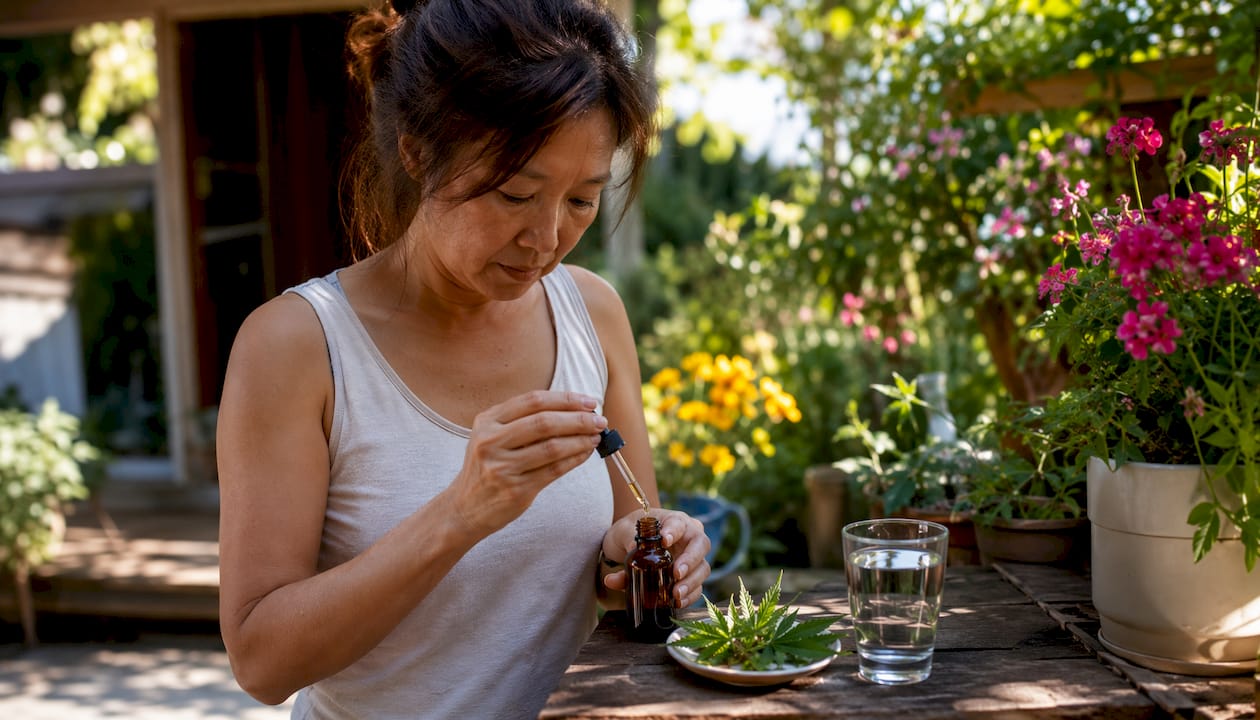
There is no universal protocol for CBD dosage. It depends on body weight, individual metabolism, the form used, and the desired effect. The method recommended by practitioners is the "start low, increase slowly" principle, documented in the scientific literature on titration.
| Objective | Suggested beach range (average adult) | Suggested frequency |
|---|---|---|
| Light well-being, stress management | 10–20 mg/day | 1 to 2 sockets |
| Sleep support | 20–40 mg/day | 1 dose in the evening |
| Mild to moderate pain | 20–40 mg/day | 2 sockets |
| Moderate to severe pain | 40 mg/day (gradual increase) | 2 to 3 sockets |
These ranges are indicative guidelines based on common practice. They do not constitute a medical prescription.
The onset of action varies depending on the route of administration: sublingual oil takes effect in 15 to 45 minutes, capsules in 1 to 2 hours, and topicals in 20 to 40 minutes on the targeted area. For prolonged effects on stress or sleep, a realistic assessment cannot be made before 2 to 4 weeks of regular use.
Recommended titration steps
- Define a specific objective (sleep, stress, localized pain).
- Start with the lowest dose in the table above.
- Maintain this dose for 5 to 7 days without modification.
- Increase in increments of 5 mg if the effects are insufficient.
- Keep a log of activity (dose, time, symptom intensity, side effects).
- Evaluate the results after 3 to 4 weeks before concluding on effectiveness.
What side effects and drug interactions should you be aware of?
Medical warning: Anyone undergoing chronic medication, particularly anxiolytics, anticoagulants, or antiepileptics, should consult a doctor before introducing CBD into their routine. CBD is metabolized by liver enzymes of the CYP450 group, which can alter the plasma concentration of certain medications and impair their effectiveness or tolerability.
Adverse effects reported at usual doses remain infrequent. The most common are temporary fatigue, mild digestive problems (nausea, diarrhea), and changes in appetite. These symptoms generally occur at the start of treatment or when the dose is increased too rapidly.
TheFrench Monitoring Centre for Drugs and Drug Addiction points out that CBD can interact with other medications via liver metabolism, and explicitly recommends consulting a healthcare professional if in doubt.
Certain groups require special attention:
- Pregnant or breastfeeding women: the lack of sufficient safety data requires that all use be avoided.
- Children and adolescents: no robust clinical data justifies use without medical supervision.
- People with liver failure: CBD metabolism may be significantly altered.
- People undergoing heavy treatments (chemotherapy, immunosuppressants): the risk of interaction is high.
Traceability of the product used is also a safety factor. A product whose certificates of analysis are missing or unverifiable exposes it to risks of contamination (pesticides, residual solvents, non-compliant THC levels) which can worsen adverse effects.
How to incorporate CBD into your daily routine?
A methodical integration significantly increases the chances of observing lasting effects. Here is a six-step protocol.
- Define your primary objective : daily stress, sleep quality, or localized pain. A specific objective allows you to choose the most suitable form and timing of administration.
- Choose the appropriate form : sublingual oil for fast and adjustable action, capsules for regularity and discretion, topical for localized pain.
- Determine the starting dose : start from the lower end of the dosage table, i.e. 10 mg/day for the purpose of general well-being.
- Schedule the doses : one dose in the morning (for stress and concentration) and/or one dose in the evening (for sleep and recovery). Regular dosing makes it easier to assess the effects.
- Log the effects : note each day the dose administered, the time, the intensity of the targeted symptom (on a scale of 1 to 10) and any possible adverse effects.
- Adjust in stages : after 5 to 7 days without noticeable improvement, increase by 5 mg and maintain this new level before any further modification.
Pro tip: Associate taking CBD with an existing ritual (morning coffee, bedtime routine) to make it a lasting habit. An action integrated into an already established sequence is much easier to maintain than taking it in isolation.
Synergies can enhance the effects: regular physical activity stimulates the production of endogenous endocannabinoids, deep breathing techniques amplify the calming effect of CBD, and good sleep hygiene (regular schedule, darkness, cool temperature) potentiates its action on sleep.
Key points
CBD acts gradually and regularly on the endocannabinoid system, making it a relevant long-term supplement for stress, sleep and mild pain, provided that the dosage is respected and a traceable product is chosen.
| Point | Details |
|---|---|
| Regularity is essential | Lasting effects require daily intake for a minimum of 2 to 4 weeks. |
| Gradual dosage | Start at 10–20 mg/day and increase in increments of 5 mg according to the results observed. |
| Drug interactions | Consult a doctor before use if you are undergoing chronic treatment (CYP450). |
| Quality and traceability | Require independent certificates of analysis and certified EU origin for all products. |
| Thefrenchhempempire | Offers a range of compliant CBD products (THC ≤ 0.3%), with independent analyses and educational resources available online. |
A measured approach is better than ill-informed enthusiasm
CBD enjoys considerable visibility today, and this is precisely what makes caution necessary. The risk lies not so much in the molecule itself, whose overall safety profile is favorable according to the WHO, but in how it is presented and used.
Too often, CBD is presented as a universal solution capable of fixing everything in a few days. This promise is both inaccurate and counterproductive. It leads people to give up too soon, convinced that "it doesn't work," when they haven't respected the necessary observation period or the regularity of use. It also pushes some users to substitute CBD for medical supervision, which can delay diagnosis or appropriate treatment.
The true value of CBD lies in its use as a long-term supplement, integrated into a healthy lifestyle. Available studies, particularly those indexed on PubMed and NCBI, show measurable effects on stress and sleep, but only under controlled conditions and with products whose composition is verified. Traceability is not a marketing ploy: it is the essential condition for the results observed in studies to be reproducible in everyday practice.
Research on cannabinoids is evolving rapidly. Current knowledge justifies reasoned and informed use, not blind adoption or systematic rejection. Adapting one's practices to the available evidence is precisely what rigorous information allows.
Thefrenchhempempire: traceable CBD products for informed everyday use
Thefrenchhempempire offers a selection of CBD products designed to meet the most common daily needs: stress management, sleep support, recovery, and general well-being. Each product in the range complies with the legal THC limit of 0.3% in France, and certificates of analysis issued by independent laboratories are available directly on the website.
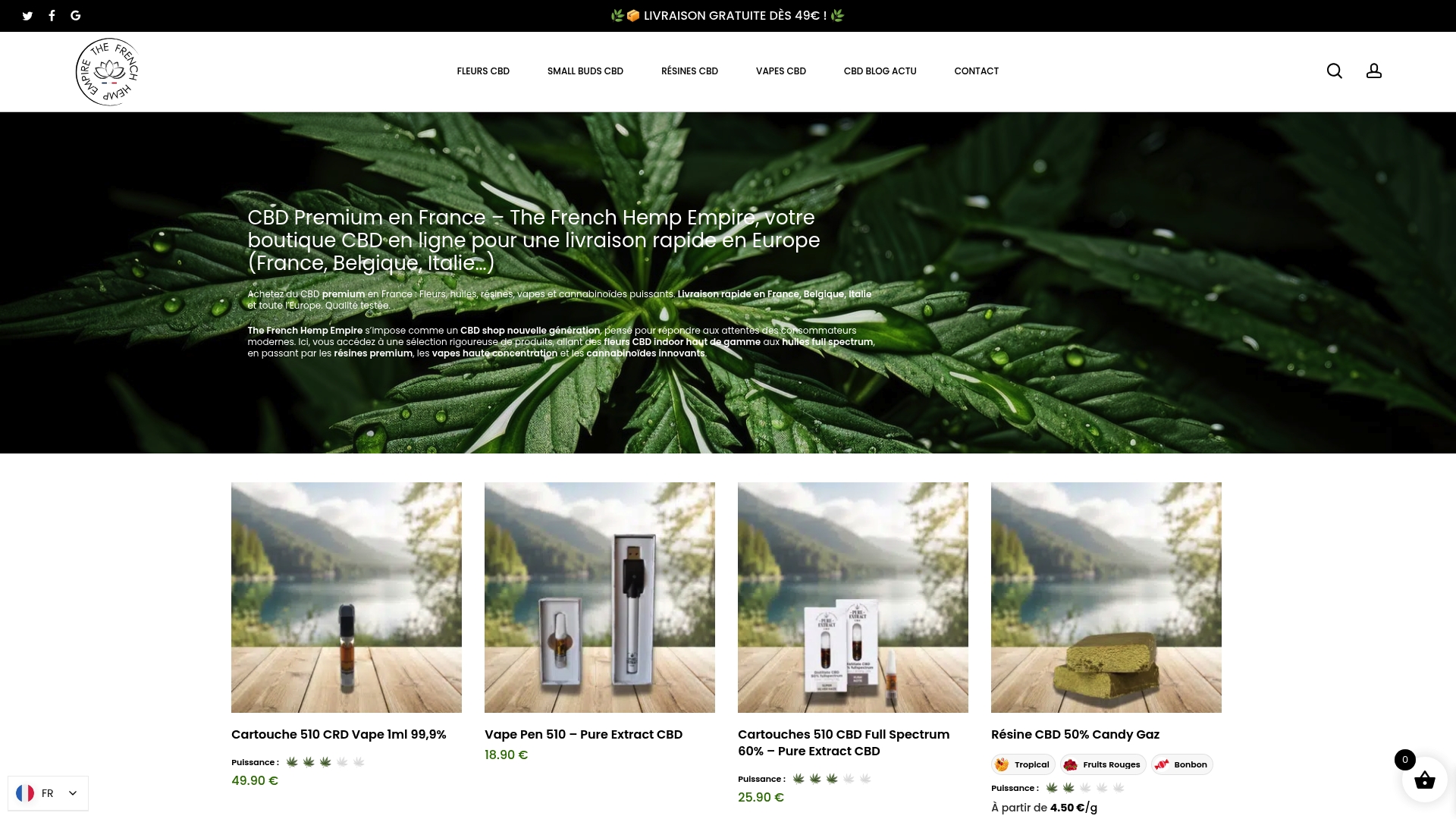
The shop covers all forms available on the market, from premium CBD flowers and resins to oils and vapes, with a particular focus on labeling and transparency regarding composition. Educational resources accompany each product category, ensuring that every buyer, whether beginner or experienced, has the information they need to make a choice tailored to their goals. To explore the full range and view batch analyses, visit thefrenchhempempire.fr.
Sources and useful reading
- NCBI — Study on the Effects of CBD (PMC3736954)
- PubMed — CBD and anxiety (33221931)
- PubMed — CBD and inflammation (29511052)
- PubMed — CBD and chronic pain (30100226)
- PubMed — CBD and sleep (33057645)
- WHO — questions and answers about cannabidiol)
- French Monitoring Centre for Drugs and Drug Addiction — CBD Fact Sheet
- PMC — good titration practices (PMC10134049)
- Top Health — Which CBD oil to choose?
- CBD Break — Benefits and Traceability
- Novaloa — CBD oil and anxiety
This article is provided for general informational purposes only and does not constitute medical advice. For any questions related to your personal situation or current treatments, consult a qualified healthcare professional.