To verify the traceability and origin of a CBD product, three elements are non-negotiable: a recent certificate of analysis issued by a COFRAC-accredited laboratory or one compliant with ISO/IEC 17025, an exact match between the batch number printed on the packaging and the one on the certificate, and confirmation that the hemp comes from varieties listed in the European Common Catalogue of Plant Species. Without these three pieces of documentary evidence, no guarantee of conformity is possible.
- Require a recent, lot-specific certificate of analysis issued by a COFRAC or ISO/IEC 17025 accredited laboratory
- Check that the batch number on the packaging exactly matches the one mentioned on the certificate
- Confirm the origin of the hemp: varieties listed in the European catalogue, produced in France or in the European Union
- Check for the absence of contaminants (pesticides, heavy metals, residual solvents) in the analysis results
- Identify the producer via their SIRET number and their agricultural APE code (01.28Z or 01.16Z)
- Ensure that the seller publishes their traceability documents without delay and that the labeling is complete
Pro tip: Keep a digital copy of the certificate of analysis and invoice on your phone. In the event of a roadside check, documentary evidence is the only way to establish the product's legal compliance without delay.
Table of Contents
- How to read and interpret a CBD analysis certificate?
- How to trace the CBD supply chain?
- What common errors distort the verification of a COA?
- Why does traceability protect health and legal compliance?
- Why is verifying the traceability of CBD essential in 2026?
- How to identify official French and European labels and certifications?
- What tools can be used to verify traceability online?
- What French health data reveals about CBD traceability
- Thefrenchhempempire: CBD products with documented traceability
- Key points
How to read and interpret a CBD analysis certificate?
The certificate of analysis, designated by the acronym COA, is the central document in any verification process. Its probative value depends entirely on the issuing laboratory: a report produced by a non-accredited laboratory has no regulatory value. In France, COFRAC (French Accreditation Committee) is the body that certifies the competence of laboratories according to the ISO/IEC 17025 standard; its online directory allows you to check in a few seconds whether a laboratory is listed.
A valid COA must include the following elements:
- Laboratory identification : name, contact details and COFRAC accreditation number visible
- Date of analysis : a certificate less than twelve months old for the batch in question is the sector reference.
- Batch number : must exactly match the one printed on the product packaging
- Cannabinoid profile : CBD, THC (Δ9-THC), CBG and CBN levels expressed as a percentage or in mg/g
- Legal THC threshold : strictly less than 0.3% in accordance with French and European regulations
- Contaminant results : pesticides, heavy metals (lead, mercury, cadmium, arsenic), residual solvents and mycotoxins
| Element of the COA | What you need to check |
|---|---|
| Laboratory accreditation | COFRAC or ISO/IEC 17025 number present and verifiable |
| Date of analysis | — |
| Batch number | Identical to that of the packaging |
| THC levels | Less than 0.3% |
| Contaminants | Values measured below regulatory limits |
The terpene profile, when present, indicates the aromatic richness of the product and can confirm the authenticity of the declared variety. Contaminant analysis is the most reliable marker for differentiating between a high-quality CBD product and a mediocre one.
How to trace the CBD supply chain?
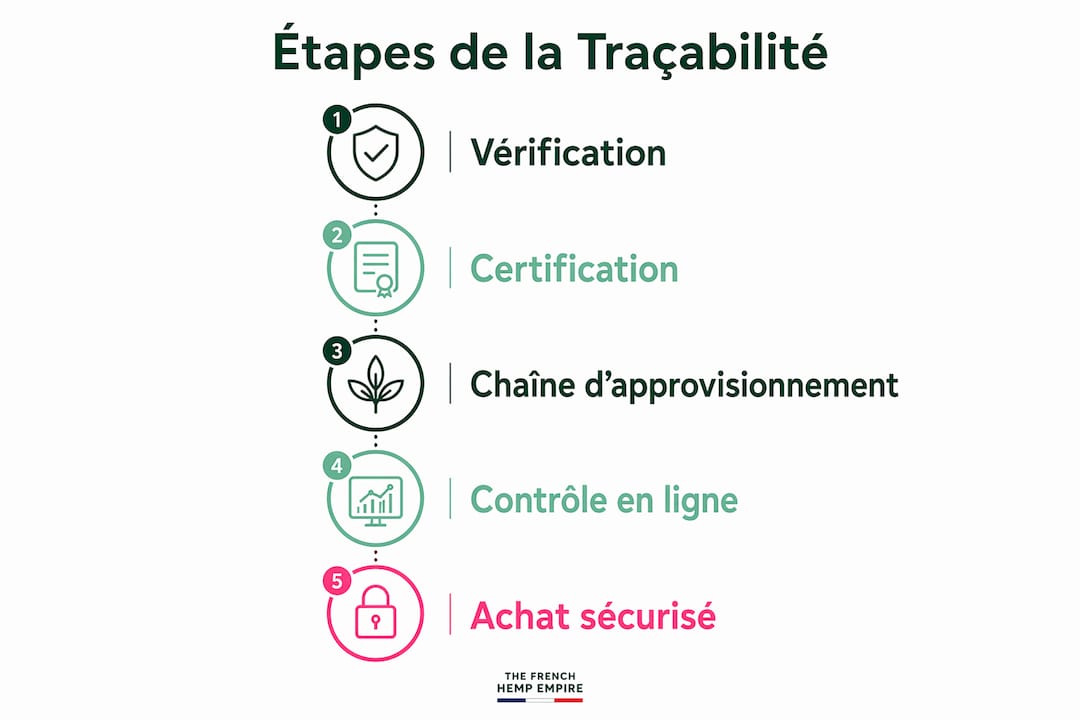
CBD traceability begins well before the finished product: it starts with the seeds. Only varieties listed in the European Union's Common Catalogue of Plant Species are authorized in France, and compliance with this catalogue is the primary guarantee that the hemp naturally meets the THC threshold without chemical additives. A product that does not specify the variety used should be rejected.
To identify whether a seller is a genuine producer or simply a reseller, administrative verification via the SIRET number is crucial. On platforms like Pappers or Infogreffe, the APE code (Main Activity Performed) instantly reveals the company's status: a farmer-producer will be registered under code 01.28Z (cultivation of spice, aromatic, medicinal and pharmaceutical plants) or 01.16Z (cultivation of fiber plants), while a reseller selling remotely will appear under code 47.91A.
- Check the declared hemp variety and its presence in the European catalogue
- Check the producer's APE code on Infogreffe or Pappers
- Ensure that the chain involves identified producer, processor and distributor
- Require that the batch number link the finished product to a documented production batch
- Search for official agricultural certifications (organic farming, good agricultural practices)
What common errors distort the verification of a COA?
The most common mistake is accepting a generic certificate of analysis (COA) that isn't linked to a specific batch number. A COA without a batch number proves nothing about the product received, as each production batch can have variations in THC and CBD levels depending on growing and extraction conditions.
Other common pitfalls include:
- Accepting a certificate dated more than a year ago without verifying whether it corresponds to the lot being sold
- Failure to verify the issuing laboratory's accreditation in the COFRAC directory
- Ignoring the absence of a batch number on the packaging makes the product untraceable
- Relying on a COA produced by an in-house laboratory of the brand, without analytical independence
- Ignoring contaminant results, focusing solely on cannabinoid levels
- Buying based on an abnormally low price often indicates a lack of quality control
Pro tip: Refusal to provide a Certificate of Authenticity (COA) is a major red flag. Any reputable seller should provide this document upon request, without delay or conditions.
Why does traceability protect health and legal compliance?
Data from ANSES and MILDECA clearly illustrate the risks associated with a lack of traceability. According to MILDECA, 81% of the CBD products analyzed had cannabinoid levels that did not conform to their labeling. Furthermore, ANSES reports an increase in poisonings linked to products containing synthetic cannabinoids (HHC, H4-CBD, MDMB-PINACA) or THC levels exceeding 0.3%, often without the consumer's knowledge.
From a legal standpoint, a product with a THC content exceeding 0.3% is classified as a narcotic, regardless of the buyer's intent. Without documentary proof of compliance, a roadside check can lead to the product's confiscation pending toxicological analysis, a procedure that can take several weeks. Therefore, rigorous traceability simultaneously protects the consumer's health and legal security.
- A recent and valid Certificate of Authenticity (COA) guarantees compliance with the legal limit of 0.3% THC
- Contaminant analyses prevent pesticide and heavy metal poisoning
- Documented traceability provides protection in the event of an inspection by the authorities
- Independent third-party analyses rule out the risk of undeclared synthetic cannabinoids
Why is verifying the traceability of CBD essential in 2026?
The French CBD market remains largely heterogeneous in terms of compliance. A study supported by MILDECA and conducted in 2023 by the CEIPs (Regional Centers for Information and Prevention) in Lyon, Paris, and Montpellier found that 8 out of 10 products had a CBD content different from that indicated on the label. In this context, systematic traceability verification is not an optional precaution: it is the only way to distinguish a compliant product from a potentially dangerous or illegal one. According to MILDECA, 81% of the CBD products analyzed did not match their labeling regarding cannabinoid content.
Novel Food regulations, stemming from EU Regulation 2015/2283, require operators to maintain documentary traceability for each production batch. Regulation (EC) No. 178/2002 on food traceability also obliges sellers to identify the origin and composition of each batch placed on the market. These regulatory obligations give the Certificate of Origin (COA) the status of a legal requirement, not simply a marketing ploy. Purchasing a CBD product without verifiable traceability means accepting uncertainty about its actual composition, legal status, and potential health effects.
How to identify official French and European labels and certifications?
Official certifications provide an additional layer of verification, provided they are checked directly with the issuing bodies. The Organic Agriculture (AB) label and the European Euroleaf attest that the hemp has been cultivated without synthetic pesticides or chemical fertilizers. The French public agency Agence BIO provides an online directory allowing users to verify whether a producer or brand is indeed certified, with a precise list of the products covered by the certification. For organic labels and European certifications, the rule is simple: don't just take it, verify it.
Other certifications can accompany a reputable product: ISO standards relating to quality management systems, Good Manufacturing Practices (GMP), or certifications issued by organizations such as Bureau Veritas or AFNOR. A transparent seller should be able to provide this evidence upon request. The presence of a certification logo on packaging without the possibility of verification with the issuing body should be treated with the same caution as a Certificate of Authenticity (COA) without an accreditation number.
What tools can be used to verify traceability online?
Several official platforms allow you to cross-reference information and validate the traceability chain of a CBD product without any special technical skills.

COFRAC Directory : accessible on the cofrac.fr website, it allows you to enter the accreditation number mentioned on a COA and to confirm that the laboratory is indeed authorized to analyze cannabinoids according to the ISO/IEC 17025 standard. According to COFRAC, approximately ten specialized laboratories are accredited in France for these analyses.
Infogreffe and Pappers : these platforms provide access to the SIRET number and APE code of a company, making it possible to distinguish an agricultural producer (code 01.xx) from a reseller (code 47.xx) in less than a minute.
Agence BIO : the online directory of Agence BIO allows you to check the validity of an organic certification for a given producer or brand.
SignalConso : the government platform managed by the DGCCRF (French Directorate General for Competition Policy, Consumer Affairs and Fraud Control) allows users to report non-compliant products. The batch number is the first piece of information required for any effective report, illustrating its central role in traceability. The DGCCRF is authorized to order the withdrawal of products and to penalize operators in violation of Regulation (EC) No 178/2002.
The QR codes on some brands' packaging also provide direct access to the Certificate of Analysis (COA) for the batch, without any additional steps. This format is gradually becoming the standard for transparency among discerning consumers.
What French health data reveals about CBD traceability
Both ANSES and MILDECA have documented the health consequences of inadequate traceability. ANSES warns of the presence of synthetic cannabinoids in products sold as CBD, including HHC, HHC-O, and MDMB-PINACA, molecules classified as narcotics whose effects can occur regardless of the method of consumption (smoked, vaped, or ingested). Furthermore, the 2023 MILDECA study identified the presence of semi-synthetic neocannabinoids in 4.5% of the samples analyzed, without any mention of them on the labeling.
Key data: 81% of CBD products analyzed in the MILDECA study had cannabinoid levels that did not conform to their labeling.
Health authorities recommend purchasing from sellers with a verifiable physical address and who offer transparent, independent batch testing. The SignalConso platform is the official recourse in case of a problem, provided you have the batch number of the product in question. Without this number, any reporting or recall process becomes technically impossible.
Thefrenchhempempire: CBD products with documented traceability
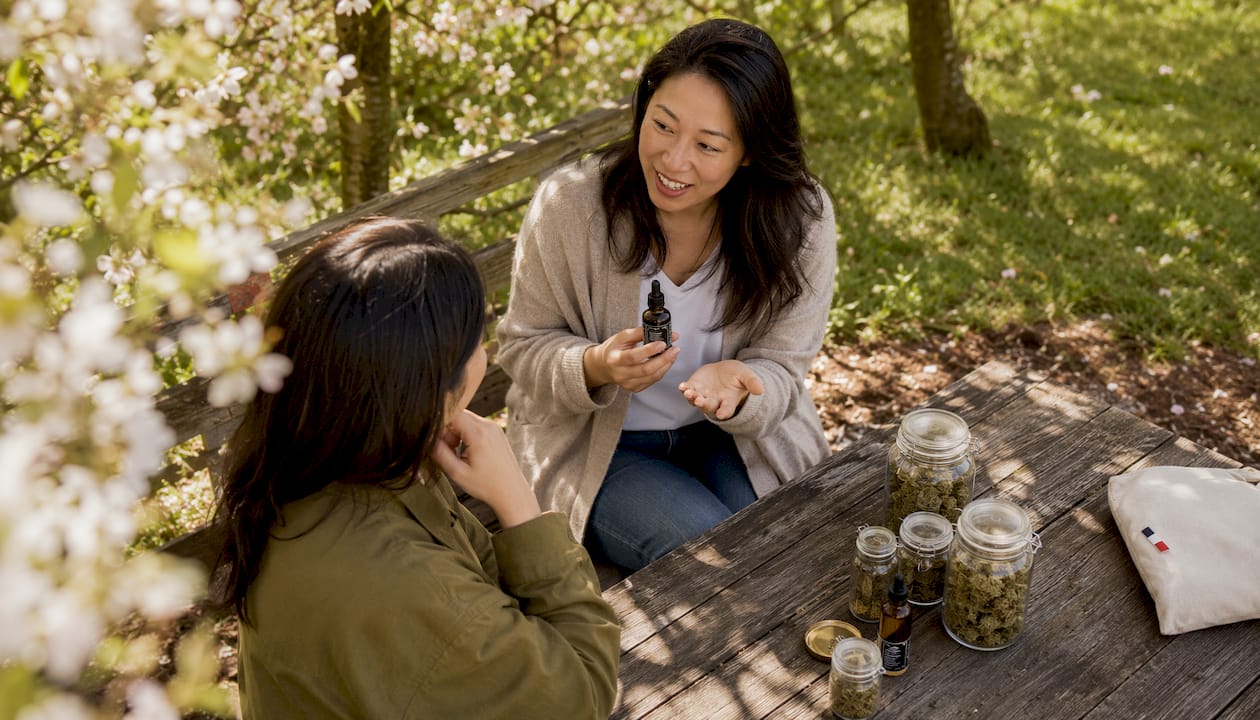
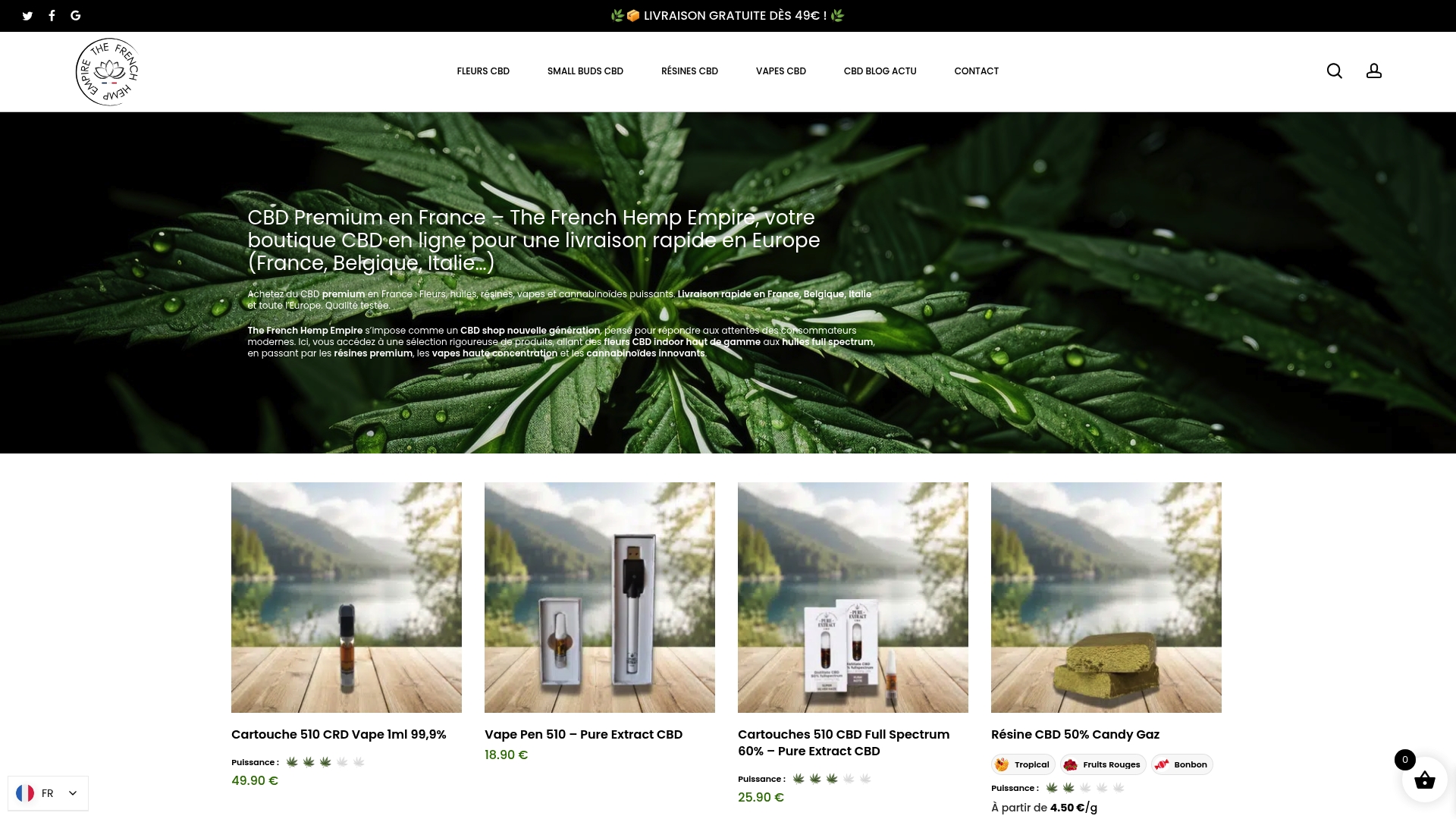
Thefrenchhempempire offers a range of premium CBD flowers, resins, and vapes selected according to strict regulatory compliance criteria: certificates of analysis issued by accredited third-party laboratories, traceable batch numbers, hemp from varieties listed in the European catalogue, and a THC content strictly below 0.3%. Traceability documentation is accessible directly on the product pages, without any additional steps. For consumers wishing to deepen their understanding of the regulatory framework, Thefrenchhempempire blog regularly publishes analyses of French and European legislation applicable to cannabinoid products. Visit the shop to access all available batch certificates of analysis and verify the compliance of each product before purchase.
Key points
Verifying the traceability of a CBD product relies on examining the certificate of analysis, the batch number and the certified origin of the hemp: without these three elements, no legal compliance can be established.
| Point | Details |
|---|---|
| Valid certificate of analysis | Must be issued by a COFRAC or ISO/IEC 17025 accredited laboratory |
| Batch number required | The packaging and the COA must match exactly; without it, the product is untraceable |
| Origin of hemp | Varieties listed in the European catalogue, production in France or the EU required |
| Frequent non-compliance | 81% of CBD products analyzed by MILDECA had cannabinoid levels that did not comply with the labeling |
| Thefrenchhempempire | Offers batch analysis certificates accessible on each product page, with THC content below 0.3% |