Cannabidiol (CBD) is defined as a non-psychoactive compound extracted from hemp, distinct from THC by the absence of a euphoric effect. Using CBD to reduce stress is based on its modulating action on the central nervous system, via serotonergic and GABAergic receptors. In France, legislation from 2026 imposes a maximum THC content of 0.3% for all CBD products, guaranteeing their legality and non-psychoactive nature. CBD is not a medicine. It is a wellness product for which scientific evidence regarding stress management is promising, but still preliminary.
How does CBD affect stress?
CBD acts on stress through two main biological mechanisms: 5-HT1A serotonergic receptors and the GABAergic system. These two pathways directly regulate mood, anxiety, and the stress response. Unlike conventional anxiolytics, CBD modulates these receptors without causing severe sedation or addiction.
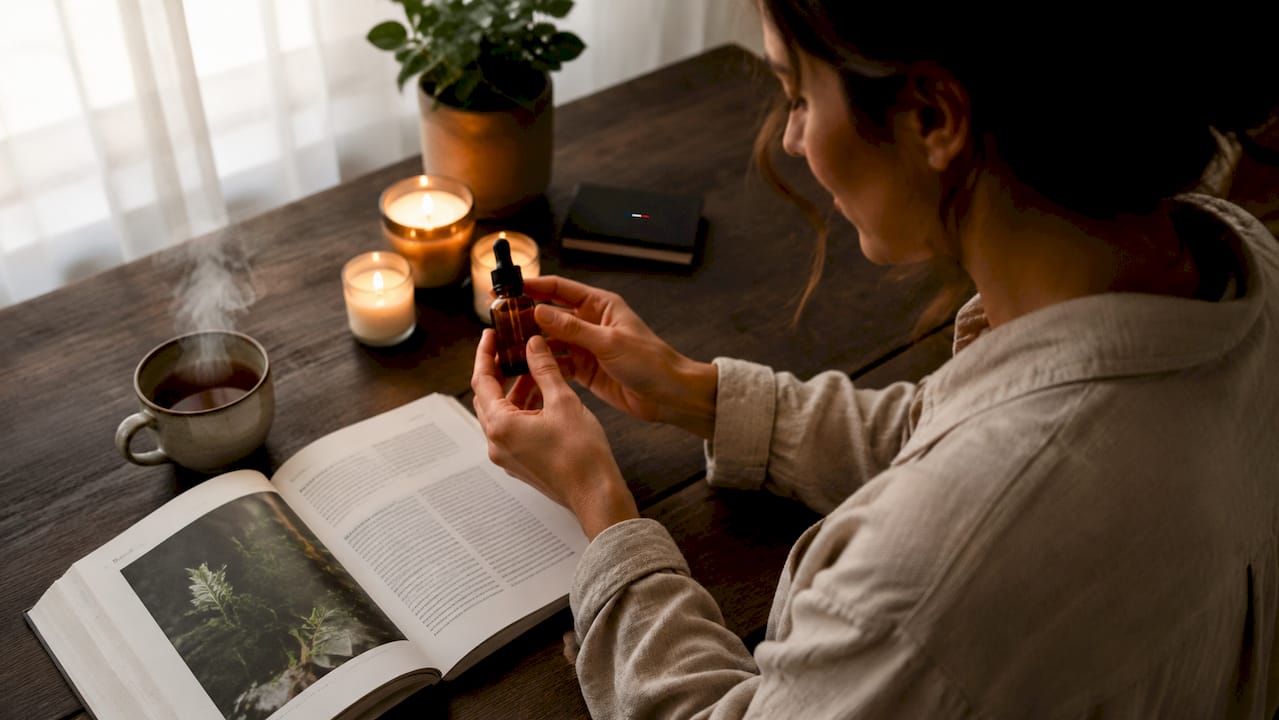
CBD also inhibits the reuptake of anandamide, an endogenous molecule sometimes called the "happiness molecule." By prolonging its duration of action in the brain, CBD positively influences mood and reduces excessive emotional responses related to stress. This effect is mediated by the endocannabinoid system, which is present throughout the central nervous system.
The effectiveness of CBD varies depending on the type of anxiety. Clinical studies show a measurable reduction in anxiety at doses of 300–600 mg per day for acute social anxiety. For generalized or chronic anxiety, the effects appear more gradually, over several days to several weeks. The onset of action ranges from 20 minutes for sublingual administration to several days for regular oral intake.
The effects of CBD are modulating, not sedative. This distinction is fundamental: CBD does not "cut" stress like a tranquilizer. It helps the nervous system regain balance, making it suitable for daily use without the risk of excessive drowsiness.
- 5-HT1A receptors : partial activation, anxiolytic effect comparable to some SSRI-type antidepressants, without the associated side effects.
- GABAergic system : strengthening of neuronal inhibition, reduction of stress-related brain hyperactivity.
- Anandamide : prolongs the effect of this endogenous molecule, improves general mood.
- Neuroplasticity : CBD promotes the formation of new neural connections, which is useful in chronic anxiety states.
Pro tip: There is real variability in effectiveness between individuals. The same dosage can produce very different effects depending on biological profile, baseline stress level, and regularity of intake.
Which forms of CBD should I choose to combat stress?
Sublingual oil offers the best bioavailability of all available forms, estimated at 20–30%, with a noticeable effect within 20–30 minutes. This rapid action is due to direct absorption through the oral mucosa, bypassing first-pass metabolism in the liver. For managing stress in acute or everyday situations, sublingual oil remains the most suitable form.
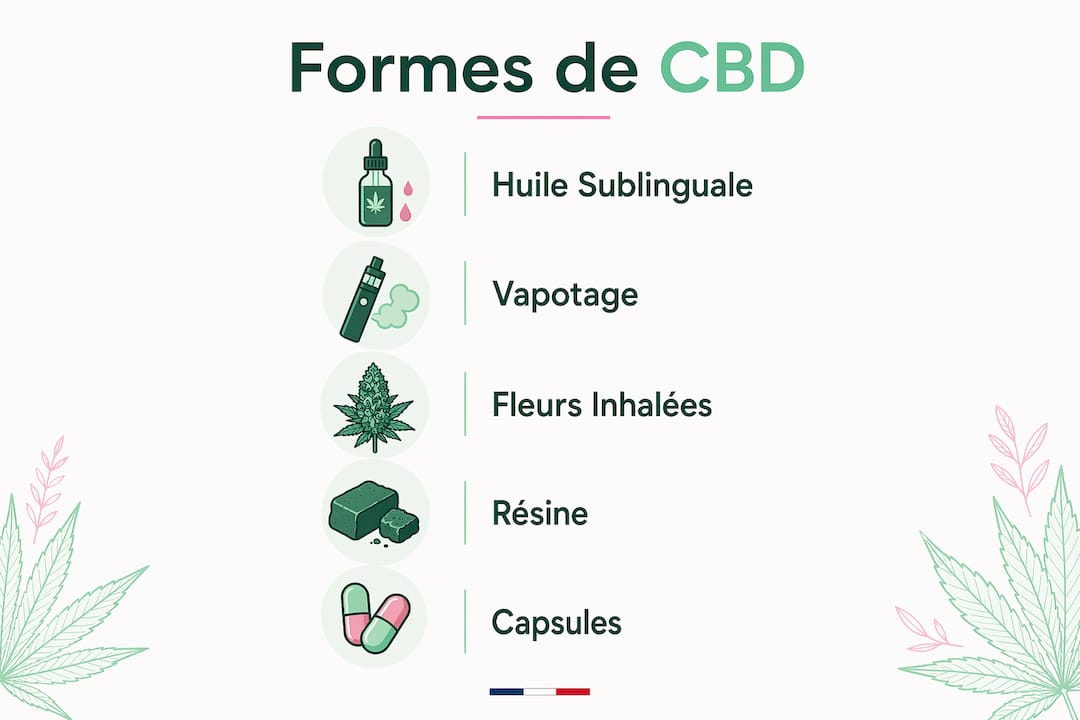
Vaping offers the fastest action (within minutes), but its effects are short-lived, and regular use raises concerns about long-term respiratory health. Capsules and infusions, absorbed through the digestive system, have lower bioavailability and a longer onset of action (1–2 hours), but their effects last longer. CBD vapes are suitable for occasional situations of intense stress, while capsules are better suited to a regular routine.
| Shape | Bioavailability | Action deadline | Duration of effect |
|---|---|---|---|
| Sublingual oil | 20–30 % | 20–30 min | 4–6 h |
| Vaping | 30–40 % | 2–5 min | 1–3 h |
| Capsules | 6–15 % | 1–2 h | 6–8 a.m |
| Infusions | 5–10 % | 30–60 min | 3–5 h |
| Flowers (inhalation) | 30–40 % | 2–5 min | 1–3 h |
The choice of product spectrum also influences effectiveness. Full-spectrum CBD retains all the cannabinoids, terpenes, and flavonoids of hemp, producing a well-known entourage effect. Broad-spectrum CBD removes THC while retaining the other compounds. Pure CBD isolate is the least likely to produce this synergistic effect. For stress management, full-spectrum or broad-spectrum CBD is generally preferred, provided the THC level remains within legal limits.
Pro tip: For beginners, broad-spectrum sublingual oil at 5% or 10% is the most controllable starting point. The dose can be adjusted drop by drop, which no other form allows with such precision.
How to dose CBD to effectively reduce stress?
CBD dosage follows a gradual, step-by-step approach. The anxiolytic effects of CBD follow an inverted U-shaped curve: too low a dose is ineffective, while too high a dose can reduce the effect or cause adverse effects. Therefore, determining the optimal individual dose requires a gradual and careful increase.
The recommended protocol for getting started includes the following steps:
- Start at 10 mg twice daily (morning and evening), preferably as a sublingual oil, for 3–7 days.
- Observe the effects : sleep quality, anxiety level, digestive tolerance, possible side effects.
- Increase in increments of 10 mg every 3–7 days if the effects are insufficient and tolerance is good.
- Reaching the maintenance phase : most people find their effective dose between 25 and 50 mg per dose for moderate stress.
- Maintaining regularity : taking it daily at a fixed time produces more stable effects than taking it occasionally.
- Do not exceed 70 mg per day without medical advice, especially if taking other medication.
The most common side effects at high doses include dry mouth, temporary digestive upset, and mild drowsiness. These effects are generally dose-dependent and disappear when the amount is adjusted. CBD can interact with certain medications via cytochrome P450, a liver enzyme involved in the metabolism of many molecules. Anyone taking medication should consult a doctor before introducing CBD into their routine.
Pro tip: Keep a log for the first two weeks: note the dose, the time taken, and the level of stress felt before and after. This simple method greatly speeds up the identification of the effective dose.
What precautions should be taken when using CBD for stress?
The quality of the purchased product directly determines its effectiveness and safety. An analysis published in JAMA in 2017, examining 84 CBD products purchased online, revealed that over 40% of the products had a CBD content different from that indicated on the label, or contained undeclared THC. This finding underscores the need for strict vigilance when choosing suppliers.
CBD should not replace prescribed anxiolytic medication without medical supervision. Abruptly stopping benzodiazepines or antidepressants can cause severe withdrawal symptoms. The recommended clinical protocol involves a gradual reduction of the anxiolytic by 10% every 15 days, concurrently with the introduction of CBD, under strict medical supervision.
The essential precautions to be observed are as follows:
- Demand a Certificate of Analysis (COA) issued by an independent laboratory for each product purchased. This document attests to the actual CBD concentration, THC level, and the absence of contaminants.
- Verify traceability : the origin of the hemp, the extraction method, and the growing conditions must be accessible. The French Hemp Empire's quality and traceability page details these criteria
- Do not expect an immediate chemical anxiolytic effect : CBD acts gradually and its effectiveness builds up over several days to weeks.
- Avoid CBD if pregnant or breastfeeding : the available data is insufficient to guarantee safety in these situations.
- Inform your doctor about using CBD if you are taking anticoagulant, antiepileptic or immunosuppressant medications, due to interactions via CYP450.
CBD is not a substitute for therapeutic treatment for severe anxiety disorders. For individuals with diagnosed generalized anxiety disorder or depression, CBD may be a helpful adjunct, but only as a complement to appropriate medical care.
How to incorporate CBD into an anti-stress routine?
CBD produces its best effects when used as part of a daily routine , rather than as a one-off dose in response to a stress spike. This ritualistic approach enhances the physiological effect through regular action on the endocannabinoid system. It also promotes better adherence, a key factor in long-term effectiveness.
Complementary practices that amplify the effects of CBD on stress include:
- Regular sleep : CBD improves sleep quality in some people, and quality sleep directly reduces sensitivity to stress.
- Moderate physical activity : exercise stimulates the production of endogenous endocannabinoids, creating a synergy with the action of CBD.
- Reducing stimulants : caffeine and alcohol disrupt the nervous system and counteract the calming effects of CBD.
- A dedicated moment : taking your CBD oil in the evening, in a calm context, transforms the intake into a conscious soothing ritual.
For beginners, a single dose in the evening for two weeks is sufficient to assess tolerance and initial effects. For experienced users, taking it morning and evening helps maintain stable plasma levels throughout the day. CBD flowers in the evening offers a gentle alternative for those who prefer to avoid oils. The key is consistency: irregular use produces unpredictable results.
Key points
CBD reduces stress by modulating 5-HT1A serotonergic and GABAergic receptors, provided that the right form is chosen, a progressive dosage protocol is followed, and certified products are purchased.
| Point | Details |
|---|---|
| Mechanism of action | CBD acts on 5-HT1A and GABA receptors, without sedation or addiction. |
| Recommended form | Sublingual oil offers the best bioavailability (20–30%) and an effect in 20–30 minutes. |
| Dosage protocol | Start at 10 mg twice daily, increasing in increments of 10 mg every 3–7 days. |
| Product quality | Require an independent Certificate of Analysis (COA) for each product used. |
| Integration into the routine | Regular daily intake produces more stable effects than occasional intake. |
What field experience really teaches us about CBD and stress
The scientific literature on CBD is promising, but it remains fragmented. The most robust clinical studies involve high doses (300–600 mg) in the context of acute social anxiety, far from the 20–50 mg that most people consume daily. This discrepancy deserves to be clearly acknowledged.
What I observe in practice is that CBD works better as a regulatory tool than as an emergency solution. Those who benefit most are those who integrate it into a consistent lifestyle, not those seeking an immediate effect after a difficult day. This distinction makes all the difference in expectations and therefore in satisfaction.
The question of the placebo effect also deserves to be addressed honestly. Part of the perceived effects is linked to the ritual itself and the attention paid to one's own state. This does not diminish the value of CBD as a wellness tool. It simply reminds us that perceived effectiveness is always the result of an interaction between the molecule, the context, and the individual.
My most practical advice: don't expect CBD to do what a prescribed anxiolytic can. CBD is a tool for gradual regulation, not a switch. Used with this understanding, it can offer real value in managing daily stress, for beginners as well as experienced users.
— Vanessa
Thefrenchhempempire's CBD products for managing stress naturally
Thefrenchhempempire offers a range of CBD products selected for their quality, traceability, and compliance with French and European regulations. Each product comes with an independent certificate of analysis, guaranteeing the actual CBD concentration and adherence to the legal limit of 0.3% THC.
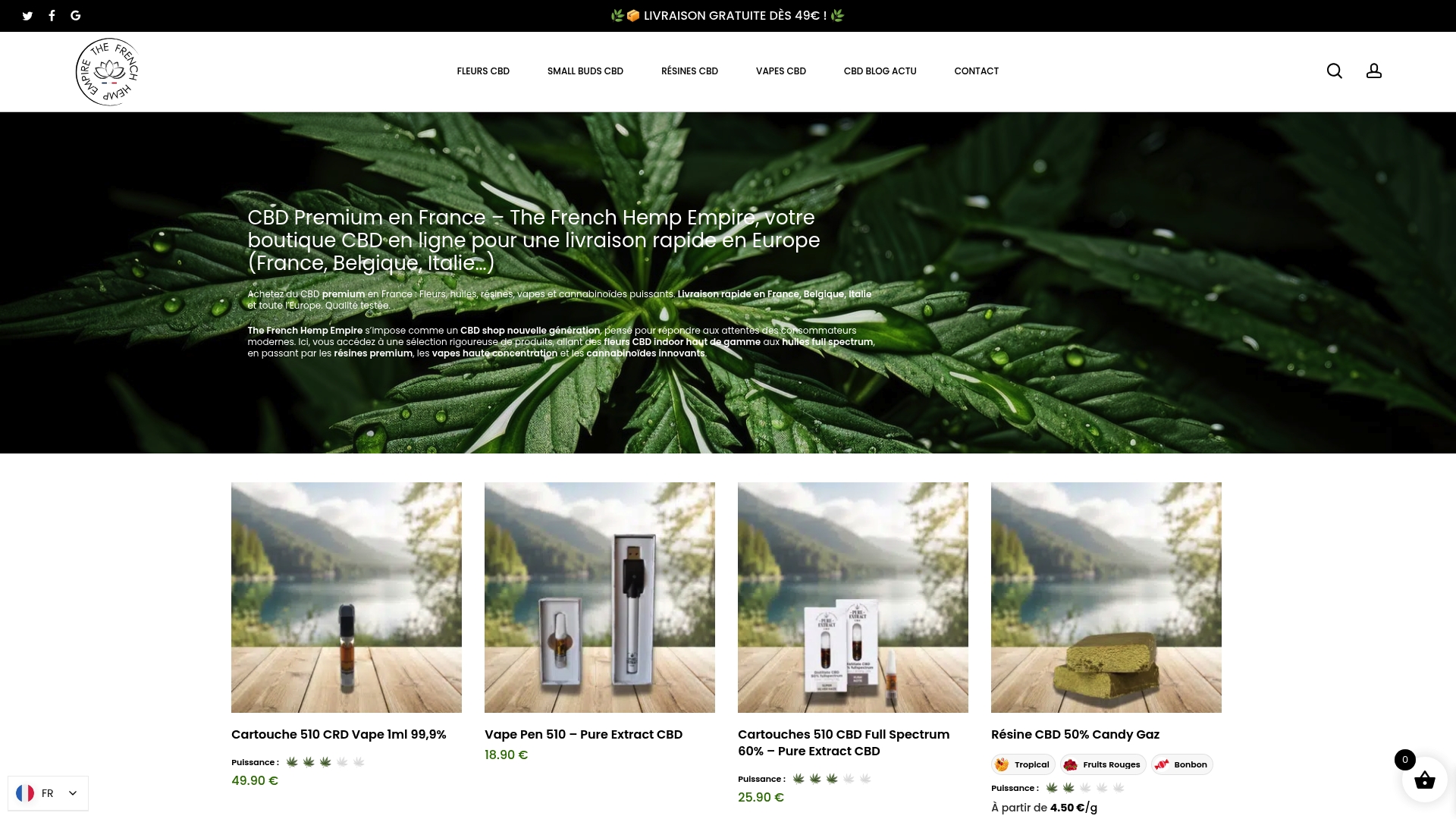
Broad-spectrum sublingual oils and legal CBD resins are among the most suitable formats for a structured stress-relief routine. For rapid absorption in situations of occasional stress, full-spectrum CBD vapes offer an effect within minutes. The entire range is available at Thefrenchhempempire , with discreet and fast delivery throughout Europe. For those wishing to delve deeper into their selection criteria, Thefrenchhempempire's high-quality CBD guide details the essential points to consider before making a purchase.
Frequently Asked Questions
Is CBD effective against anxiety?
CBD reduces anxiety by acting on 5-HT1A and GABAergic receptors. Clinical studies show measurable effects at doses of 300–600 mg for acute social anxiety, with more gradual results for chronic anxiety.
Which form of CBD works fastest against stress?
Vaping and inhaling CBD flowers produce an effect within 2–5 minutes, but it is short-lived. Sublingual oil offers a balance between speed (20–30 minutes) and duration of action (4–6 hours), making it the most suitable form for daily use.
Can you replace your anxiolytics with CBD?
CBD is not a substitute for prescribed anxiolytic medication without medical supervision. Abruptly stopping benzodiazepines is dangerous. Any transition must be gradual, under medical supervision, with a 10% reduction in the medication every 15 days.
How can you tell if a CBD product is of good quality?
A reliable CBD product comes with a Certificate of Analysis (COA) issued by an independent laboratory, attesting to the CBD concentration, THC level, and absence of contaminants. More than 40% of products sold online do not meet the levels indicated on the label.
How long does it take to feel the effects of CBD on stress?
The effects vary depending on the form and frequency of administration. Sublingual oil takes effect within 20–30 minutes for immediate relief. For a lasting effect on chronic anxiety, regular daily use for 2–4 weeks is generally necessary to observe stable results.