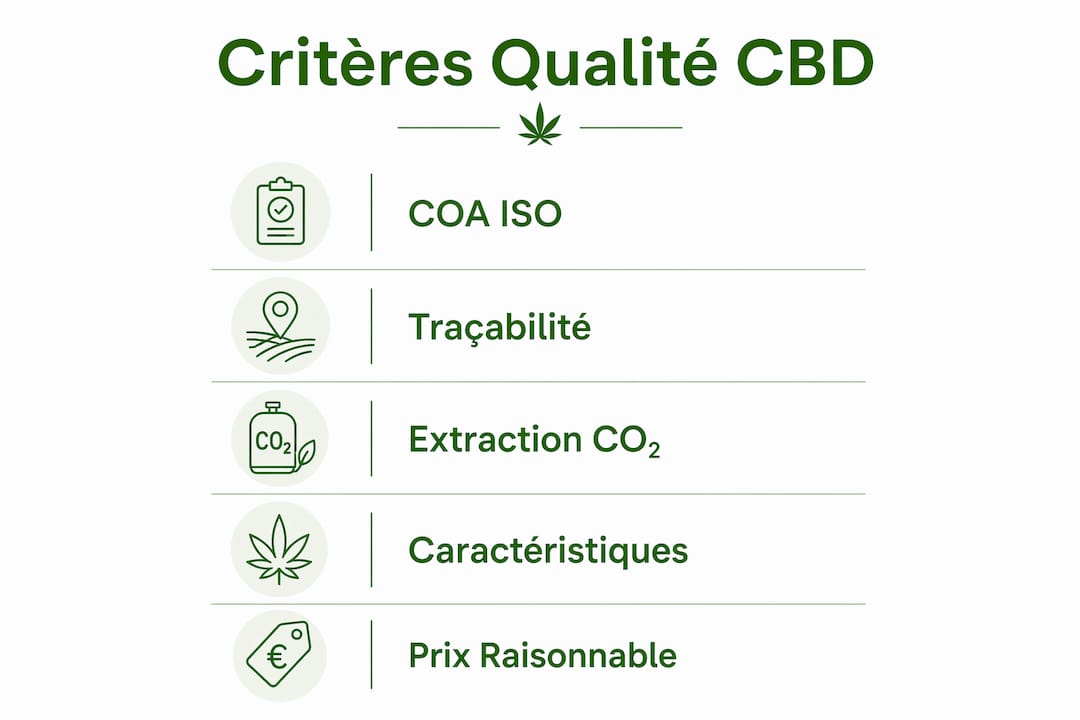
High-quality CBD is defined by the presence of a Certificate of Analysis (COA) issued by an independent third-party laboratory, traceable hemp origin, and a THC content of less than 0.3%. Recognizing premium CBD relies not on marketing or packaging, but on verifiable analytical evidence. In 2026, 81% of CBD products tested in France had THC levels that did not comply with labeling requirements, according to the MILDECA (Interministerial Mission for the Fight against Drugs and Addictive Behaviors). This figure illustrates the scale of the problem and justifies a methodical approach before making any purchase.
What documents should I check to recognize a high-quality CBD?
The certificate of analysis is the central document for assessing the reliability of a CBD product. Without it, no quality claim can be objectively verified.

What a valid COA should contain
A complete and reliable COA must include the following elements:
- Batch number exactly matching the purchased product
- Recent analysis date, ideally less than 6 months old
- Total CBD content calculated using the formula: Total CBD = CBD + (CBDA × 0.877)
- THC content below 0.3%, in accordance with current European regulations
- Absence of contaminants : pesticides, heavy metals, residual solvents, mycotoxins
- Name and accreditation of the laboratory that performed the analysis
A Certificate of Analysis (COA) without a batch number or with an old date is meaningless. The acceptable tolerance between the declared and measured levels is ±10%; beyond this, the product is non-compliant.
Why ISO 17025 accreditation is essential
Only ISO 17025 accredited laboratories guarantee reliable analytical results free from conflicts of interest. Some manufacturers have their products analyzed by laboratories they own, which compromises the objectivity of the results. An independent third-party laboratory has no commercial interest in concealing poor quality. Verifying the laboratory's accreditation on the Certificate of Analysis (COA) is therefore a non-negotiable step.
Pro tip: Go directly to Certificates of Analysis page to see concrete examples of compliant COAs and understand what a valid document should contain.
How to recognize a premium CBD by its physical characteristics?
The sensory qualities of a CBD flower or resin directly reflect the care taken in its cultivation, drying, and storage. A careful visual and olfactory examination reveals information that analysis alone cannot convey.
Visual signs of a quality flower
A high-quality CBD flower displays vibrant colors (deep green, purple, or orange hues depending on the strain), a dense structure, and trichomes visible to the naked eye or under a magnifying glass. Trichomes are small resinous glands that concentrate cannabinoids and terpenes. Their abundant presence indicates carefully selected genetics and harvesting at the optimal stage of maturity.
The signs of poor quality or improper storage are as follows:
- Dull or yellowish colors, indicating aging or exposure to light
- Dry and crumbly texture, a sign of over-drying or improper storage
- Presence of mold (white cottony patches, musty smell)
- The near-total absence of trichomes reveals a premature harvest or a poor-quality variety
- Flowers that are too light and sparse, often resulting from cultivation under low-intensity artificial light
The smell, an indicator of terpene richness
High-quality CBD flowers exhibit a rich and characteristic aromatic profile, reflecting their genetic makeup. An intense, complex, and natural scent indicates a high concentration of terpenes, the molecules that contribute to the product's effects and sensory profile. A weak, neutral, or chemical odor suggests degradation or partial extraction of the aromatic compounds. High-quality CBD resins share these same olfactory characteristics.
Pro tip: Store your CBD flowers in an airtight container, away from light and moisture. Proper storage preserves the terpenes and maintains the sensory quality for several months after purchase.
What criteria of origin and extraction guarantee quality?
The origin of the hemp and the extraction method are two key factors in the purity and safety of a CBD product. These elements directly determine the presence or absence of contaminants in the final product.
Why choose European hemp?
- Regulated traceability : Hemp grown in France, Switzerland or Italy is subject to strict agricultural standards, including the prohibition of many pesticides authorized elsewhere.
- Certified varieties : European cultivars listed in the official catalogue naturally have THC levels that comply with regulations, reducing the risk of non-compliance.
- Soil control : European farms are subject to regular soil quality checks, limiting contamination by heavy metals.
- Proximity and verifiability : Hemp grown in Europe allows for a more accessible visit or documentary verification than hemp of extra-European origin.
- Environmental standards : European environmental requirements reduce the use of chemical inputs, which is reflected in the purity of the final product.
Supercritical CO2 extraction as a reference
The supercritical CO2 extraction method produces an extract free of chemical residues and preserves all the terpenes and cannabinoids present in the plant. This technique uses pressurized carbon dioxide as a solvent, a process that leaves no toxic residue in the finished product. Extraction methods using chemical solvents (butane, hexane) present a risk of residues if the purification process is insufficient. A transparent manufacturer will always mention their extraction method in the product information sheet or upon request.
Hemp is a bioaccumulator: it absorbs heavy metals and pesticides present in the soil, contaminants invisible without analytical testing. This property makes purity testing absolutely essential, regardless of the hemp's declared origin.
A very low price is often a sign of poor raw materials or quality control. Clean cultivation, supercritical extraction, and laboratory analyses represent real costs that the final price must reflect.
How to avoid counterfeit or inferior quality CBD products?
The CBD market remains largely unregulated in Europe, which facilitates the circulation of non-compliant products. In the absence of recognized official labels, analytical transparency is the most reliable criterion for distinguishing a legitimate product from a dubious one.
The most common warning signs are:
- Absence of COA or refusal to provide it upon request
- Unidentified analysis laboratory or one belonging to the manufacturer itself
- Unsubstantiated medical claims : a legal CBD product cannot claim therapeutic properties without regulatory authorization
- The origin of the hemp is not specified , or it is vaguely referred to as "natural hemp" without identifying the country or farm.
- Abnormally low prices without justification by a clearly defined entry-level range
- Vague marketing : terms like "100% natural" or "pure CBD" without analytical evidence guarantee nothing
“A reputable brand always shares its lab analyses and avoids vague marketing. Analytical evidence is essential for building trust. Terms like ‘100% natural’ without proof guarantee nothing.”
For online purchases, ensure the website publishes Certificates of Analysis (COAs) directly on the product pages or in a dedicated section. Consult verified customer reviews: high-quality products typically offer accessible analyses, clear traceability, and a significant number of reviews. In physical stores, always ask to see the COA for the batch before making a purchase.
Key points
The quality of a CBD product is verified by three objective proofs: a recent ISO 17025 COA, a traceable European origin, and an extraction without chemical residues.
| Point | Details |
|---|---|
| Certificate of Analysis (COA) | Require a COA with lot number, recent date and ISO 17025 accredited laboratory. |
| THC level compliant | Check that the THC content is less than 0.3% on the COA for any product that is legal in France. |
| Traceable European origin | Opt for hemp grown in France, Switzerland or Italy for purity and compliance. |
| Supercritical CO2 extraction | This method guarantees the absence of chemical residues and preserves the terpenes. |
| Be wary of low prices | An abnormally low price often indicates insufficient raw materials or quality control. |
What I've learned after years of analyzing the CBD market
The criterion that most consumers overlook isn't the CBD percentage listed on the packaging. It's the date on the Certificate of Analysis (COA). I've seen products sold with analyses that were two years old, presented as current. A COA older than six months no longer reflects the reality of the batch being sold, especially if the product has been stored under poor conditions.
What also strikes me is the persistent confusion between marketing and quality. Terms like "full spectrum natural" or "artisanal extract" have no legal or analytical value. They reassure without proving anything. The only question that matters is: "Can I consult the Certificate of Analysis (COA) for this specific batch, issued by an ISO 17025 accredited laboratory?"
The future of the sector depends on stricter regulation and official labels recognized across Europe. In the meantime, consumer education remains the only effective defense against non-compliant products. Reading a Certificate of Analysis (COA) is not just for experts: it's an accessible skill that any informed buyer can acquire in minutes. Traceability and analytical quality are not marketing ploys. They are minimum requirements.
— Mohamed
Thefrenchhempempire: transparency and traceability for every product
Thefrenchhempempire publishes the certificates of analysis for each batch directly on its website, issued by accredited independent third-party laboratories. Each product is made from European hemp selected for its genetics and regulatory compliance, with a THC content strictly below 0.3%.
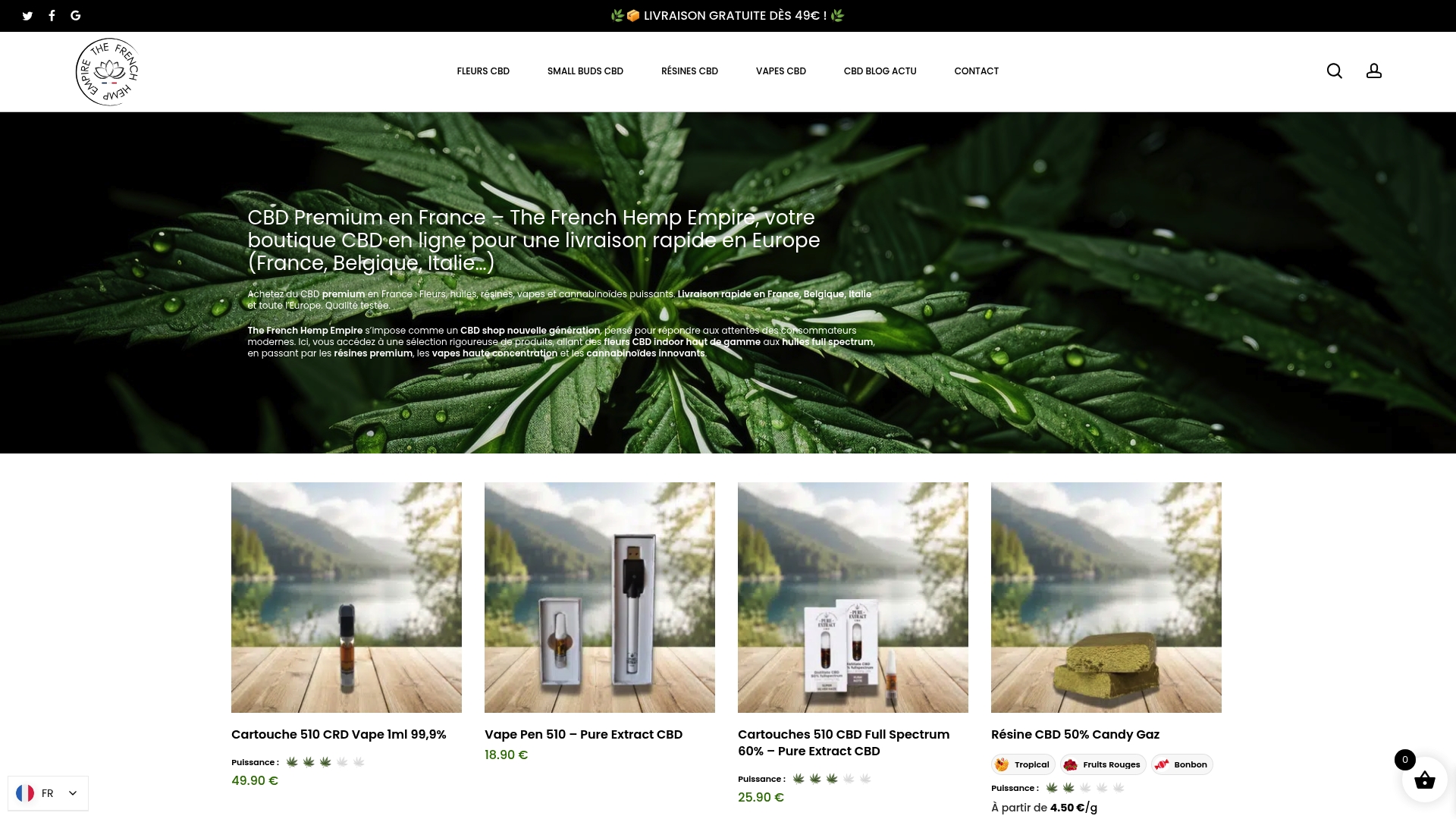
The range covers premium CBD flowers, resins, oils, and vapes, suitable for various uses and consumer profiles. Verified customer reviews and discreet delivery throughout Europe complete an offering designed for discerning buyers. For reliable CBD purchases with accessible analyses and guaranteed origin, Thefrenchhempempire is a well-documented reference in the French market.
Frequently Asked Questions
What is a CBD Certificate of Analysis (COA)?
A Certificate of Analysis (COA) is a document issued by an independent laboratory that certifies the composition of a CBD product, including cannabinoid levels, THC, and the absence of contaminants. A valid COA must include the batch number and a recent analysis date.
How can I verify that the THC level is compliant in France?
The THC content must be less than 0.3% according to French and European regulations. This value must be explicitly stated on the product's Certificate of Analysis (COA), calculated on a dry matter basis.
Is a CBD flower without odor of good quality?
No. A weak or absent scent indicates a loss of terpenes due to improper drying, unsuitable storage, or premature harvesting. High-quality CBD flowers exhibit an intense and characteristic aroma typical of their strain.
Why is supercritical CO2 extraction preferable?
Supercritical CO2 extraction leaves no chemical residue in the final product and preserves terpenes and cannabinoids. Methods using chemical solvents present a risk of residue if purification is insufficient.
Can a low price indicate poor quality CBD?
Yes. Proper cultivation, quality extraction, and laboratory analysis represent real costs. An abnormally low price suggests savings made on raw materials or quality control.