It does not aim for immediate sleep but a gradual reduction of the nervous agitation that prevents one from falling asleep.
The range that works best for most users is between 15 and 50 mg, depending on the severity of the condition and individual sensitivity, as explained in this summary of the benefits of CBD products. Beyond this, the additional benefits become uncertain and the risk of mild side effects increases.
- Starting dose: 5 to 10 mg in the evening, to be adjusted after several nights.
- Typical effective range: 15 to 50 mg depending on the severity of sleep disturbances.
- Recommended form to start with: sublingual oil, the effect of which is felt in 15 to 45 minutes.
Pro tip: Each night, note down the dose taken and the quality of sleep on a scale of 1 to 5. After a week, the trend becomes clear, much more so than if you were to rely on just one night.
Key points
The most effective dose of CBD for sleep is the lowest dose that produces a stable effect, achieved through gradual increases over several days and never fixed all at once.
| Point | Details |
|---|---|
| Starting dose | Start with 5 to 10 mg in the evening, about one hour before bedtime. |
| Custom calculation | Use the formula weight × 0.25 to 0.5 to estimate a dose in milligrams. |
| Progressive titration | Maintain each dose for 3 to 7 nights before increasing in increments of 5 to 10 mg. |
| Quality control | Always demand an independent COA confirming the CBD content and THC threshold. |
| Purchase traced | Thefrenchhempempire publishes its laboratory analyses for each product, oil, flower or resin. |
Table of Contents
- Calculate your CBD dose for sleep based on your weight
- Oil, capsule or inhalation: which form should you choose for sleep?
- How to gradually adjust your CBD dose without making a mistake?
- Convert an oil percentage into milligrams per drop
- Does CBD present any risks of interactions or side effects?
- How can you verify that a CBD product is reliable before buying it?
- What I most often see as dosage errors
- Traceable products to complement your evening routine
- Frequently asked questions about CBD dosage for sleep
- Sources
Calculate your CBD dose for sleep based on your weight
Weight influences the response to CBD, but not in a strictly proportional way: two simple calculation rules allow you to obtain a reasonable starting point before refining through experience.
The second method involves multiplying the weight in kilograms by 0.25 to 0.5 to obtain a dose in milligrams. Both methods yield similar results and serve primarily as a guideline, not as a fixed prescription.
- Choose your reference weight (60, 70 or 80 kg for example).
- Multiply this weight by 0.25 for the lower terminal, then by 0.5 for the upper terminal.
- Compare the result to the practical range of 15 to 50 mg mentioned above.
- Adjust the starting dose downwards if you are a novice or sensitive to cannabinoids.
For a person weighing 60 kg, the calculation yields a reasonable starting dose. At 70 kg and 80 kg, the starting dose increases accordingly. These figures remain starting points, not targets to be met at all costs on the first night.
The number of drops depends directly on the concentration indicated on the bottle. This variability in the dropper explains why it's better to calculate your own mg/drop value rather than relying on a generic figure found online.
Oil, capsule or inhalation: which form should you choose for sleep?
The choice of form influences the experience as much as the dosage itself, since the onset of action varies considerably from one format to another. According to Pharamond, sublingual oil takes effect in 15 to 30 minutes, capsules require 60 to 90 minutes to be absorbed through the digestive system, and vaporized flowers produce an effect in 5 to 10 minutes.
- Sublingual oil: rapid absorption, precise drop-by-drop dosage, ideal for fine-tuning.
- Capsules: fixed dose and convenient for a regular routine, but longer and less predictable onset of action.
- Inhalation (flowers, vapes): almost immediate effect, useful in case of night awakening, but shorter duration of action.
Oil often remains the most suitable choice for starting a titration protocol, as it allows you to increase or decrease the dose drop by drop without wasting an entire capsule. Capsules are better suited once the optimal dose has been identified and the evening routine is established. Inhalation, on the other hand, is appealing due to its speed but results in a shorter duration of effect and dosage variations that are more difficult to control from one use to the next, particularly with flowers and resins whose perceived potency can fluctuate depending on whether they are burned or vaporized.
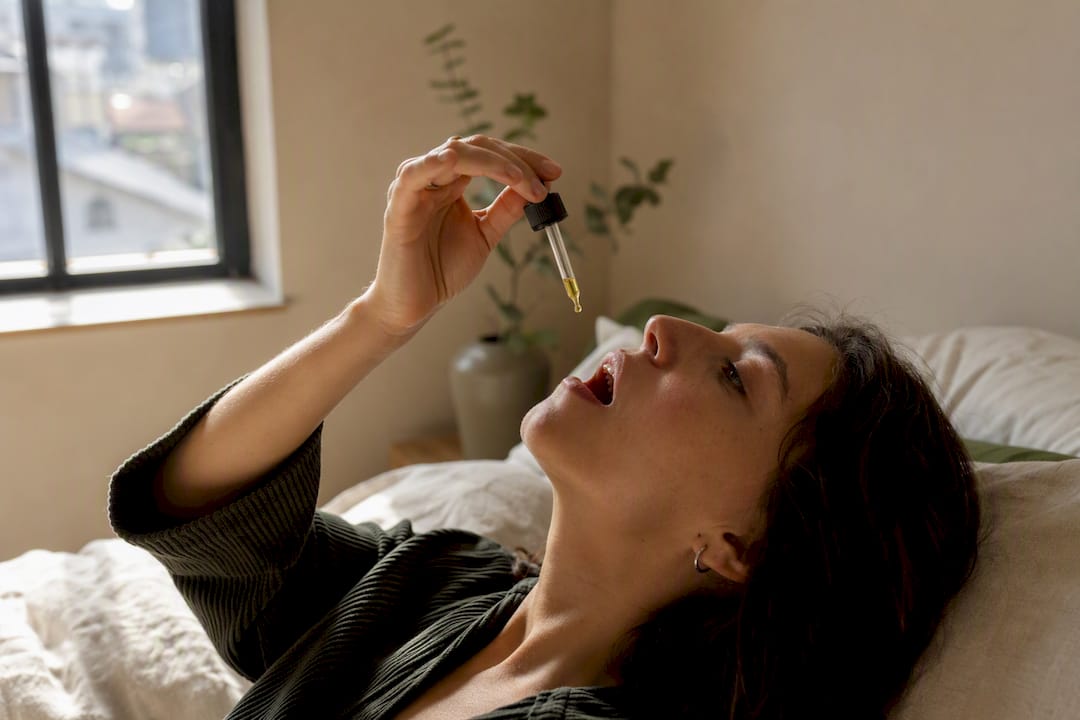
Pro tip: Hold the oil under your tongue for 60 to 90 seconds before swallowing. This pause significantly improves absorption through the sublingual mucosa rather than the slower digestive system.
How to gradually adjust your CBD dose without making a mistake?
Finding the minimum effective dose requires consistency rather than haste. Changing the dose every night makes it impossible to properly assess the actual effect, as sleep already naturally varies from night to night for reasons unrelated to CBD.
- Set a starting dose (5 to 10 mg) and maintain it for 3 to 7 consecutive nights.
- Note down each morning the quality of sleep, the time it takes to fall asleep, and any nighttime awakenings.
- If the effect remains insufficient after this period, increase by an additional 5 to 10 mg.
- Repeat the step until you reach what specialists call the "comfort point," that is, the lowest dose that produces a satisfactory effect, without trying to go any higher.
Systematically increasing the dose does not necessarily improve the outcome: beyond the comfort point, additional benefits often plateau, while the risk of mild side effects (daytime drowsiness, dry mouth) increases. A healthcare professional should be consulted if no improvement is seen after several weeks of titration, or if unusual symptoms persist, such as severe headaches or digestive problems.
Pro tip: Only change one parameter at a time: the dose, the timing, or the form. Modifying multiple elements simultaneously makes it impossible to identify what actually worked.
Convert an oil percentage into milligrams per drop
The percentage printed on a bottle of CBD oil indicates the proportion of cannabinoid in the total volume, but it doesn't tell you how many drops are needed to reach a specific dose. The calculation is done in three simple steps: multiply the percentage by the bottle's volume in milliliters to obtain the total milligrams, divide this total by the number of drops the bottle contains (usually between 200 and 300 for a 10 ml bottle), and then multiply this result by the desired number of drops.
- The exact number of drops per bottle varies depending on the dropper provided: always check the manufacturer's instructions rather than relying on an average.
- Always round down when in doubt, especially at the beginning of a titration protocol.
- Keep a simple journal (date, dose, drops, how you feel) to spot trends over several weeks rather than judging night by night.
More concentrated oils, such as those featured in our guide to high-concentration CBD, allow you to achieve a high dose with fewer drops, simplifying intake for people who have already identified their optimal dose.
Does CBD present any risks of interactions or side effects?
CBD interacts with the CYP450 enzyme system, the same family of liver enzymes that metabolizes many common medications, including some anticoagulants, antiepileptics, and anxiolytics. The World Health Organization's critical review emphasizes that this interaction warrants caution, particularly at high doses, and recommends consulting a doctor for anyone taking regular medication.
The most common side effects are mild: daytime drowsiness, dry mouth, slight drop in blood pressure, or temporary digestive problems. Reducing the dose or changing the time of administration is often enough to alleviate them.
- Pregnancy and breastfeeding: the use of CBD is not recommended due to insufficient safety data.
- Children and adolescents: all use must be under strict medical supervision.
- Liver diseases or chronic treatments: prior medical advice is necessary before taking any product.
According to the Sleep Foundation, current clinical evidence is insufficient to establish a standardized protocol applicable to all profiles, which reinforces the importance of careful titration rather than a fixed dose copied from a third party. Our cannabinoid safety guide details these precautions for each population group.
How can you verify that a CBD product is reliable before buying it?
A laboratory analysis report, or COA (certificate of analysis), remains the only reliable way to verify the actual contents of a bottle of oil or a sachet of flowers. Discrepancies between the advertised and actual content are not insignificant in the online market, hence the importance of never relying solely on the label.
- Exact concentration of CBD and delta9THC, the latter must remain below the legal threshold of 0.3%.
- No residual solvents were used during the extraction.
- Search for heavy metals (lead, mercury, cadmium, arsenic).
- Microbiological analysis guaranteeing the absence of mold or pathogenic bacteria.
An accessible and dated COA, produced by a laboratory independent of the manufacturer, constitutes the only concrete proof that a product corresponds to what its label indicates.
This transparency allows the reader to verify the figures themselves rather than simply accepting a marketing promise.
What I most often see as dosage errors
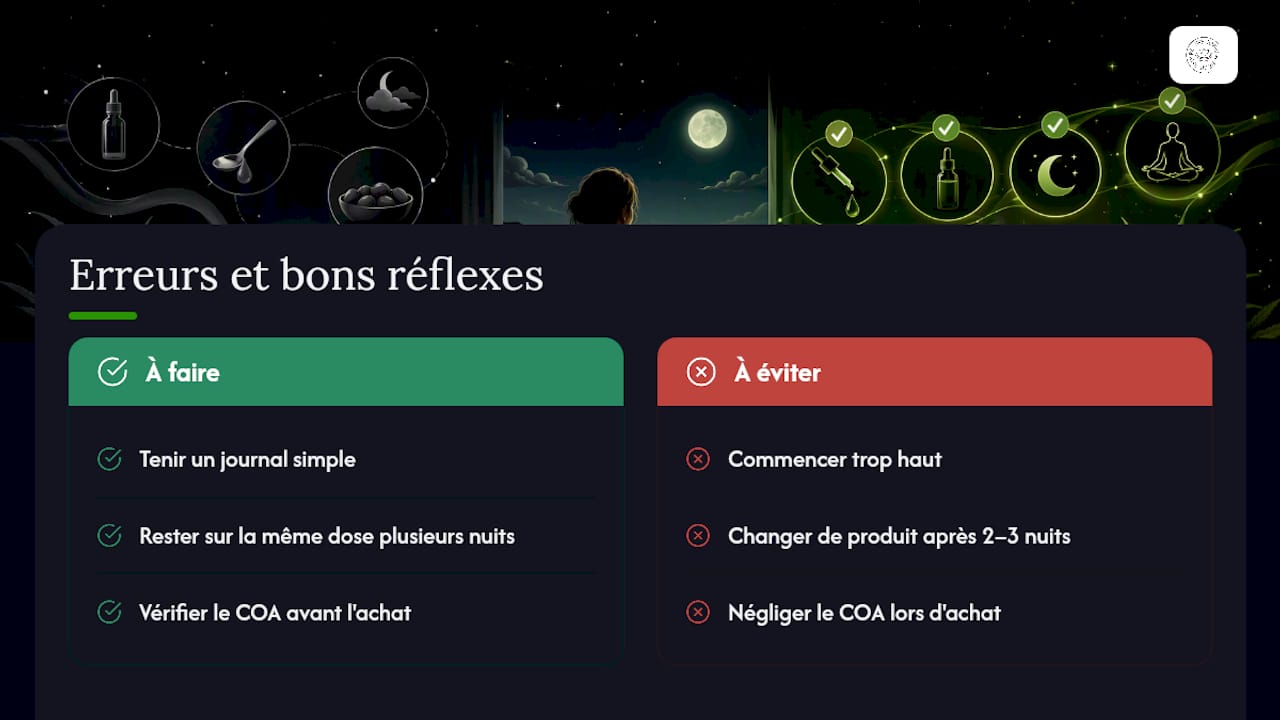
The first mistake is almost always to start with too high a dose, often out of impatience, hoping for an immediate effect similar to that of a sleeping pill. CBD doesn't work that way: it primarily works by calming underlying anxiety, a slower and more subtle mechanism.
The second common mistake is changing products or forms after only two or three nights, without giving the body time to react. The third, more insidious, is neglecting the Certificate of Analysis (COA) at the time of purchase, even though it's the only reliable way to know exactly what you're taking.
Keeping a simple diary, staying on the same dose for several nights, and systematically checking the laboratory analysis before purchase: these three reflexes avoid the majority of the disappointments observed.
Traceable products to complement your evening routine
Unlike buying randomly from a site without published analyses, Thefrenchhempempire provides access to verifiable COAs for each reference, which avoids calculating a dose based on an inaccurate content.
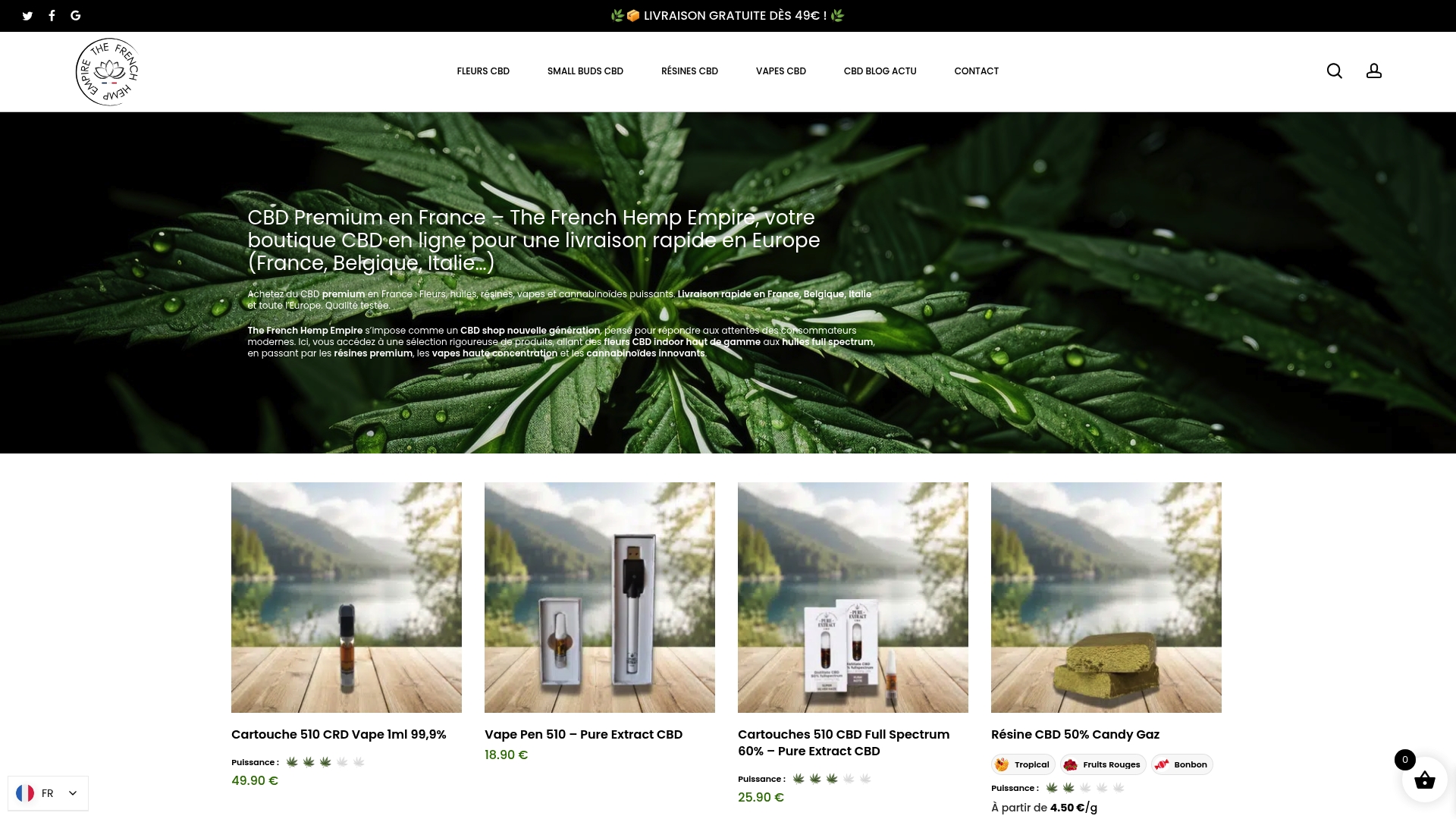
To confidently begin a titration protocol, premium CBD flowers offer a fast-acting effect, useful for nighttime awakenings, while CBD resins are suitable for those who prefer a more relaxed approach in the evening. Readers wishing to refine their choice can consult our guide to recognizing quality CBD before placing an order. For personalized advice on the concentration or form best suited to your needs, contact Thefrenchhempempire's customer service directly through the online store.
Frequently asked questions about CBD dosage for sleep
How many drops of CBD should I take to sleep the first time?
When is the best time to take CBD before bed?
The window of 30 to 90 minutes before bedtime works best with sublingual oil, allowing time for the effect to gradually take hold in the body.
Does the dosage of CBD for sleep change with age?
Sensitivity to CBD tends to vary with age and body mass, which justifies systematically starting with the lowest dose in older people before cautiously increasing it.
Is it safe to take CBD every night?
Daily use at moderate doses is generally well tolerated, but any prolonged use should take into account possible drug interactions via CYP450 enzymes, hence the importance of seeking medical advice if you are currently undergoing treatment.
How long does it take to see an effect on sleep?
Some feel an effect from the first night, but most users observe a marked improvement after one to two weeks of regular use at a stable dose.
This article provides general information and is not a substitute for professional medical advice. Consult a qualified healthcare professional about your specific situation before taking any action based on this content.
Sources
- CBD and sleep: what does science say about its effectiveness for better sleep? – Pharamond
- Is CBD a Safe and Effective Sleep Aid? | Sleep Foundation