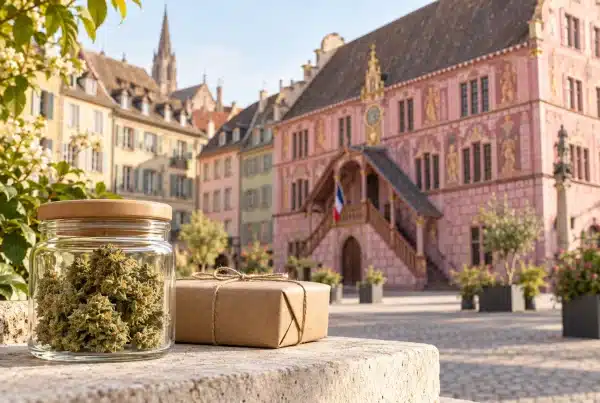
This distinctive aroma comes primarily from terpenes, but also from minor volatile compounds long overlooked in commercial descriptions. Overly rapid drying, sloppy curing, or the addition of synthetic substances can alter or mask this original aroma, making sensory evaluation essential before purchase.
In short:
- The aromatic perception of CBD depends primarily on major terpenes and minor volatile compounds, which can vary depending on the drying and curing method.
- Too rapid a drying or curing process can mask or alter the natural odor, making sensory evaluation essential before purchase.
- The presence of sulfur compounds at low concentrations strongly influences the olfactory profile, even in the absence of dominant terpenes.
- Vaporizing at 160–190 degrees better preserves terpenes and reduces respiratory risks compared to combustion.
- Laboratory analyses and traceability of the flowers guarantee a natural aromatic profile that meets expectations without artificial additions.
Table of Contents
- The molecules responsible for the odor: major terpenes and minor volatile compounds
- Drying and curing: how these steps transform the aroma
- How to assess the scent of a flower before buying it
- Identifying a flower that has been modified or artificially scented
- Vaporization or combustion: what effect on odor and respiration?
- What laboratory analyses reveal about natural aroma
- What aroma science really changes for the consumer
- Where to find flowers with a natural and verified fragrance
- Sources
- Frequently Asked Questions
The molecules responsible for the odor: major terpenes and minor volatile compounds
The aroma of a CBD flower results from a complex chemical mixture, where terpenes have long played a documented role without explaining the entire perceived olfactory range.
- Myrcene : an earthy and musky note, often dominant in relaxing varieties.
- Limonene : a distinct citrus fragrance, associated with a sensation of freshness.
- Beta-caryophyllene : peppery and spicy aroma, the only terpene known to interact directly with cannabinoid receptors.
- Linalool : floral note similar to lavender.
- Alpha-pinene : pine and resin odor, common in sativa genetics.
These five terpenes form a recognizable aromatic base, described in a review dedicated to cannabis terpenes , which notes that the plant actually produces more than 750 phytocompounds that can influence the smell and perceived effects. This chemical diversity explains why two flowers with an almost identical terpene profile can smell very different.
A study published in 2023 identified volatile sulfur compounds, such as 3-mercaptohexyl, capable of producing pronounced citrus notes on their own, independently of the dominant terpenes. This research on non-terpene volatile compounds shows that these minor molecules, active at very low concentrations, often escape detection by traditional analyses focused solely on terpenes.
A 2024 review on the entourage effect concludes that the idea remains plausible but direct clinical evidence remains limited for many marketing claims.
Drying and curing: how these steps transform the aroma
Drying and curing are two distinct, often confused steps, which nevertheless determine a large part of the final aromatic result.
- Drying removes moisture from freshly harvested flowers, usually within a few days, in a dark and ventilated environment.
- The curing process then refines the aroma over several weeks, allowing volatile compounds to stabilize in airtight containers that are opened regularly.
- Drying too quickly blocks this maturation and leaves a vegetal, sometimes astringent odor that masks the finer notes.
A poorly dried flower often gives off an odor of damp hay or raw chlorophyll, a sign that the chlorophyll and residual sugars haven't had time to decompose properly. Conversely, successful curing produces a rounder, more complex aroma, where earthy or fruity notes emerge without being harsh.
Pro tip: A properly cured flower gives off a stable scent even after several openings of the container, whereas a poorly cured flower quickly loses its fragrance upon contact with air.
The variations in odor observed between two batches of the same genetics often have less to do with the genetics itself than with the precise temperature and humidity conditions during this post-harvest phase, a factor that marketing descriptions rarely mention.
How to assess the scent of a flower before buying it
Judging the aromatic quality of a CBD flower follows a simple procedure, applicable both in a shop and upon receiving a package.
- First observe the visual appearance: homogeneous color, presence of visible trichomes, absence of mold.
- Gently crumple a small fragment between your fingers to release the surface volatile compounds.
- Smell at short distance immediately after the crushing, noting the first impressions.
- Close the container, wait 30 to 60 seconds, then smell again to perceive the base notes, which are often different from the top notes.
This dual olfactory interpretation allows us to link a specific sensation to a family of compounds: a pronounced citrus note evokes limonene or certain minor sulfur compounds, while a peppery scent points towards beta-caryophyllene. A high-quality flower exhibits a aromatic complexity , without any aggressive chemical overtones or bland scent.
The availability of the certificate of analysis remains a key criterion. A guide on the olfactory profiles of CBD flowers details how to associate a given variety with its expected notes even before purchase.
Identifying a flower that has been modified or artificially scented
Some flowers undergo treatments designed to artificially enhance their scent or appearance, at the expense of their naturalness.
- A chemical odor, unrealistically sweet or discordant with the appearance of the flower, constitutes an early warning sign.
- An unusual oily sheen on the surface of the buds may indicate the addition of an external substance.
- Powdery or sticky residues, visible to the naked eye, deserve to be checked before any purchase.
Pro tip: Comparing the perceived odor with the official description of the certificate of analysis helps to spot a suspicious discrepancy between the advertised terpene profile and the sensory reality.
When in doubt, the safest approach is to request the certificate of analysis (COA) of the batch in question, to compare several samples of the same variety and to systematically favour sellers who make these documents available without delay.
Vaporization or combustion: what effect on odor and respiration?
The method of consumption directly influences how the aromas are revealed, but also the risks associated with inhalation.
- Vaporization heats the flower to a controlled temperature, without combustion, which releases terpenes and volatile compounds without destroying them or producing toxic smoke.
- Combustion, on the other hand, burns some of these aromatic molecules and generates compounds from pyrolysis that mask the original subtle notes.
- Indicative ranges between 160 and 190 degrees generally allow for the preservation of a significant portion of the most volatile terpenes, without depleting the plant material too quickly.
Observational data reported by the World Health Organization associate vaporization with a reduction in respiratory symptoms compared to combustion. This analysis of vaporization and respiratory symptoms remains based on observational data, which limits definitive conclusions about the magnitude of this effect. Vaporization does not eliminate all risks associated with inhalation, but it is an approach that better preserves the flavor profile while reducing exposure to combustion products.
What laboratory analyses reveal about natural aroma
It also details the complete terpene profile of the batch, which confirms that the perceived odor corresponds to a natural composition and not an external addition.
The approach described is based on transparency: traceability of the flowers' origin, independent laboratory analysis, and strict adherence to regulatory THC limits. A guide to reading a certificate of analysis explains how to interpret this terpene data and verify the absence of contaminants before any purchase.

What aroma science really changes for the consumer
The commercial obsession with a few star terpenes, myrcene and limonene in particular, gives an incomplete picture of what truly constitutes the aromatic quality of a flower. Minor volatile compounds, almost invisible on a typical product sheet, often play a greater role in the final perception than one might think, making simplified descriptions misleading through their excessive simplicity.

The most useful approach is not to seek out a flower that ticks a list of advertised terpenes, but to learn to smell for oneself, to distinguish a clear note from a masked one. The entourage effect deserves to be considered as a path for scientific research, not as a definitive selling point: caution on this point protects the consumer from unrealistic expectations.
What matters most is the consistency between what the nose perceives and what the analysis certificate confirms. A seller who is transparent about this information deserves more trust than an elaborate marketing description.
— Vanessa
Where to find flowers with a natural and verified fragrance
Some online shops offer feminized Auto CBD Kush seeds selected for their full traceability and independent laboratory analyses, a useful guarantee to verify that an aroma comes from the natural chemistry of the plant rather than an artificial addition.

The CBD Flowers category includes varieties with documented aromatic profiles, accompanied by their certificates of analysis. To further refine your selection based on desired aromas, the CBD Flower Types guide details the profiles by genetics.
Sources
The studies cited focus on the volatile compounds of cannabis, the entourage effect, terpenes, and the respiratory impact of vaporization compared to combustion.
- Minor, Nonterpenoid Volatile Compounds Drive the Aroma Differences of Exotic Cannabis
- The Entourage Effect in Cannabis Medicinal Products: A Comprehensive Review
- Decreased respiratory symptoms in cannabis users who vaporize | WHO FCTC
- The Cannabis Terpenes
Frequently Asked Questions
Does CBD smell the same as regular cannabis?
CBD flowers share an aromatic base similar to THC-rich cannabis, as they produce the same families of terpenes and minor volatile compounds. The main difference lies in the concentration of cannabinoids, not in the chemical nature of the aromatic molecules themselves.
What effects can be expected from CBD flowers?
CBD flowers are generally sought after for their calming potential, useful in managing stress or improving sleep, without the psychoactive effects associated with THC. Clinical evidence on a synergy between terpenes and cannabinoids, known as the entourage effect, remains limited, according to a recent review.
Is it legal to smoke CBD flowers?
It is advisable to check the legislation in force in one's own country before any consumption by combustion or vaporization.
What specific odor does a CBD flower give off?
This scent comes from both major terpenes like limonene or myrcene and minor volatile compounds recently identified as key to certain distinctive notes.